 Foilopedia
Disciplines · Motor and tow
E-foiling: what it is and how an e-foil works
E-foiling is riding a foil board that has its own battery and electric motor, so it lifts you above the water without wind, waves or a boat.
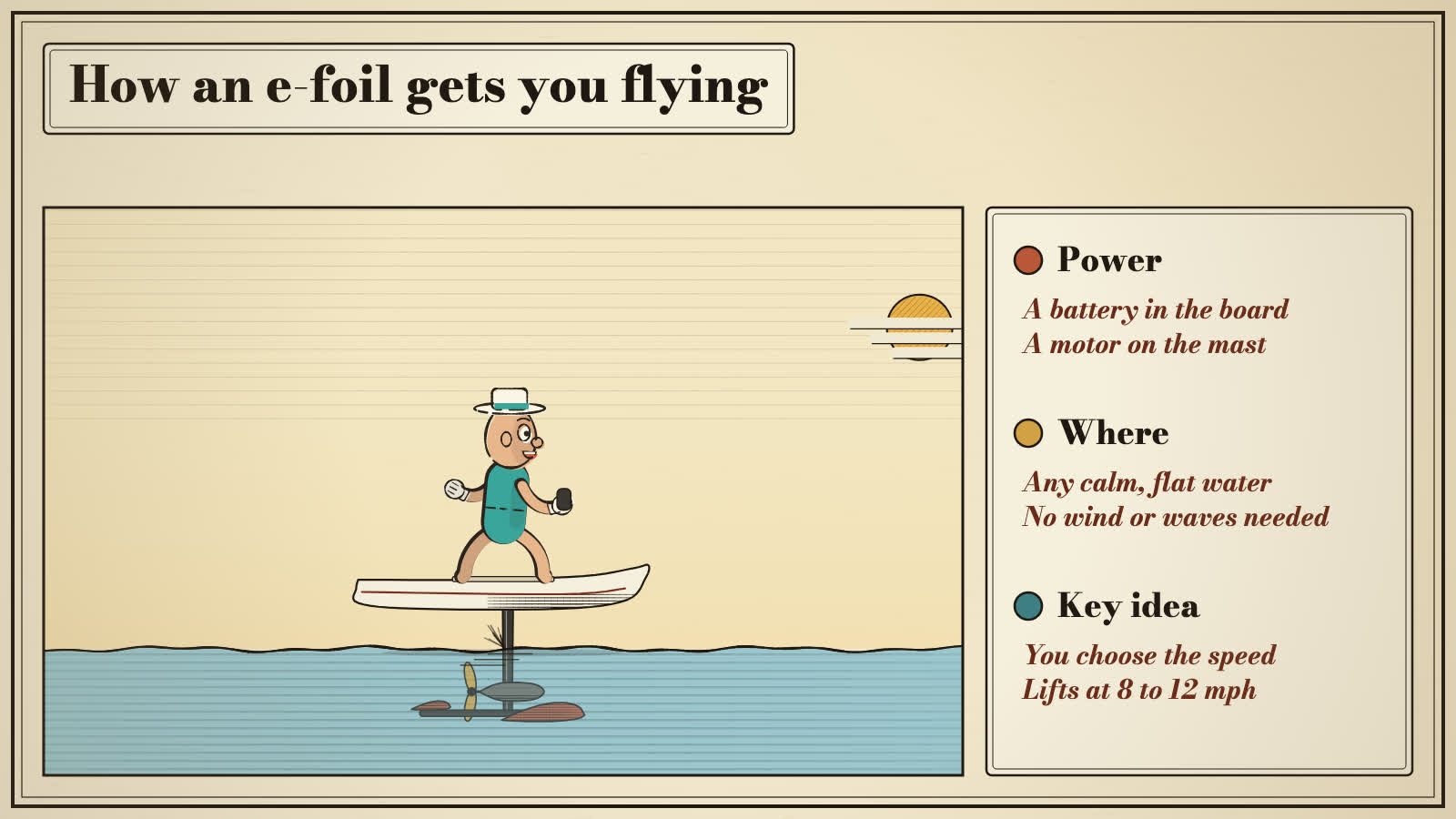
An e-foil (also written efoil or eFoil) has the battery and electronics in the board, a motor that spins a propeller on the mast, and a wireless remote in your hand. You control your own speed, so you can fly on a calm lake on a windless day.1
It suits people with no board-sport background, holiday riders and anyone near calm water. For how the first ride goes, read your first e-foil ride.
At a glance
- Power: a battery and electric motor
- Where: calm, flat water: lakes, bays, rivers, sheltered sea
- Learn from zero? Yes, with a lesson
- Typical first step: a lesson or guided rental
- Gear to start: e-foil board, remote, helmet, vest
- Closest relatives: wake foiling, pump foiling
How it works
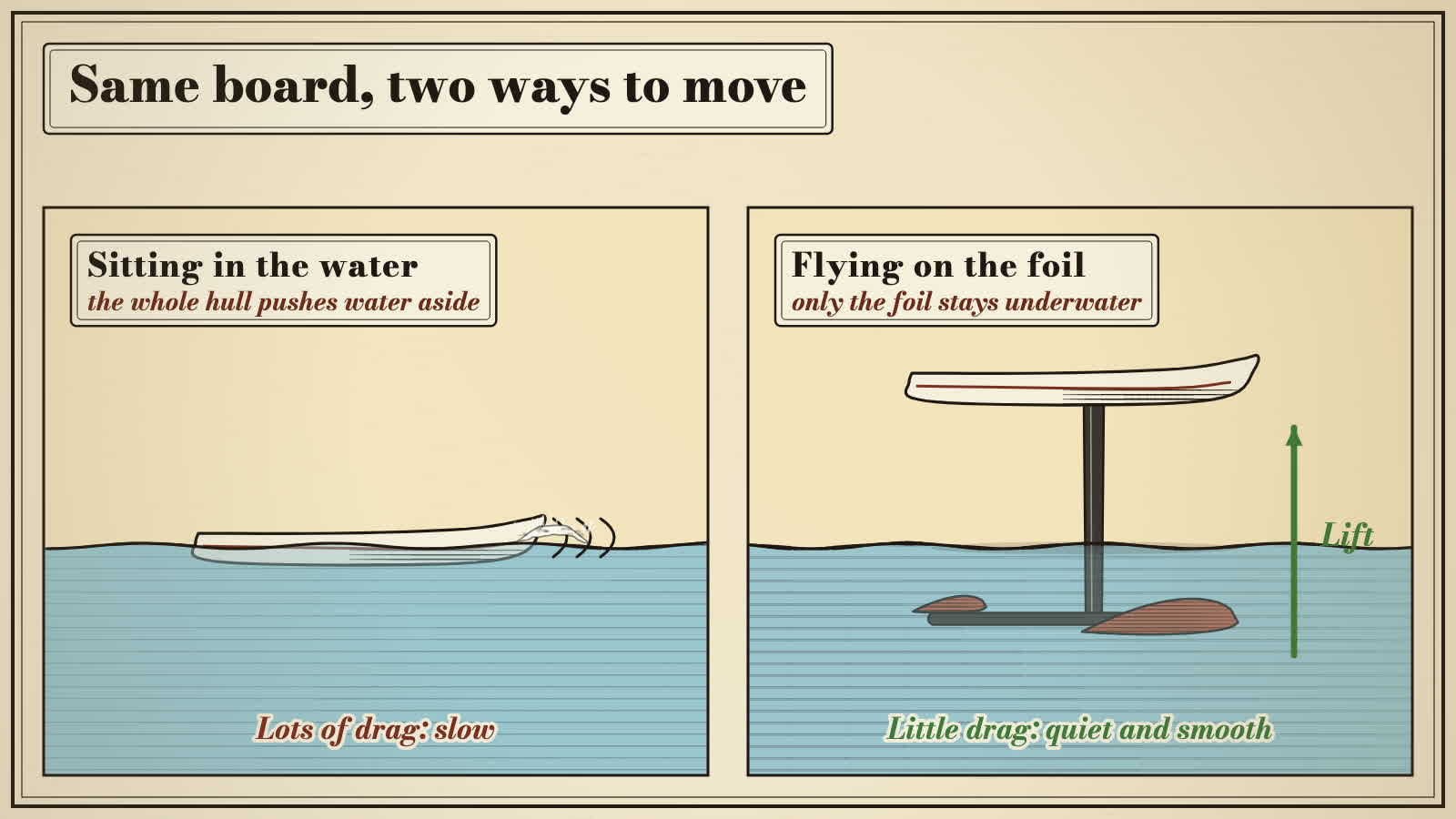
The foil works the same as in every kind of foiling: see how a hydrofoil works. What differs is where the push comes from.
On an e-foil, the battery in the board sends power through wiring inside the mast to the motor and propeller. They push the board forward, and the wings underneath create lift.2
Squeeze the remote's trigger for more power; ease off to slow down. Most e-foils also have lower power modes, so you avoid sudden bursts of speed while you learn.2
Most e-foils start to lift at about 8 to 12 mph (13 to 19 km/h), depending on the foil size, your weight and the board.2
Once you are flying, most e-foils can reach about 20 to 30 mph (32 to 48 km/h). Beginners ride much slower, on larger, more stable wings.3
The power is steady and always there, so there is no gust or wave to catch. That is why most people fly sooner on an e-foil than on anything else.
The gear
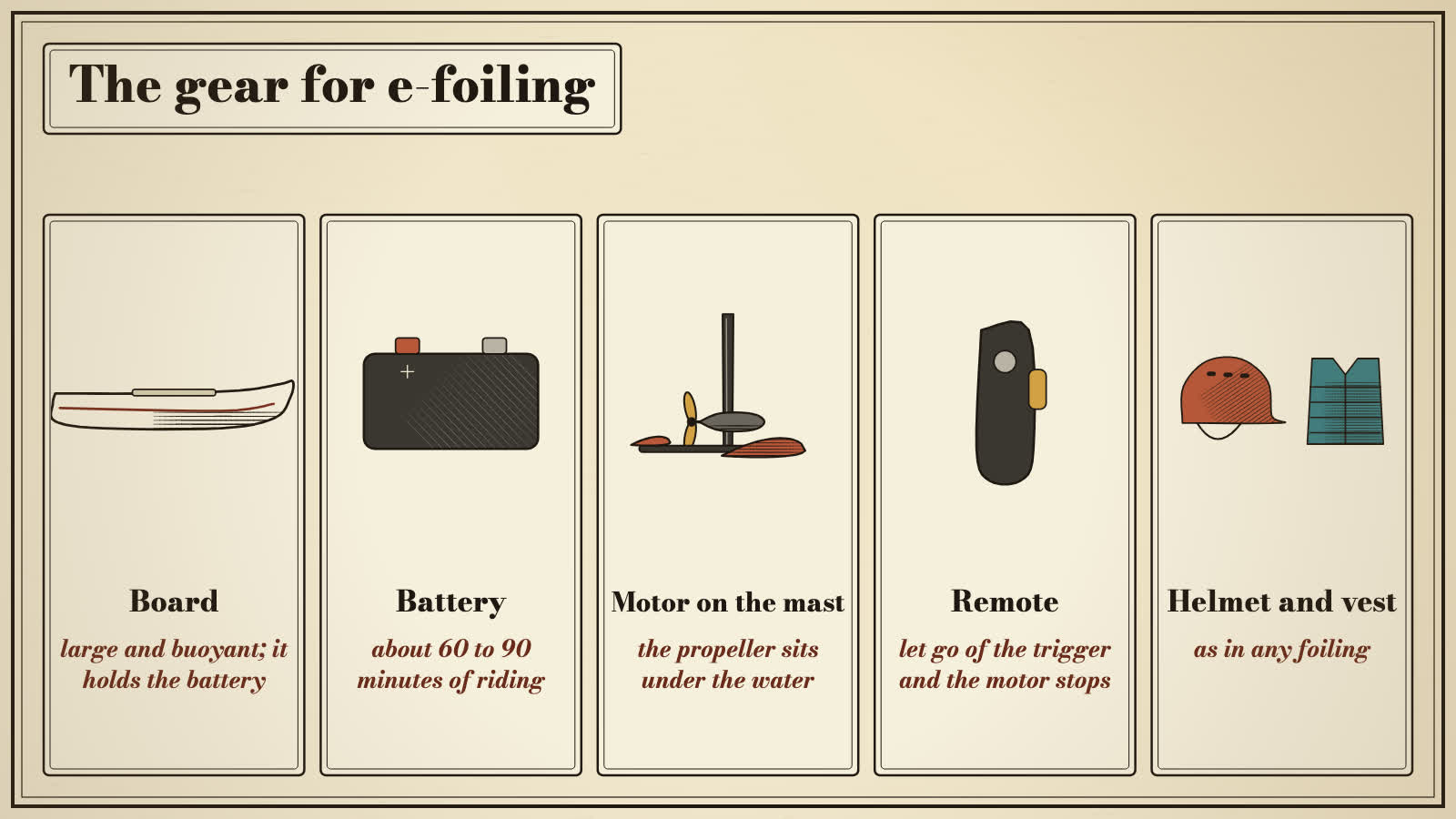
- Board. A large, buoyant board that holds the battery and keeps you stable before the foil lifts.2
- Battery. A lithium-ion pack that sets your ride time. Fliteboard's smallest pack weighs 6.2 kg (13.7 lb).4
- Mast, motor and propeller. The mast joins the board to the foil and carries the wiring. The motor and propeller sit on it, under the water.2
- Remote. A handheld wireless throttle with a dead-man trigger: release it and the motor stops, so let go of the trigger as soon as you start to fall.1
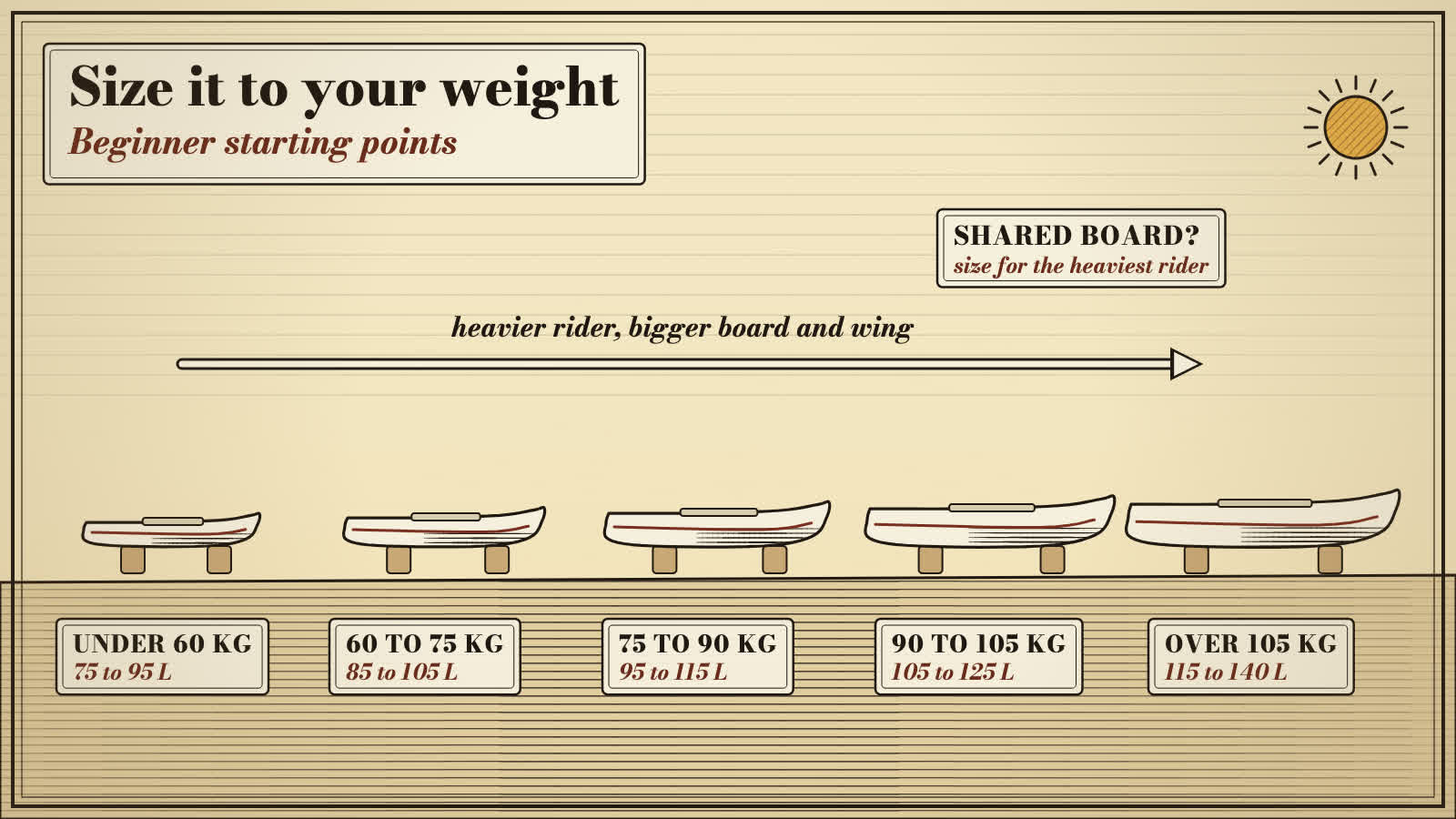
- Foil wings. Bigger wings lift at lower speeds and are easier. Smaller wings need more speed and turn sharper.2
- Helmet and impact vest, as in any foiling. See foil safety.
Battery life and charging
Most e-foil batteries give about 60 to 90 minutes of riding in average conditions. A heavier rider might get about 60 minutes from a pack that gives a lighter rider closer to 90.4
Pack size matters too. Fliteboard rates its batteries from up to 45 minutes for the smallest to up to 2.5 hours for the largest.5
How you ride matters too. Smaller wings need more speed to stay up, which drains the battery faster. Bigger wings lift at lower speeds and save power.4
Charging time depends on the brand and the charger:
- Fliteboard says e-foil batteries typically charge in under 2 hours.4
- Waydoo says about 3 to 4 hours on a standard charger.1
How it differs from other kinds of foiling
E-foiling vs wake foiling
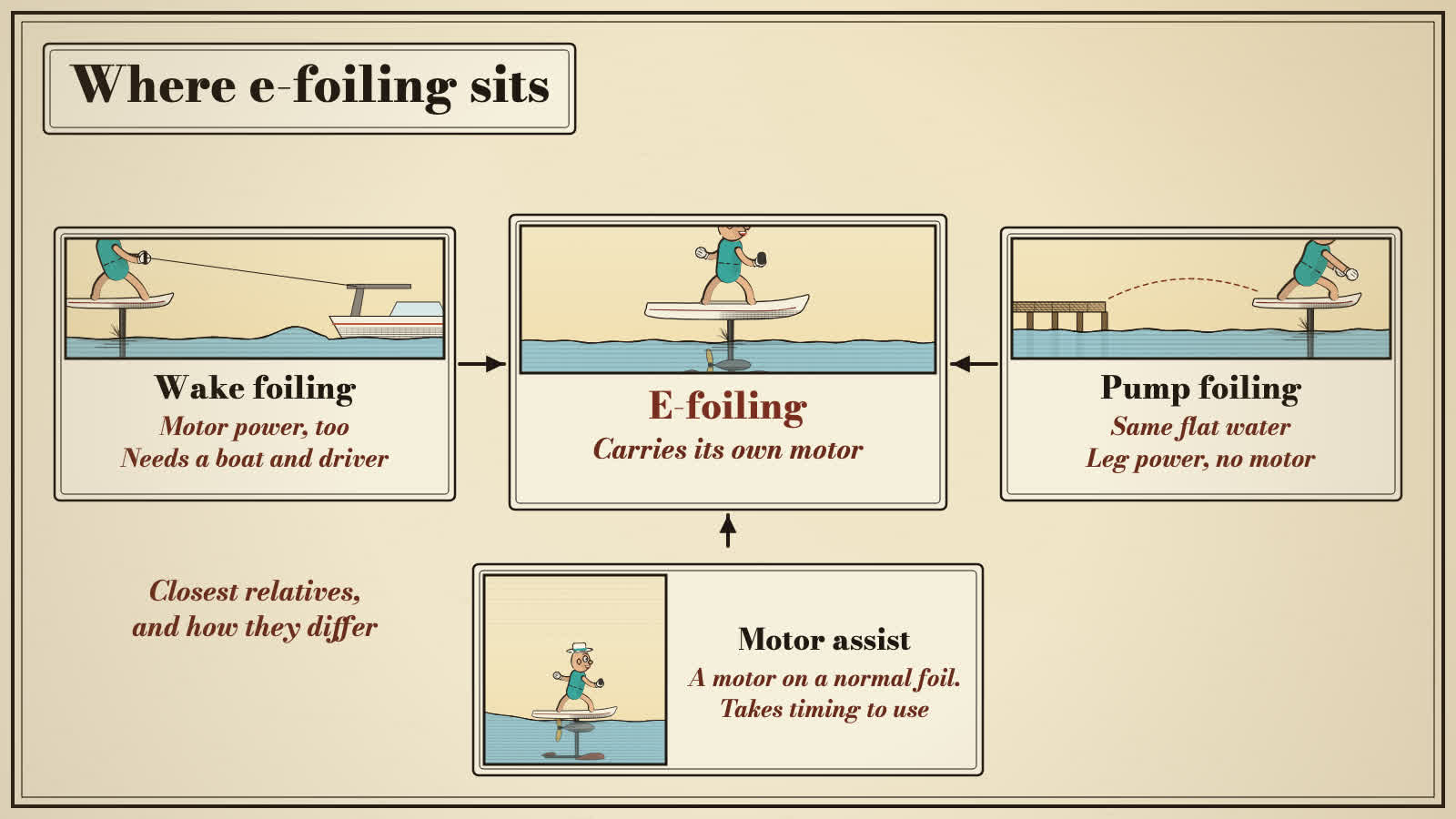
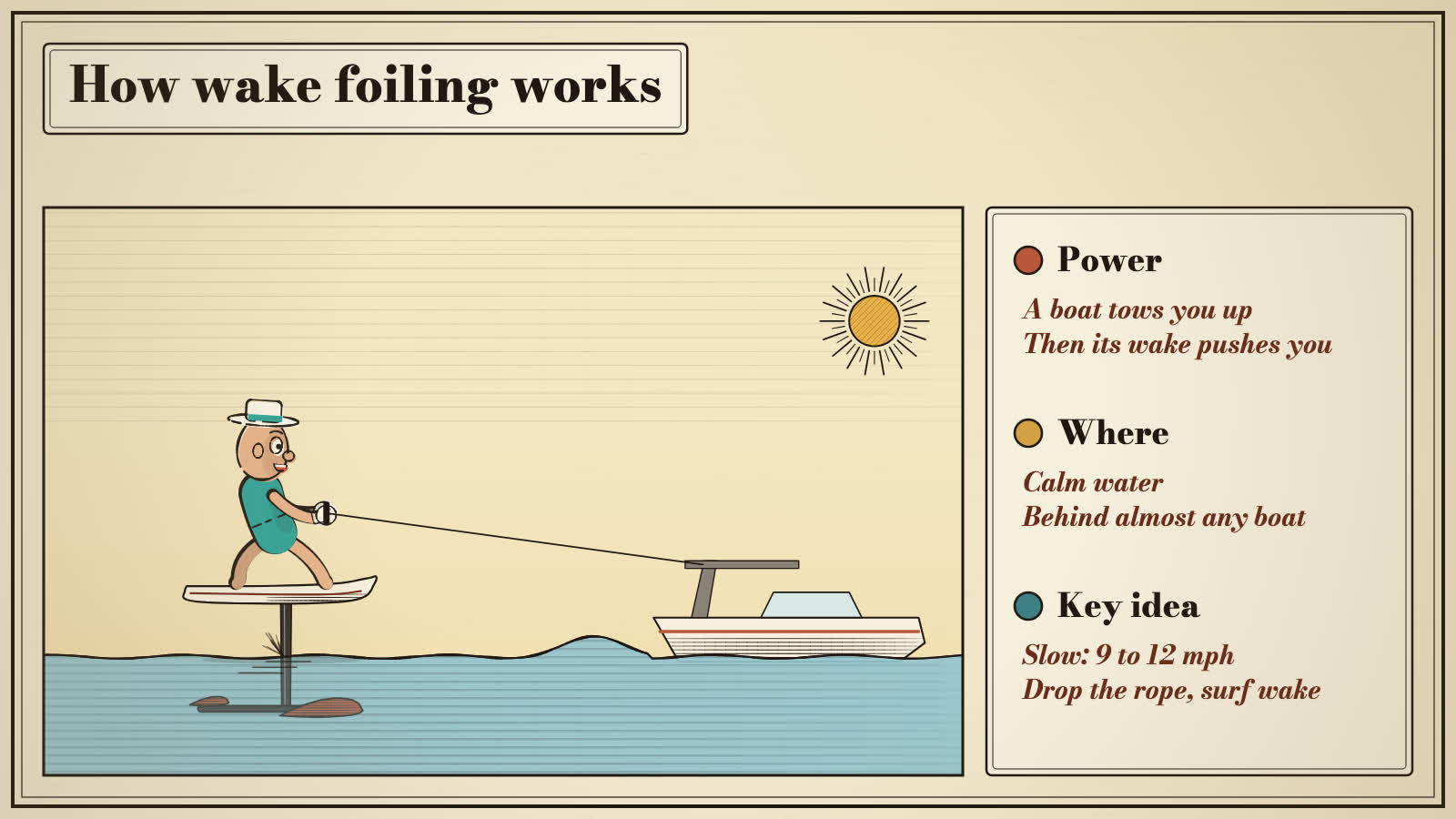
Both run on motor power on calm water. A wake foiler is towed up by a boat and then rides its wake, so you need a boat and a driver. An e-foil carries its own motor, so you can ride alone from the shore. See wake foiling.
E-foiling vs pump foiling
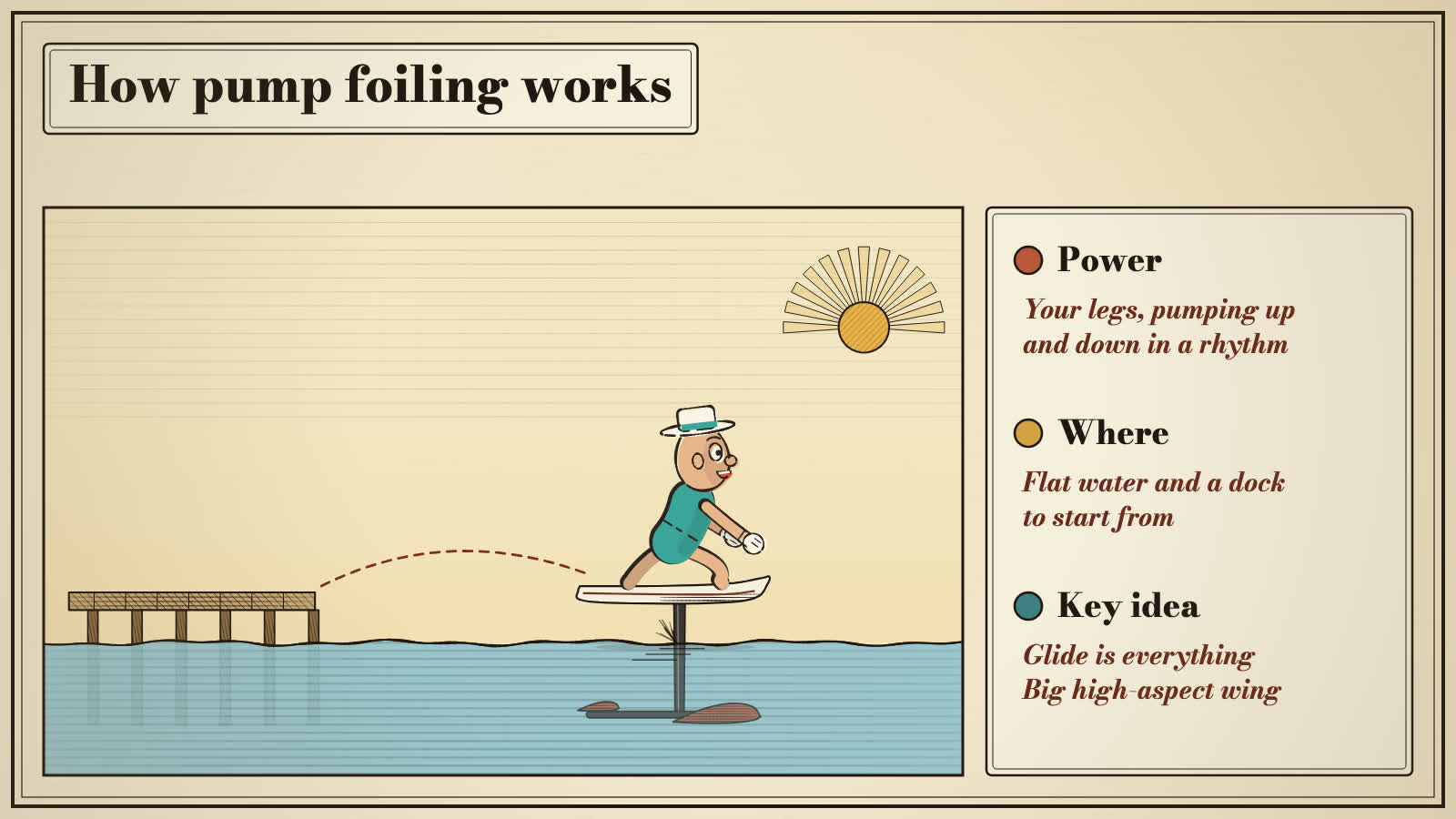
Same flat water, opposite energy. In pump foiling your legs keep the foil flying with a rhythmic up-and-down drive. It is hard work and comes after you can already foil. See pump foiling.
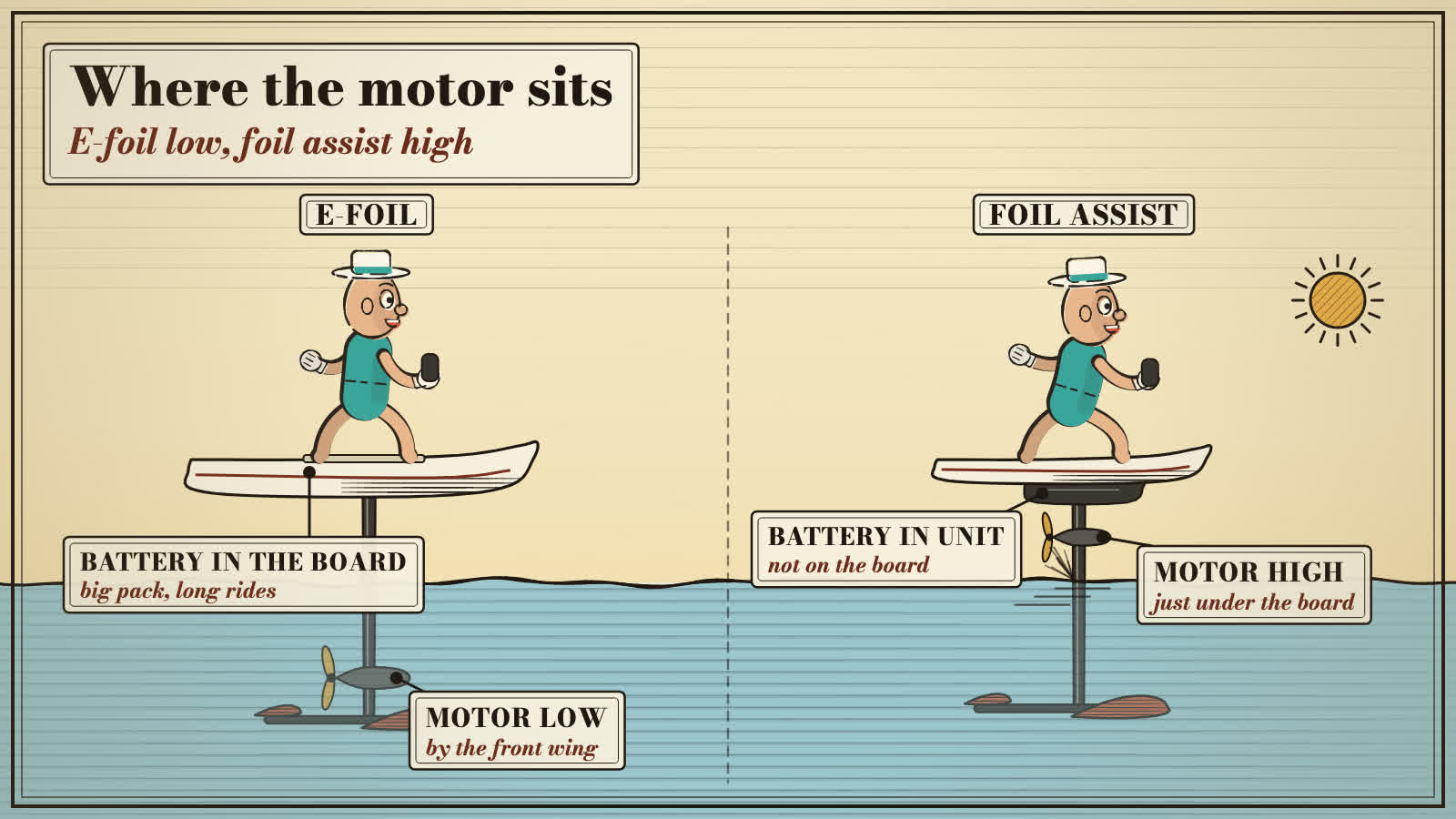
E-foiling vs motor-assist foils
The full comparison, with brands, is in e-foil or foil assist.
You may also hear about motor-assist systems such as Foil Drive: a motor riders pair with an ordinary foil board, such as a wing, downwind or mid-length board, to get going and link waves. MACkite says it is nothing like an e-foil, where you press the button and go. It takes timing, a bit like a slow surf pop-up.6
Who it suits
A good fit if you:
- have never foiled and want to fly within a few sessions
- live near calm water with little wind or surf
- wakeboard or wakesurf: the stance and speed feel carry over
Probably not the right pick if you:
- want the e-foil to teach you everything: it is a great way to learn balance and height control, but pumping, catching wind or waves and reading the water still have to be learned in those sports
- are on a tight budget: at about $5,000 to $10,000 new, it is among the most expensive foil gear to own1
- want to travel light: the board and battery are heavy and bulky
Getting started: lessons, renting, buying
Lesson or not? Yes. Waydoo says a lesson takes the guesswork out of setup, launch depth, stance, throttle and falling.7
Where to find one. E-foil schools, rental shops, resorts and tour operators. Many brands list dealers who run demos.
Rent or buy? Rent first. Waydoo says two guided sessions are usually enough to know whether owning one makes sense. As of November 2026, it puts most rentals at about $150 to $250 per hour.1
What buying costs. As of November 2026, Waydoo says most beginner-friendly e-foils cost about $5,000 to $10,000. Prices vary by brand, battery size and region.1
What to buy first. Nothing until you have ridden a few times. Then a complete set from one brand with a large beginner wing is the simple route.
What your first sessions look like. Waydoo says most beginners stand up within 15 to 30 minutes and start flying within two to three sessions.1
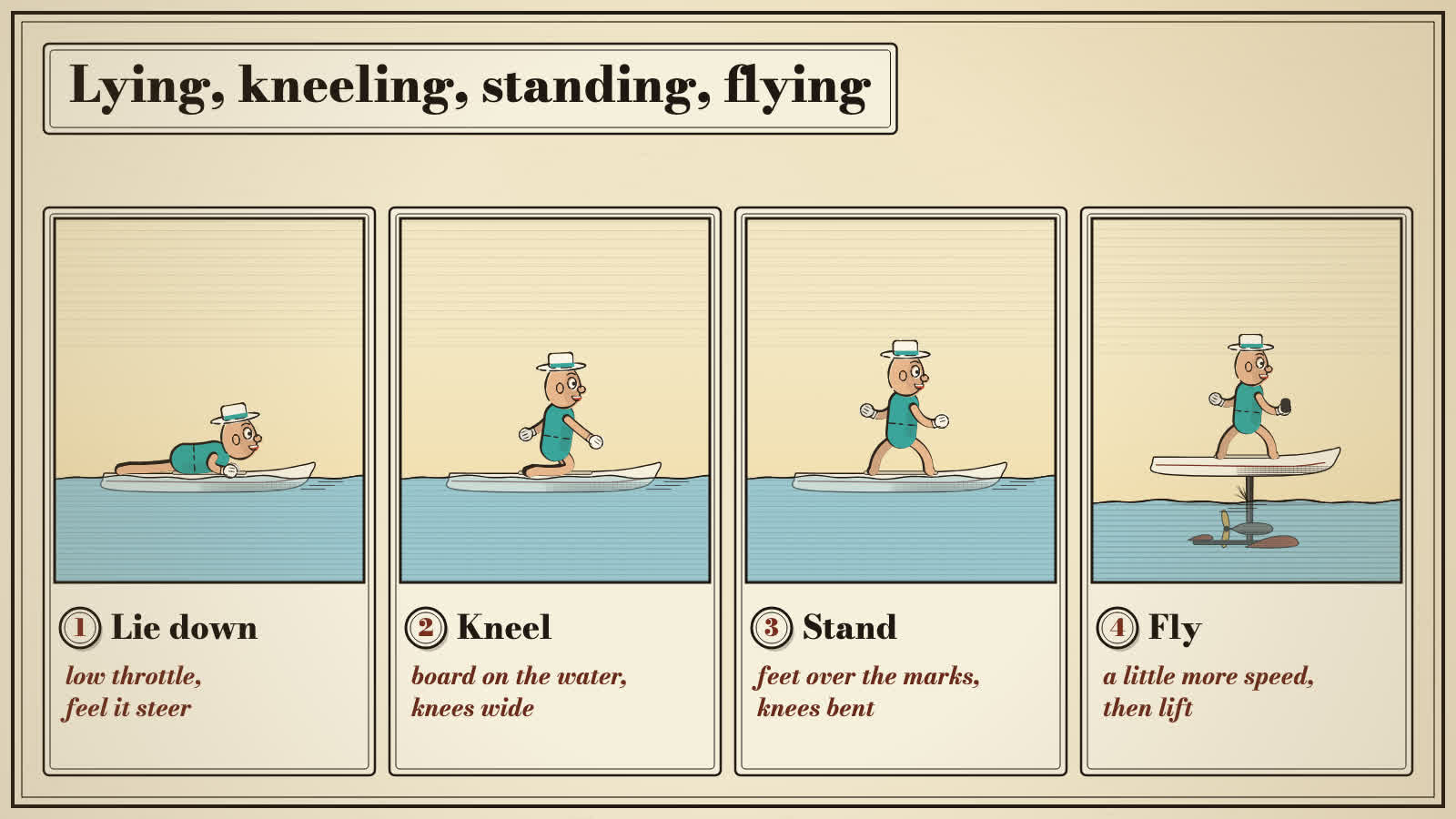
Beginner tip: the lie, kneel, stand, fly steps and how to use the throttle are all in your first e-foil ride.
Safety notes
The basics are the same in every kind of foiling: read our foil safety guide. On an e-foil, also keep these in mind:
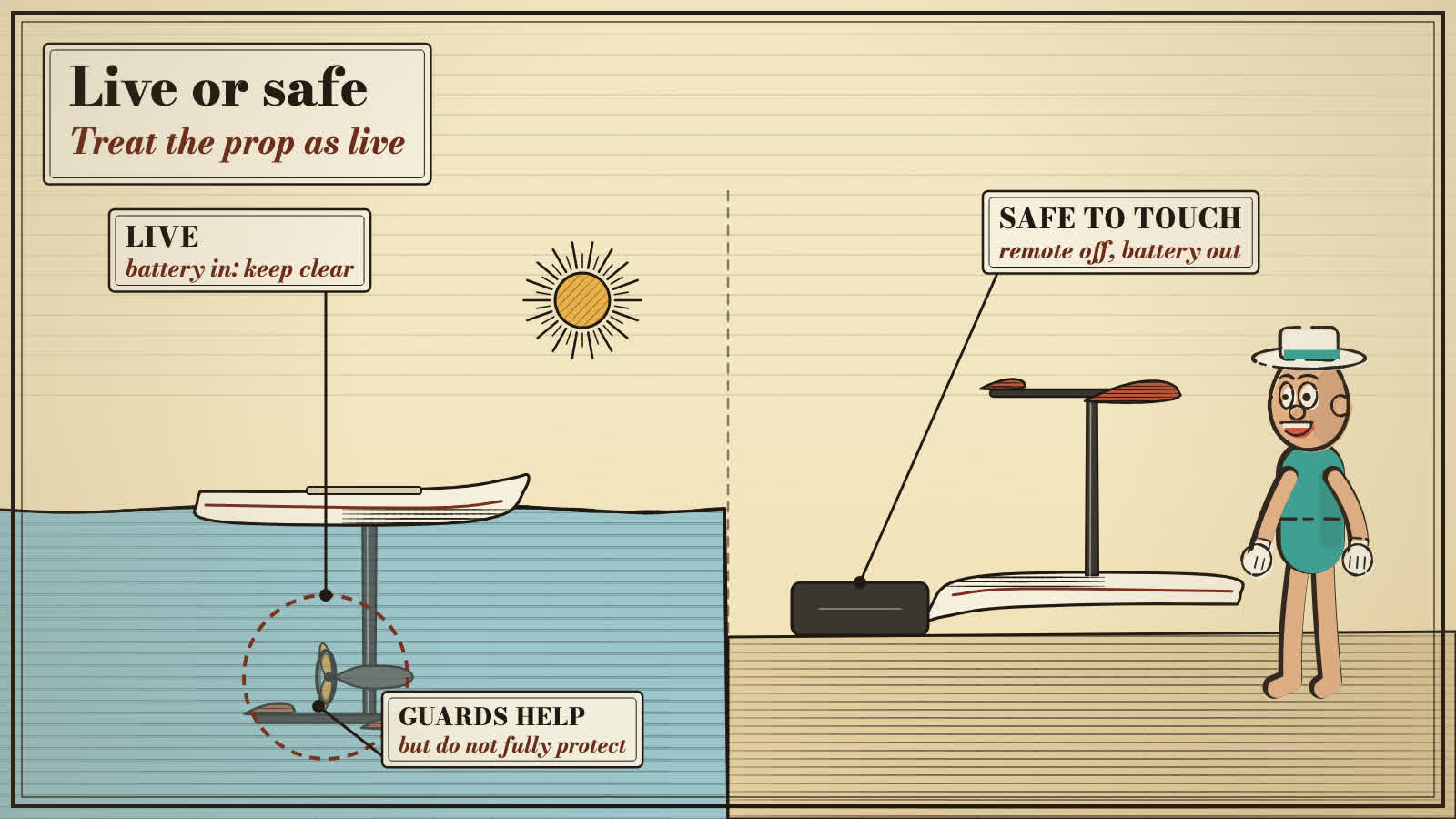
- The propeller. It is the one hazard other foil boards don't have. Treat the board as live until it is disarmed.7
- Use a prop guard if your board has one. What guards can and can't do is in e-foil propeller safety.
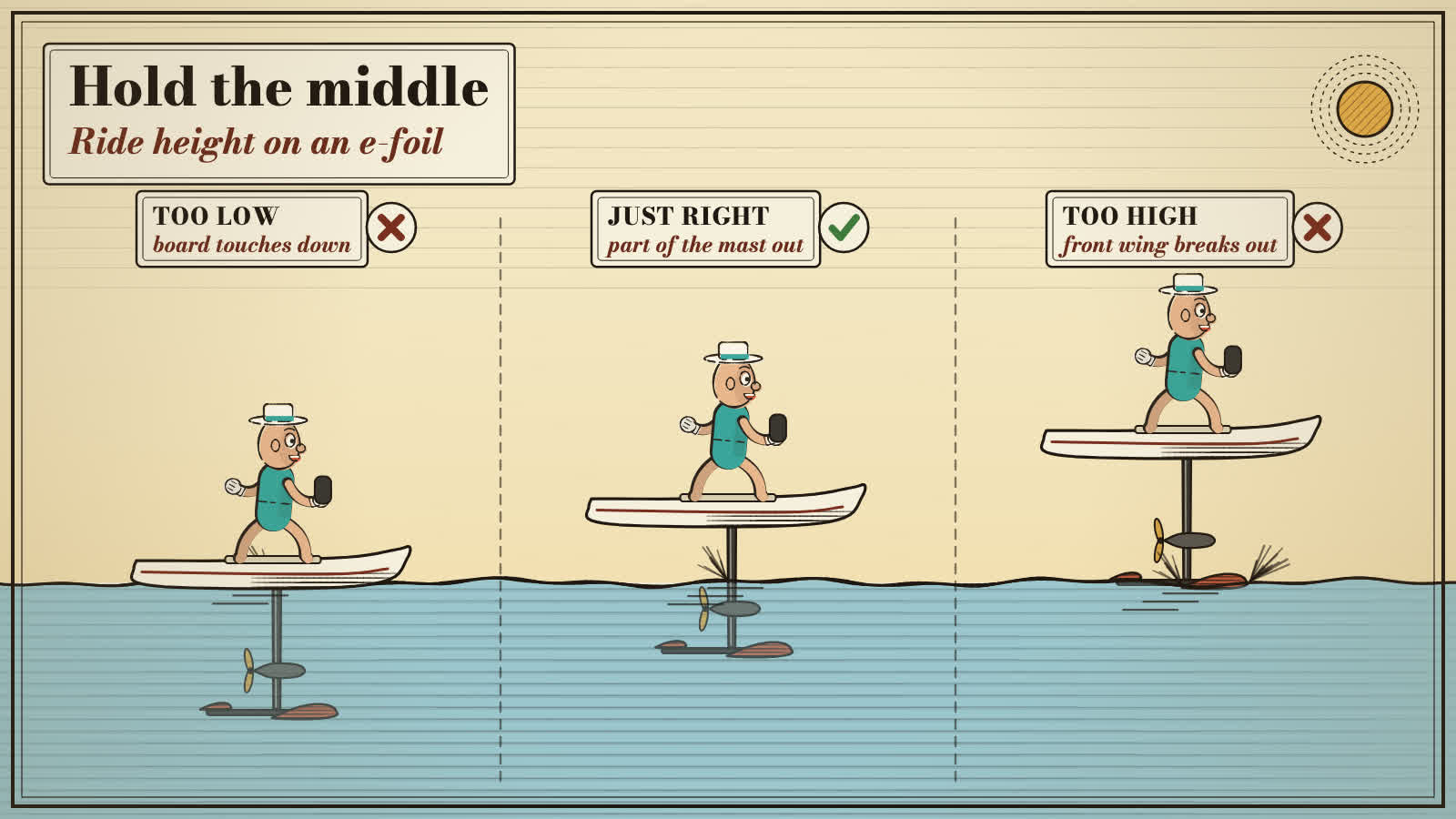
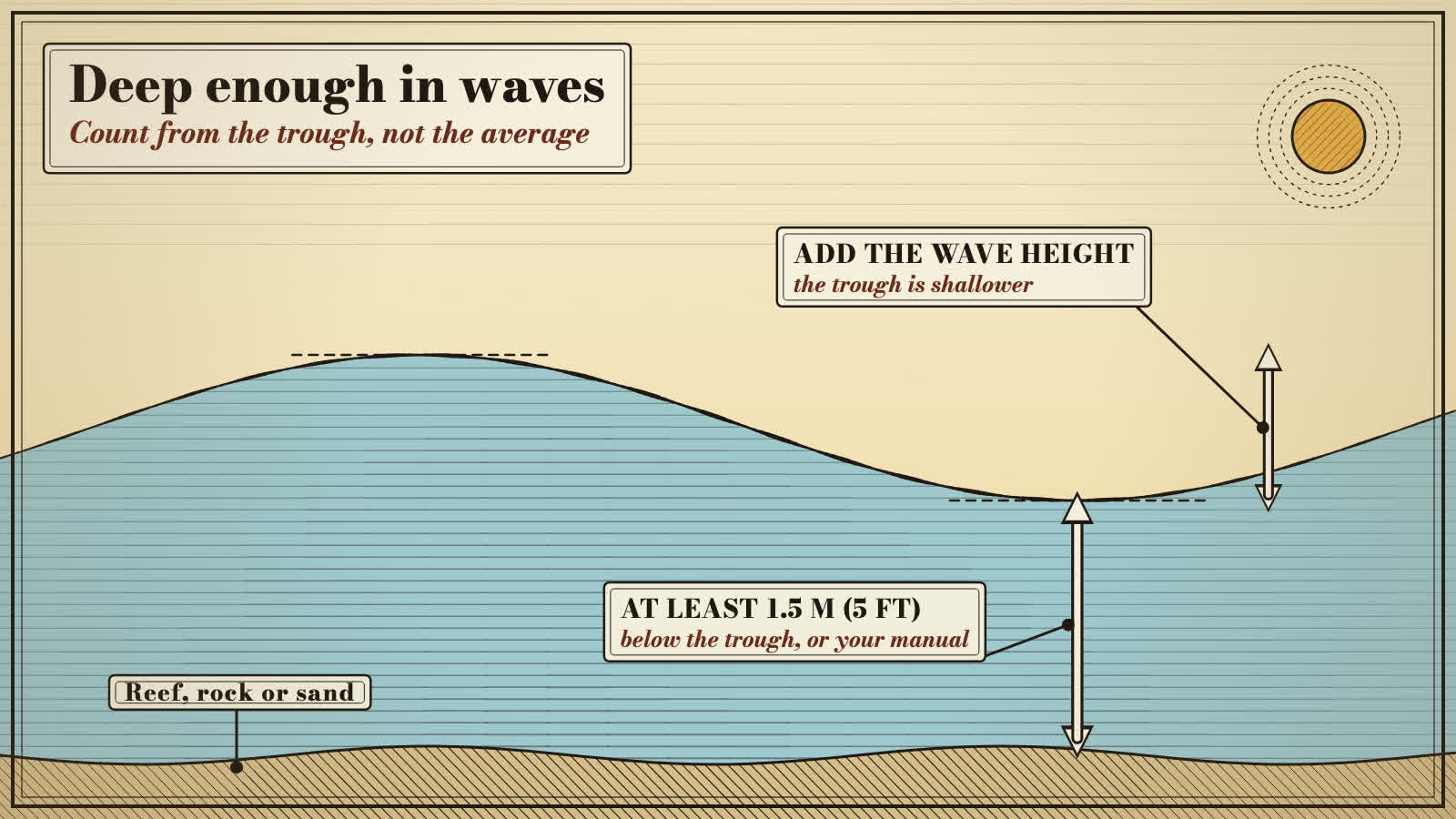
- Before you ride: remote check and water depth are covered in your first e-foil ride.
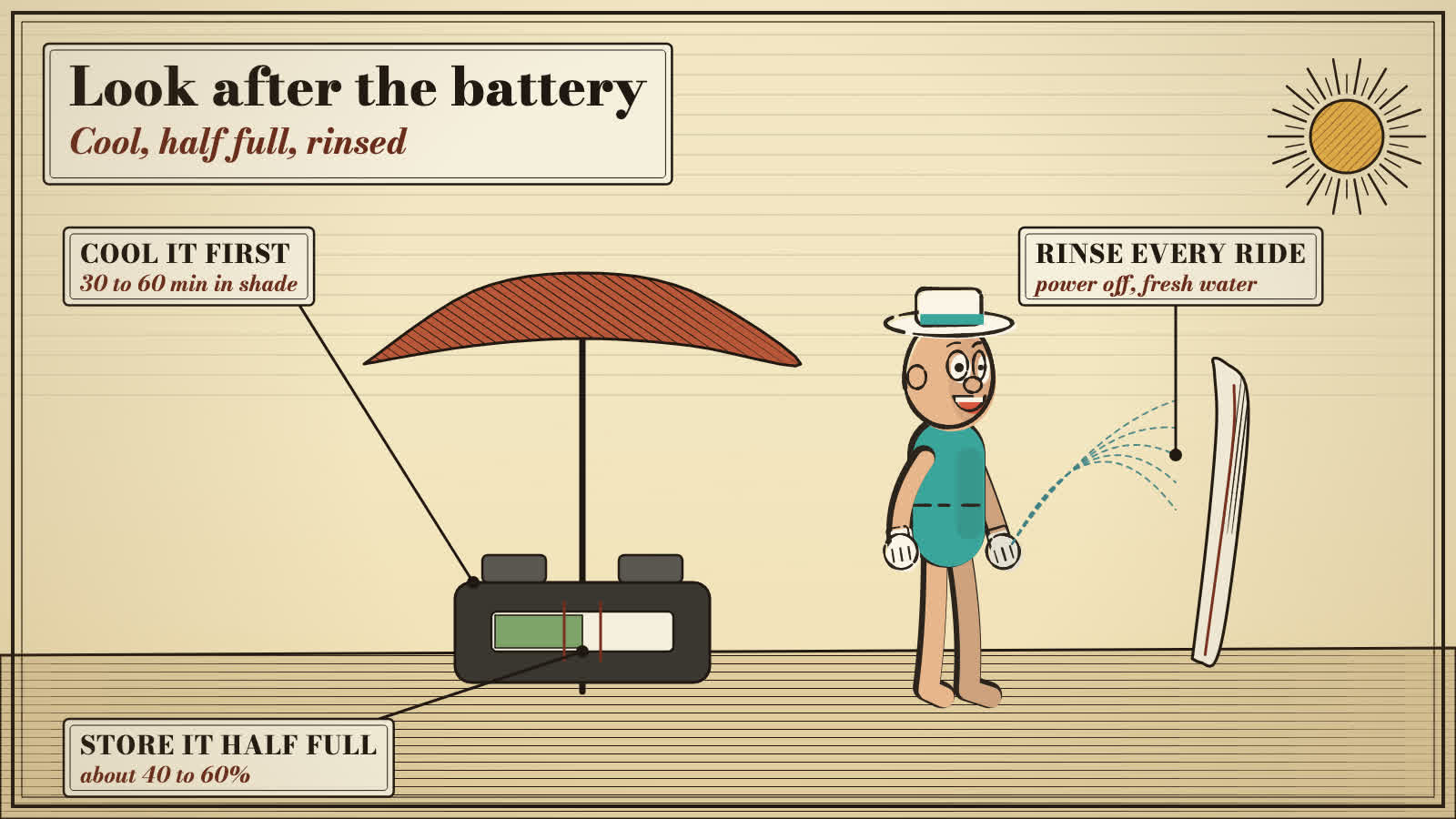
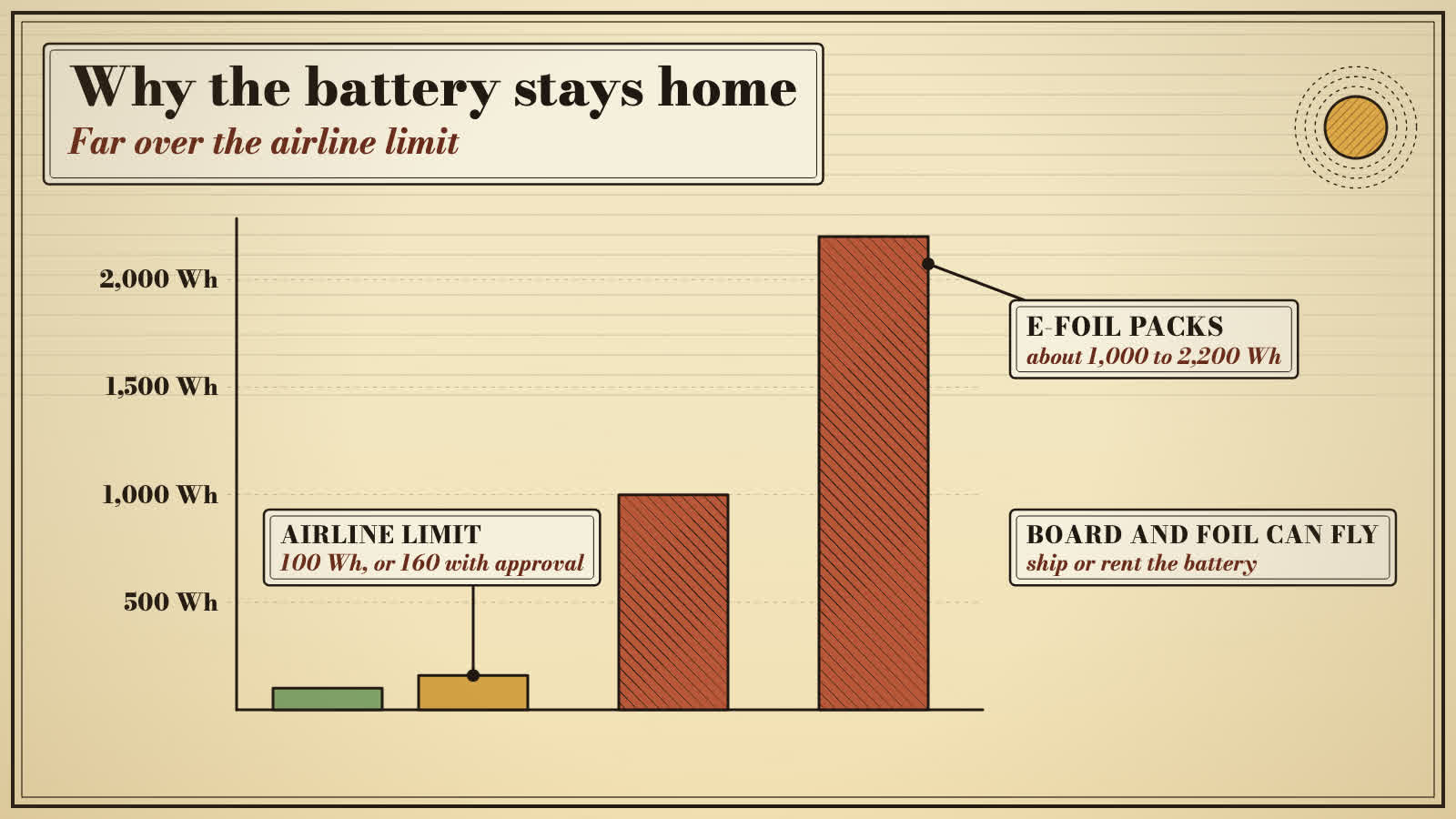
- Treat the battery with care. It is heavy, so carry it to the water carefully. Follow the maker's charging and storage rules (see e-foil battery care), and check transport rules before you travel (see traveling with an e-foil).
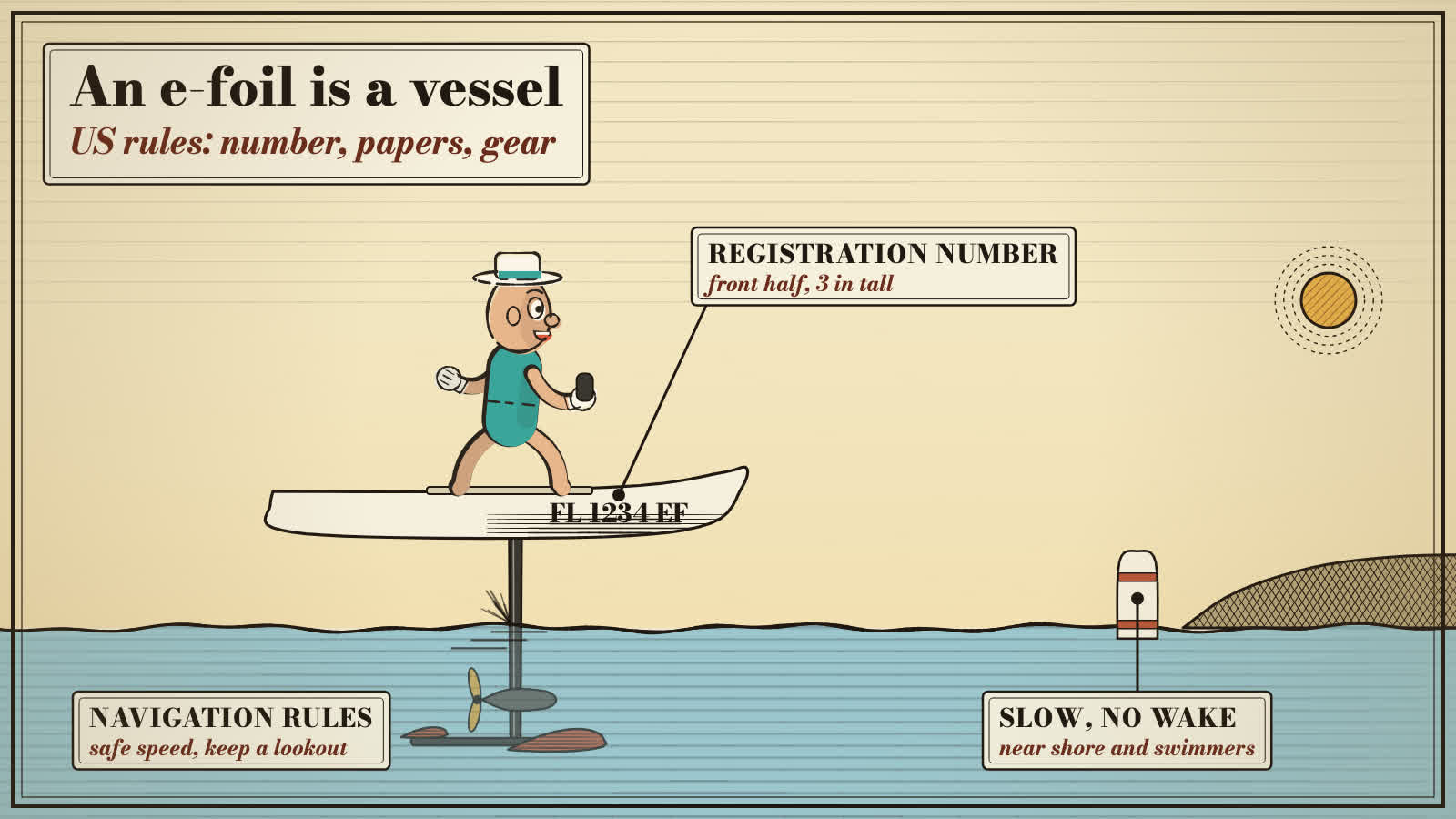
- Check the local rules. Some waterways limit motors or set speed rules for powered craft. See is an e-foil a boat?
Not sure this is the one? Compare every kind on what is foiling.
FAQ
How much does an e-foil cost?
As of November 2026, Waydoo says most beginner-friendly e-foils cost about $5,000 to $10,000, and rentals run about $150 to $250 per hour.1
How long does an e-foil battery last?
Usually about 60 to 90 minutes of riding. It depends on the battery size, your weight, your speed and the wing you use.4
Is it better to rent or buy an e-foil?
Rent first. A couple of guided sessions show whether you will ride enough to make owning one worth it.1
Do you need a license to ride an e-foil?
It depends on where you ride. Waydoo says that many US states do not require a boating license, but some areas require registration or a boating safety certificate. Check your local waterway rules before you ride.1
Keep learning
Sources
Facts checked against the sources below in November 2026.
- Waydoo, What is an eFoil waydoo.com ↩
- Waydoo, How do eFoils work waydoo.com ↩
- Fliteboard, How fast do eFoils go fliteboard.com ↩
- Fliteboard, How long does an eFoil battery last fliteboard.com ↩
- Fliteboard, Features eu.fliteboard.com ↩
- MACkite, What size board and foil do I need for Foil Drive mackiteboarding.com ↩
- Waydoo, How to eFoil waydoo.com ↩
Also used:
- Fliteboard, How to eFoil: a step-by-step guide: https://fliteboard.com/blogs/news/how-to-efoil-a-step-by-step-guide