 Foilopedia
Learn · E-foil and wake
E-foil turns and height control
Once you can fly in a straight line, the next skills are holding a steady height and turning while you stay up. Both come from small weight shifts and a calm hand on the throttle. If you are not flying yet, start with your first e-foil ride.
Hold your height
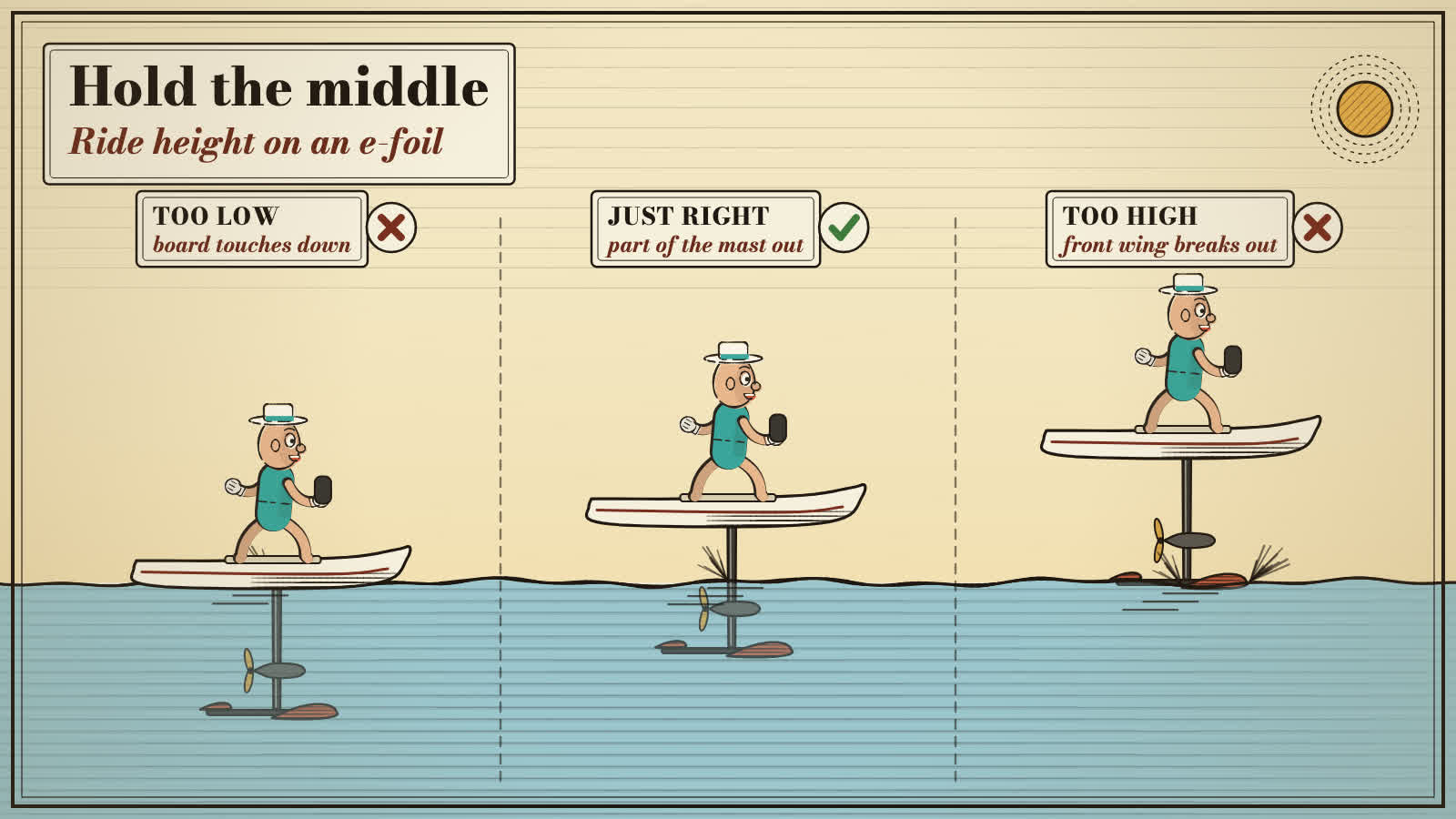
Your ride height is a balance of speed and where your weight sits. Waydoo's drill: to climb, add a small burst of throttle and ease a little weight onto your back foot (a small shift, not leaning back), then hold the higher position for two or three seconds.1
To come down, ease off a little and move some weight forward. Waydoo says to keep the drop controlled, not fast.1
For a low skim, fly just above the water. When spray starts to touch the board, shift back a little and add a touch of throttle. The reason this works is explained in how a hydrofoil works.1
Touch-and-go
A touch-and-go is a planned landing that turns straight back into a flight. At low speed, ease off the throttle until the board touches the water, then add throttle and ease a little weight back. Waydoo says the board should lift again within one or two seconds.1
Practice it until you don't have to think about it. It is your recovery move whenever a turn or a trick starts to go wrong.1
Breaching: when the wing comes out
You breach when you fly so high, or lean so far, that the front wing reaches the surface. Once it is in the air, it loses its lift and the board drops. Waydoo notes that flying high leaves less room before the wing breaches.2
If you feel the wing break the water, Waydoo says to reduce throttle right away and shift your weight forward to drive the wing back down. Stay calm and respond quickly, without overcorrecting.1
If the board drops hard and you can't save it, let go of the throttle and fall clear to the side, away from the mast and foil. Protect your head with your arms as you come up.2
Beginner tip: breaches often come from big moves. Waydoo warns that leaning back can create a steep climb and a breach. Climb with small shifts, and keep your height moderate until your touch-and-gos are reliable.2
Your first turns
Start with wide S-turns, then grow them into carves.
- Check first. Look over your shoulder for riders, swimmers and boats on the side you are turning to. The boating rules say every vessel must keep a proper lookout by sight and hearing at all times.3
- Look where you're going. Fliteboard Performance Team rider Justin Chait says to look in the direction you want to go to start the turn.4
- Lean with your body, not your feet. Chait advises against steering with toe and heel pressure. It works to a point, but it limits stronger carves and can cause a "taco" fall. Shift your whole weight instead, and don't bend at the waist, which often ends in a wipeout.4
- Go wide. For a wide carve, Waydoo suggests picking a point on the water and drawing a big circle around it. Lean in gradually and hold the edge.1
- Keep the speed on. Use small throttle changes to hold your speed through S-turns. If you slow down in a turn, add a touch of throttle.1
- Commit. For tighter carves, Waydoo says hesitation lets the board slide out.1
Riders describe this differently. Waydoo's S-turn drill, and Fliteboard's own slalom drill, use toe and heel turns. Chait prefers to avoid toe and heel pressure and turn with a whole-body weight shift. All agree on small, smooth shifts. Try a gentle lean of your whole body first.1,4
Most riders find one direction harder than the other. Practice your weak side on purpose.
Too much lean
If a wingtip breaks the surface in a turn, you are leaning too far. Waydoo says to ease back.1
Experienced riders sometimes do it on purpose. Fliteboard calls it a wing breach: a hard, high heel-side turn that lifts the wingtip. Its drill starts with turns at about 25 km/h (16 mph) and builds to 30 to 35 km/h (19 to 22 mph) before the breach. Leave that for later, and wear your safety gear.4
When to try a smaller wing
A smaller front wing needs more speed to stay up, but it turns quicker. Waydoo says a wing that is too large feels sluggish in turns, and suggests a mid-size front wing of about 1,200 to 1,500 cm² (186 to 233 sq in) as a balance of lift and agility for trick practice. Heavier riders often do better with a larger wing.1
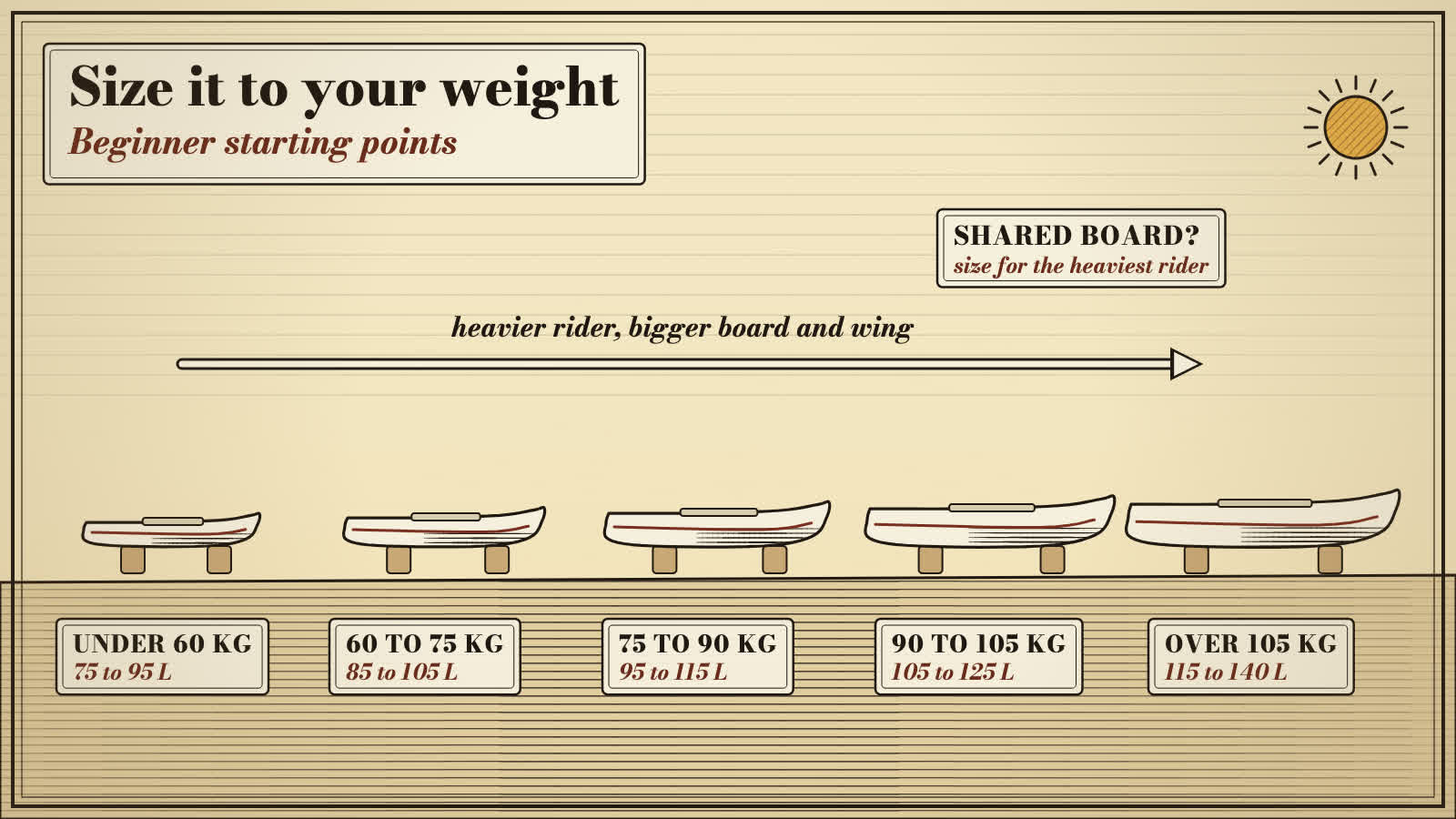
Fliteboard's wing guide says beginners should start on a larger wing, and that confident or lighter riders may move down. It gives no exact weight or skill point for the change. For beginner wing sizes by rider weight, see how to choose an e-foil.5
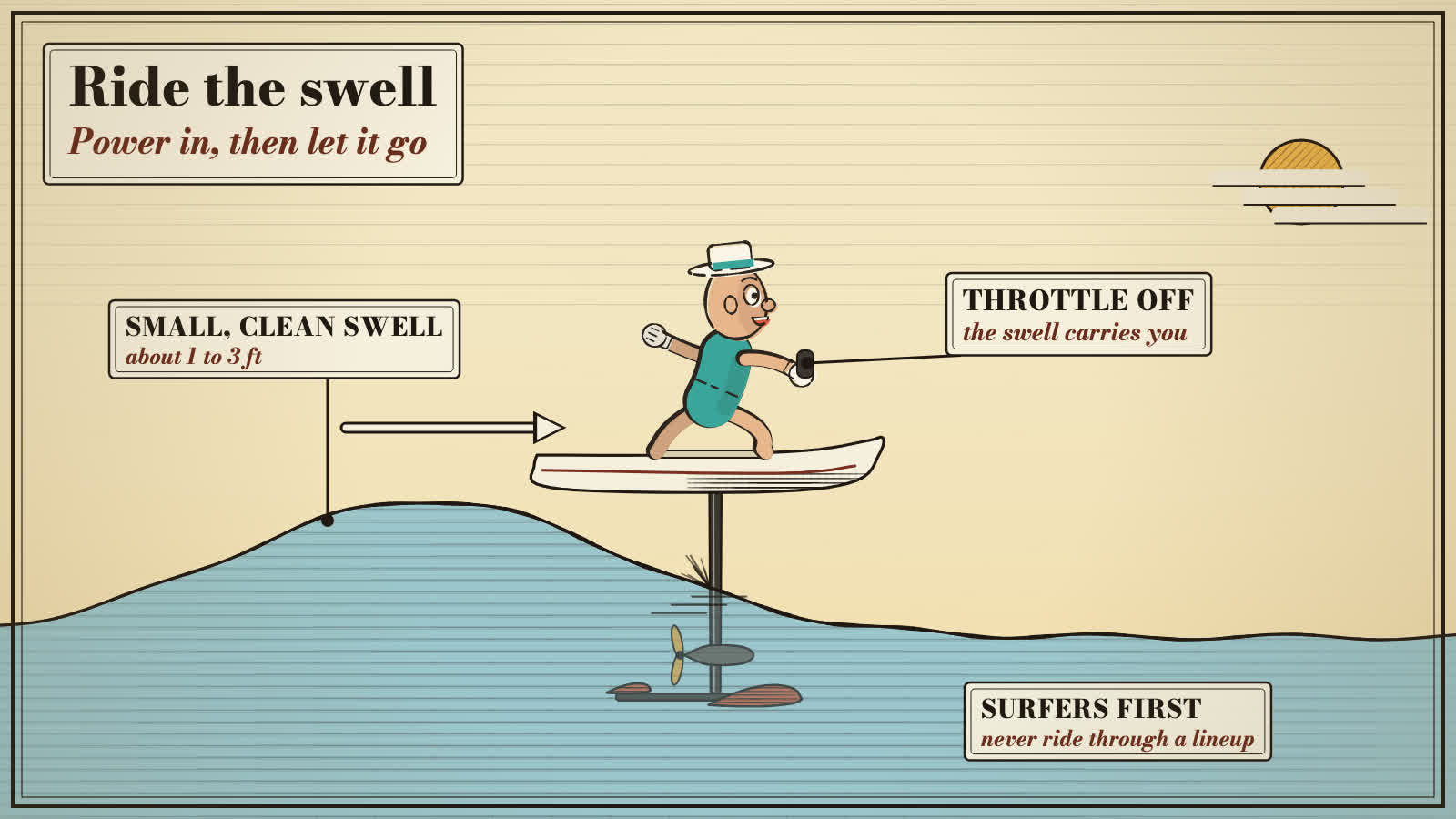
A good sign you are ready: you can hold your height, touch-and-go, and carve both ways without breaching. Try the smaller wing on a calm day, and expect to need more speed to take off. After that, the next step is swell and small waves.
Stabilizer shims
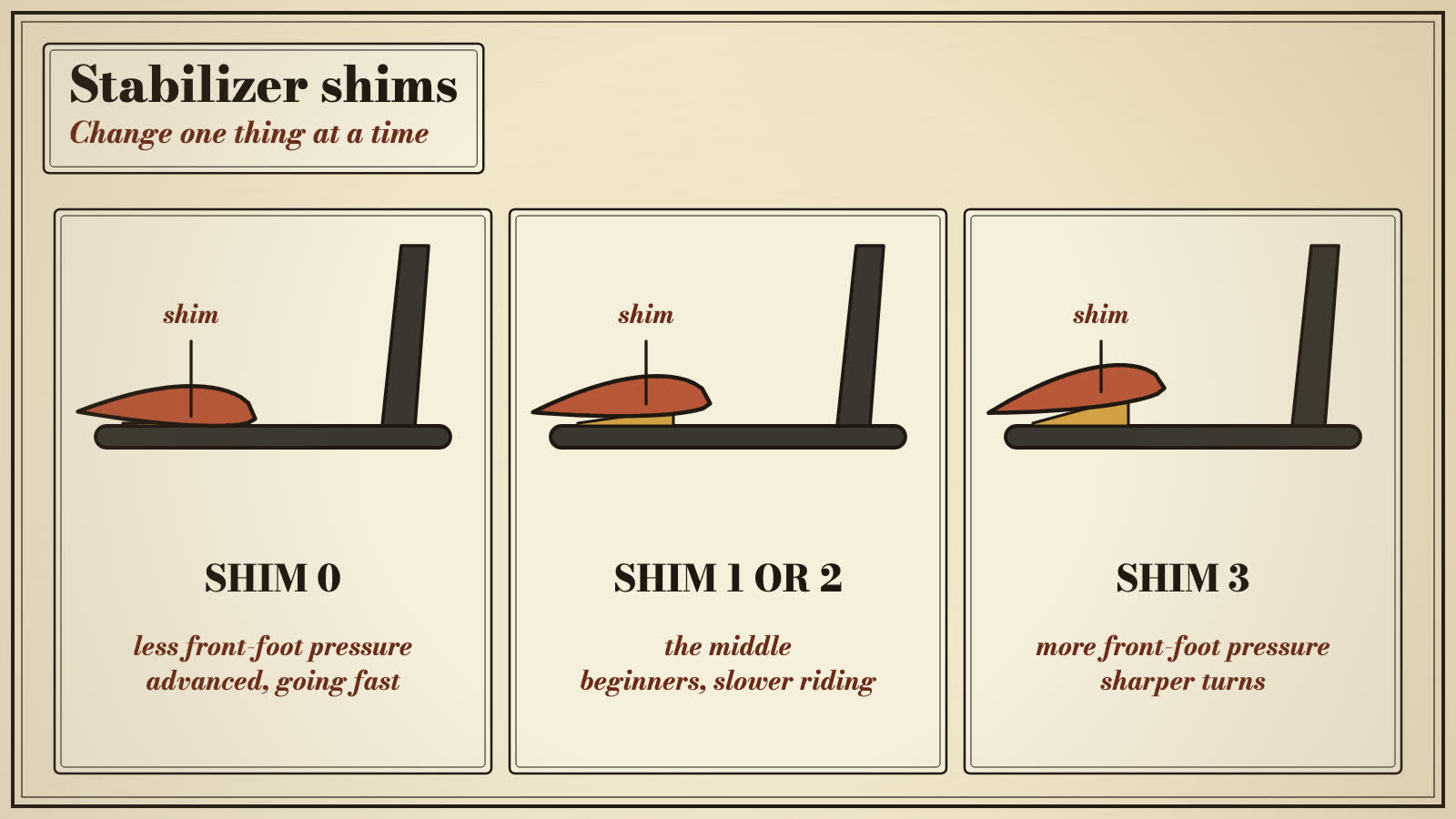
Fliteboard says it is the only e-foil range with an adjustable rear wing (stabilizer). It says its boards come with four shims in a 0 to 3 range. A higher shim adds front-foot pressure and turning response. A lower shim takes front-foot pressure off, especially at speed. Fliteboard suggests shim 1 or 2 for beginners and slower riding, and 0 or 1 for advanced riders going fast.5
Change one thing at a time, so you know what made the difference.
Straps can wait
Leave straps until your turns are steady. Waydoo says to follow your board maker and instructor, and not to add straps without understanding the entrapment and fall risks. Why to start without them is in your first e-foil ride.2
Practice plan
- One skill per session. Waydoo suggests trying a move three or four times, then going back to normal riding to reset.1
- Stop when your balance fades. Tired legs make sloppy turns.1
- Leave room. Practice well away from people and other craft. How much room, and why, is in e-foil propeller safety.
Common mistakes
- Turning with the feet only. Look and lean with your whole body.
- Dropping speed in the turn. A touch of throttle keeps the foil flying.
- Moving to a small wing too soon. Master height and turns on the wing you have first.
FAQ
How do you turn on an e-foil?
Look where you want to go, then lean your whole body gently into the turn. Fliteboard team rider Justin Chait advises against steering with toe and heel pressure. Start wide, and Waydoo suggests small throttle changes to hold your speed.4,1
Why does my e-foil keep breaching?
Usually you are flying too high or leaning too far. When the front wing reaches the surface, it loses lift. Waydoo says to reduce throttle and shift your weight forward to push the wing back down.1
What size e-foil wing should I use for carving?
Waydoo suggests a mid-size front wing of about 1,200 to 1,500 cm² for a balance of lift and agility. Heavier riders often do better with a larger one. Check your brand's wing guide.1
What does a stabilizer shim do on an e-foil?
It changes the angle of the rear wing. On a Fliteboard, a higher shim adds front-foot pressure and turning response, and a lower one reduces front-foot pressure at speed.5
Keep learning
Sources
Facts checked against the sources below in November 2026.
- Waydoo, Top eFoil tricks from beginner to advanced waydoo.com ↩
- Waydoo, How to eFoil waydoo.com ↩
- 33 CFR 83.05, Rule 5 (look-out) law.cornell.edu ↩
- Fliteboard, Top 6 eFoil tricks fliteboard.com ↩
- Fliteboard, Which eFoil wing is right for me fliteboard.com ↩