 Foilopedia
Safety · Self-rescue and rescue
When something goes wrong on an e-foil
An e-foil gives you a motor, so it is easy to forget you are still on a board in open water. Sooner or later the motor will stop when you don't expect it. The fix is simple: let go, switch off, lie down and paddle. Plan every session so that paddle is short.
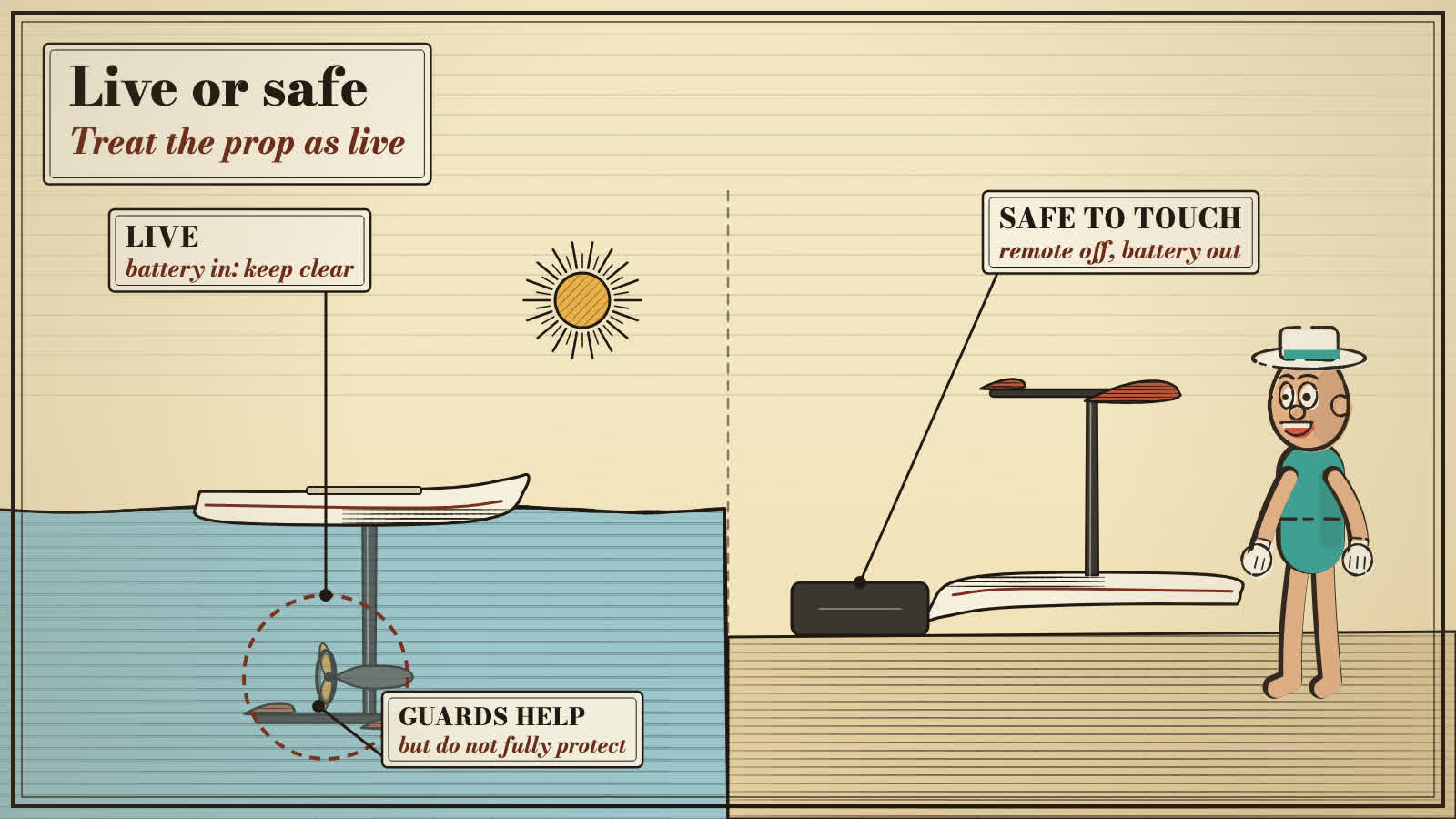
Propeller habits are in e-foil propeller safety, and the general basics are in foil safety.
Plan so you can always get back
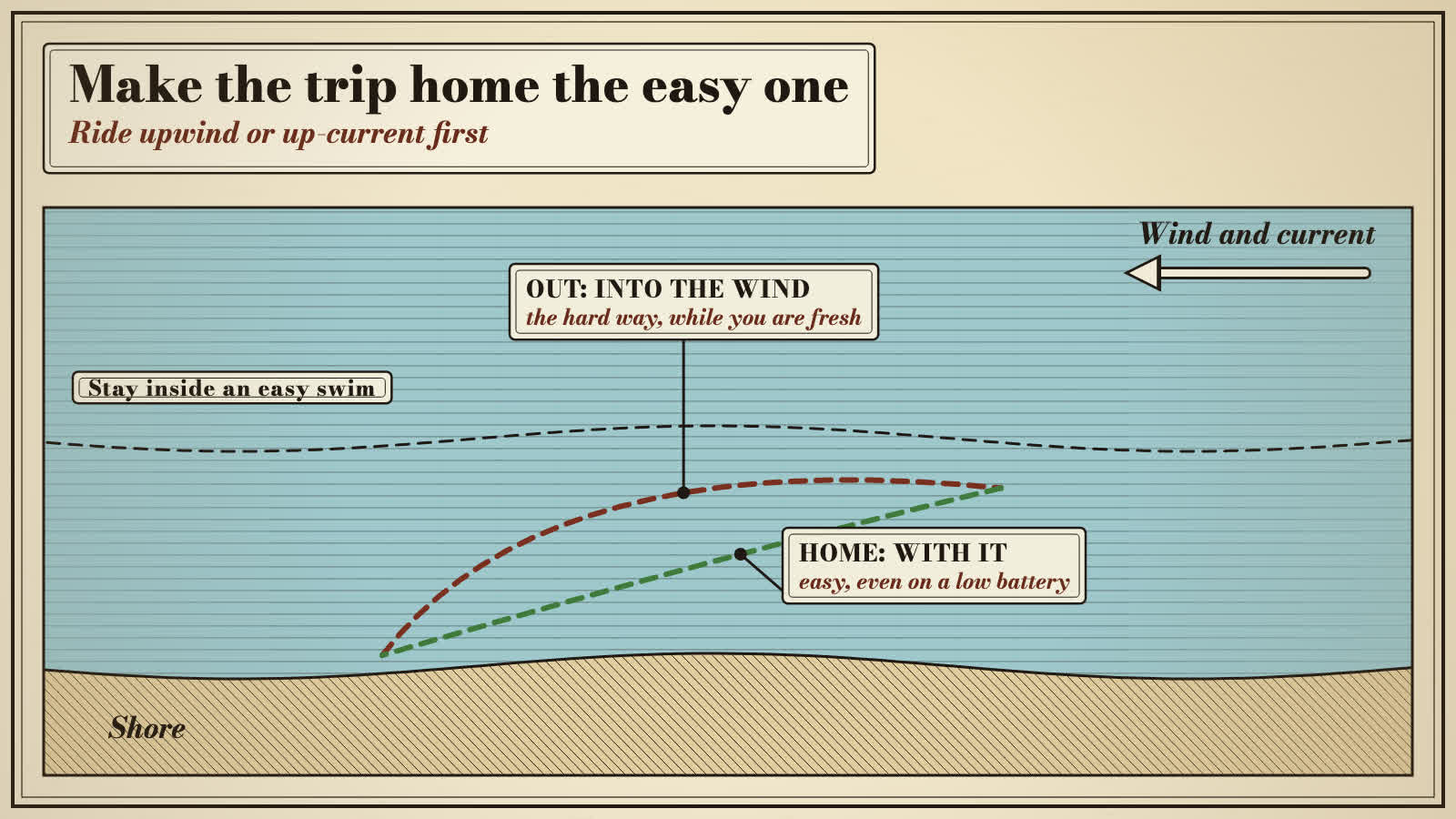
- Don't go farther than you can swim back. Fliteboard says you shouldn't fly out farther than you're willing to swim back. MACkite says never go farther offshore than you can swim in the current conditions.1,2
- Ride with a buddy. MACkite says to always e-foil with someone else, so you have a backup if something goes wrong.2
- Tell someone your plan. WA's Department of Transport says to check the weather and tides, check your safety gear, and tell someone your plans before you leave.3
- Turn back at the low-battery warning at the latest. MACkite warns not to ignore it and head farther offshore. Earlier is better.2
- Watch the wind and current. If they push you away from shore, paddling back takes far longer. Ride upwind or up-current first, so the trip home is the easy one.
Beginner tip: stay within an easy few minutes' swim of shore until you have done a full paddle back on purpose. Practice it once on a calm day.
The battery runs low
Most e-foils warn you before they quit.
- Waydoo says the light in the middle of the board starts flashing when the battery runs down to 20%.4
- MACkite says that on a Waydoo below 20%, the board goes into a low-power safety mode. The remote's battery icon turns red, the battery beeps, and power and speed drop.2
Your board may warn you differently. Learn its signals from the manual. When you see the warning, turn for shore right away at a steady, moderate speed. Don't sprint, and don't head farther out. If the board drops into low-power mode and won't fly, lie down and ride in at low throttle, or paddle if the motor stops.2
The remote loses signal
A dropped link usually stops the motor. Fliteboard says its motor shuts off if the controller goes out of range or under water.5
Aerofoils lists two common causes:
- A low battery in the remote or the board. Check both.6
- Too long or too deep under water. The signal can drop if the remote and board stay submerged too long or too deep.6
Hobbywing suggests checking whether the Bluetooth icon on the remote is flashing. If it is, restart the battery and pair again.7
When the motor stops: what to do
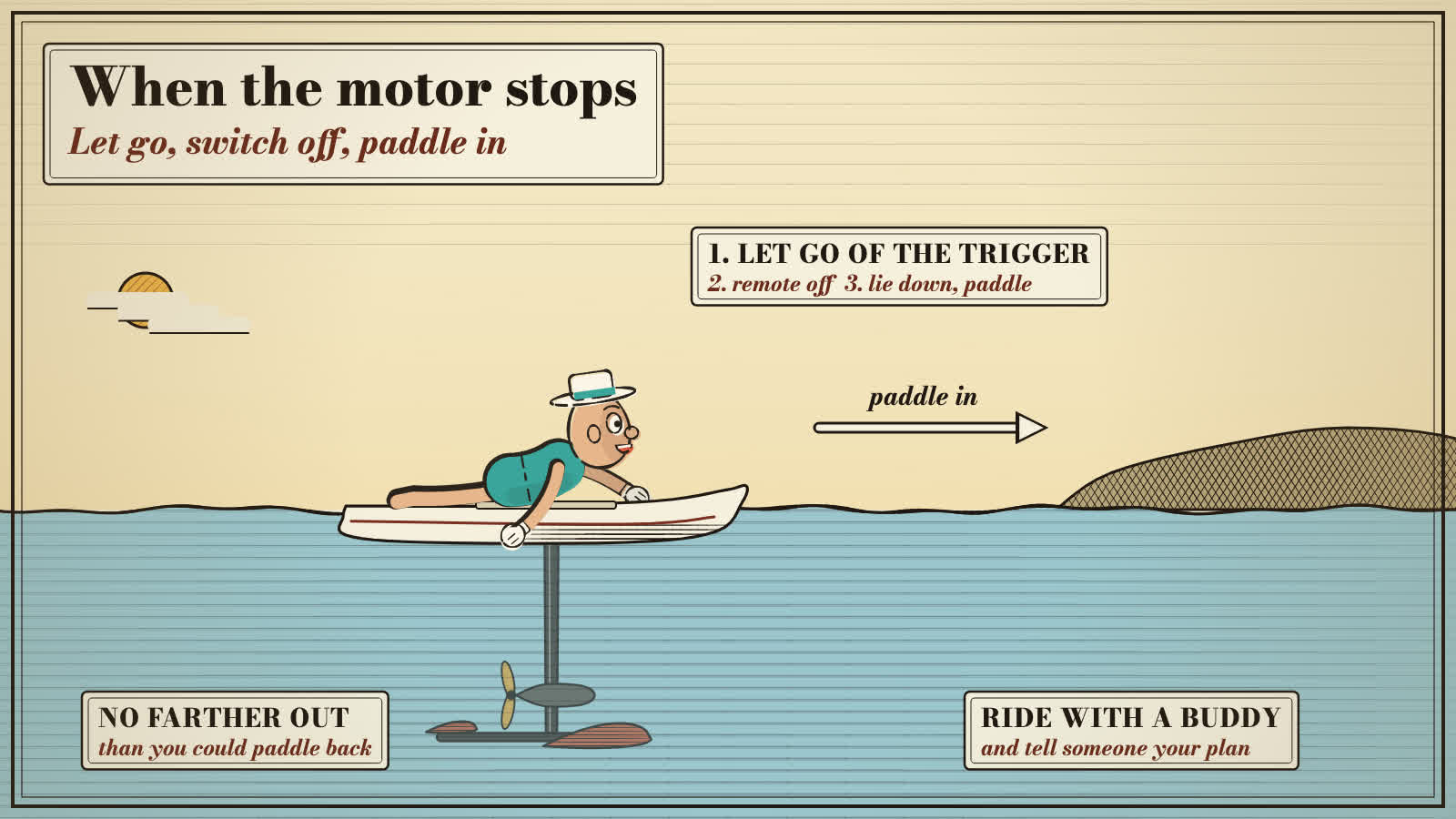
Hobbywing and Waydoo give the same steps for remote and power problems:7,4
- Release the trigger at once.
- Turn the remote off.
- Lie flat on the board.
- Paddle back to shore with both hands.
Try one restart and re-pair while lying on the board. If a quick re-pair doesn't fix it, stop trying and paddle in. Stay with the board: it floats, and it is much easier to see than a swimmer.
Aerofoils says that if the e-foil switches off while riding, get back to shore as soon as possible. Then open the battery compartment, check that the data line is plugged in properly, and check the remote for error messages.8
If the battery overheats or smokes
If the battery shows an over-temperature warning, stop. Hobbywing says to stop and wait for it to cool down. Never charge a battery that overheated or looks damaged: see e-foil battery care.7
Hissing, cracking or popping sounds are warning signs, and if it smokes, a fire may already have started. New York's emergency services office says to stop using the device and turn it off, leave the area, and call 9-1-1 if it is smoking. On the water, that means: get off, move away upwind of the board, and signal for help.9
When to call for help
Signal early, not once you are exhausted. Call for help if you are drifting away from shore, can't make progress paddling, are getting cold, or are hurt.
- A whistle. The US Coast Guard says e-foil riders should carry a sound-producing device. A whistle on your vest is the easy way.10
- Your buddy, waving with both arms, or a phone in a waterproof case.
- A beacon if you go farther out. In Western Australia, riders of boards over 4.5 kW must carry an EPIRB or wear a PLB when more than 400 m (about 1,300 ft) from shore in unprotected waters. Rules elsewhere differ. See e-foil rules.3
Cold water
Cold water is dangerous long before it is icy. The US National Weather Service says cold shock can be dangerous at 50 to 60 °F (10 to 15 °C). The gasp reflex can start in water as warm as 77 °F (25 °C).11
The Canadian Safe Boating Council (CSBC) explains it with the 1-10-1 principle:12
- 1 minute: cold shock. A sudden gasp, then fast breathing. Focus on calming your breathing.
- 10 minutes: you start to lose the use of your fingers, arms and legs. Swimming gets hard.
- 1 hour: even in ice water, it can take about an hour for hypothermia to knock you out.
What that means on an e-foil:
- Wear a life jacket. CSBC says a life jacket is critical in that first minute, to keep you afloat and breathing. An impact vest protects you from hits, but check its label to see whether it is a rated flotation device.12
- Dress for the water, not the air. Wear a wetsuit thick enough for the water temperature.
- Stay on the board. Out of the water is warmer than in it.
- If you must wait in the water, the Weather Service suggests the H.E.L.P. position: knees to your chin, legs together, arms tight to your sides, head out of the water. With others, huddle together.11
FAQ
What happens if an e-foil battery dies on the water?
The motor stops and you are back on a floating board. Release the trigger, turn the remote off, lie on the board and paddle in with both hands. Most boards warn you first. Waydoo's flashes a light at 20%.4
Why does an e-foil remote lose connection?
Often a low battery in the remote or the board, or the remote and board being under water too long or too deep. Fliteboard's motor also stops if the remote goes out of range.6,5
How far from shore can you ride an e-foil?
No farther than you can swim or paddle back in the current conditions. That is the advice from both Fliteboard and MACkite. Ride with a buddy and tell someone your plan.1,2
Is it safe to e-foil in cold water?
It can be, with the right gear and a short range. Cold shock can hit at 50 to 60 °F (10 to 15 °C), so wear a wetsuit and a life jacket, and stay close to shore.11
Keep learning
Sources
Facts checked against the sources below in November 2026.
- Fliteboard, How to eFoil: a step-by-step guide fliteboard.com ↩
- MACkite, eFoil safety tips while riding your Waydoo mackiteboarding.com ↩
- WA Department of Transport, Electric hydrofoil transport.wa.gov.au ↩
- Waydoo, FAQs waydoo.com ↩
- Fliteboard, eFoil safety: how Fliteboard is designed for safer riding fliteboard.com ↩
- Aerofoils, Remote control service.aerofoils.de ↩
- Hobbywing, Faults and solutions sports.hobbywing.com ↩
- Aerofoils, Battery and e-foil service.aerofoils.de ↩
- New York State DHSES, Lithium-ion battery fire warning signs dhses.ny.gov ↩
- US Coast Guard, CG-BSX Policy Letter 22-02, CH-1 uscgboating.org ↩
- US National Weather Service, Cold water safety weather.gov ↩
- Canadian Safe Boating Council, 1-10-1 principle csbc.ca ↩