 Foilopedia
Disciplines · Wind-powered
Wing foiling: what it is and how it works
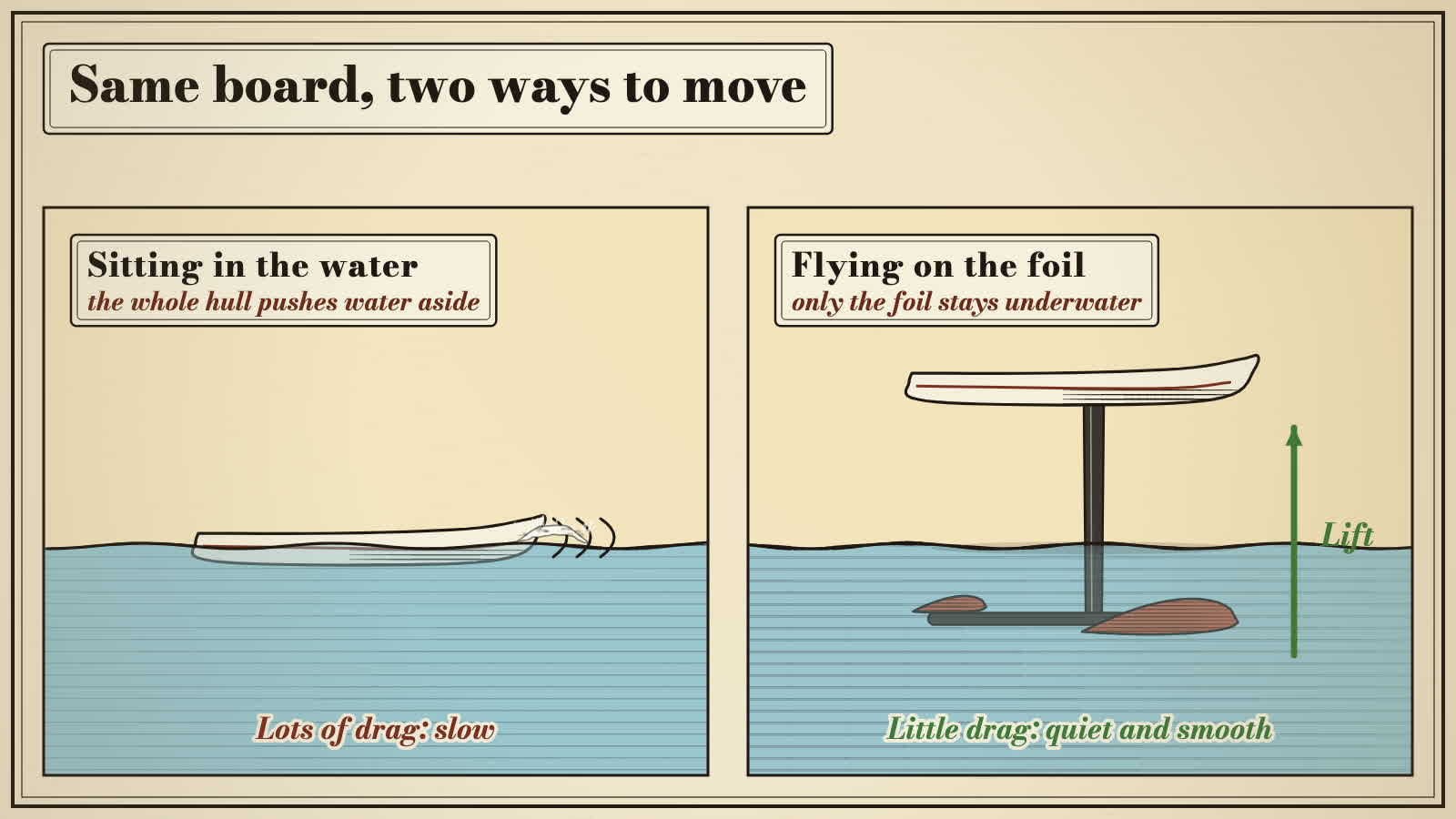
Wing foiling is riding a foil board powered by a small inflatable wing that you hold up to the wind with both hands. The wing has no lines and isn't attached to the board. Once you go fast enough, the hydrofoil under the board lifts you clear of the water.
One large US school, REAL Watersports, calls wing foiling its complete beginner path and steers most new foil students to it, or to e-foil or surf foil coaching, before kite foiling.1
One word causes most of the confusion: "wing". In this sport it means the hand-held sail. The underwater part is the foil, and it has its own front wing.
At a glance
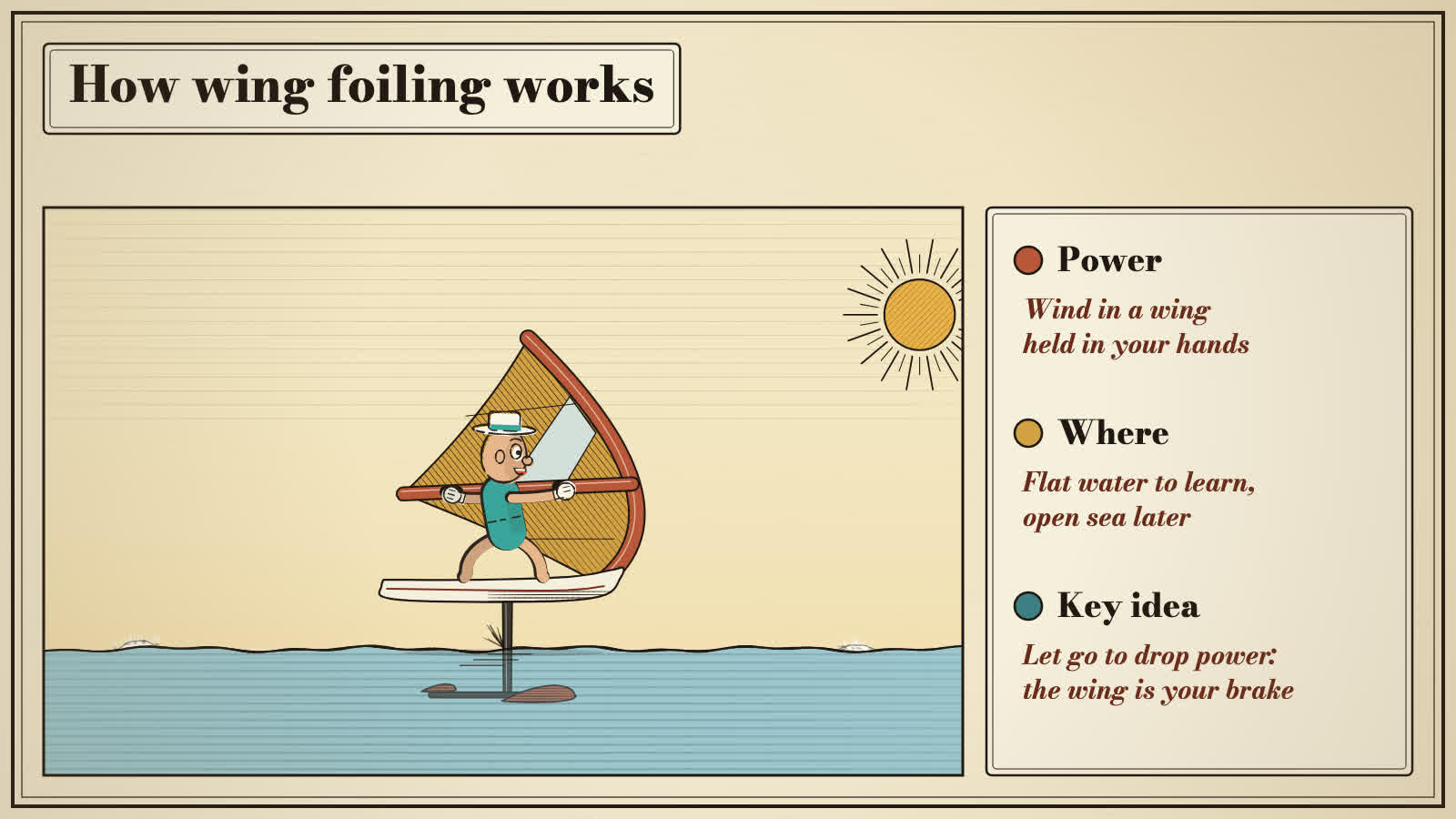
- Power: wind, caught by a wing you hold in your hands
- Where: flat water, lakes and bays to learn; open sea and waves later
- Learn from zero? Yes, with a lesson
- Typical first step: a lesson, often starting on a big board without the foil
- Gear to start: wing, big foil board, foil, leashes
- Closest relatives: kite foiling, parawing foiling
How it works
The wind fills the wing and pulls on your arms. You lean against it like a windsurfer, and when the board is fast enough, the foil lifts it out of the water. The foil itself works the same in every sport: see how a hydrofoil works.
Getting up is not a smooth glide. You build speed with the wing, help the board along with your legs and the wing, then the foil takes over. Once you are flying, you need much less power.
The wing is also your brake. Ease the back hand off and the power drops. Let go with the back hand and the wing flags out from your front hand, with almost no pull. Let go with both hands and it floats on its leash.
The sport is young. Wing-like rigs date back to the 1980s. Slingshot's Tony Logosz tried inflatable hand-held wings around 2012. The modern boom started on Maui in 2018: Ken Winner, now a Duotone designer, watched Flash Austin foil with an aluminum-framed wing that March and tried his first self-built inflatable wing that June.2
You only need wind; waves are a bonus. Many riders stay on flat water, and some use the wing to get out to open-ocean swell, then ride the bumps with the wing flying loose and powerless, like a flag.
The gear
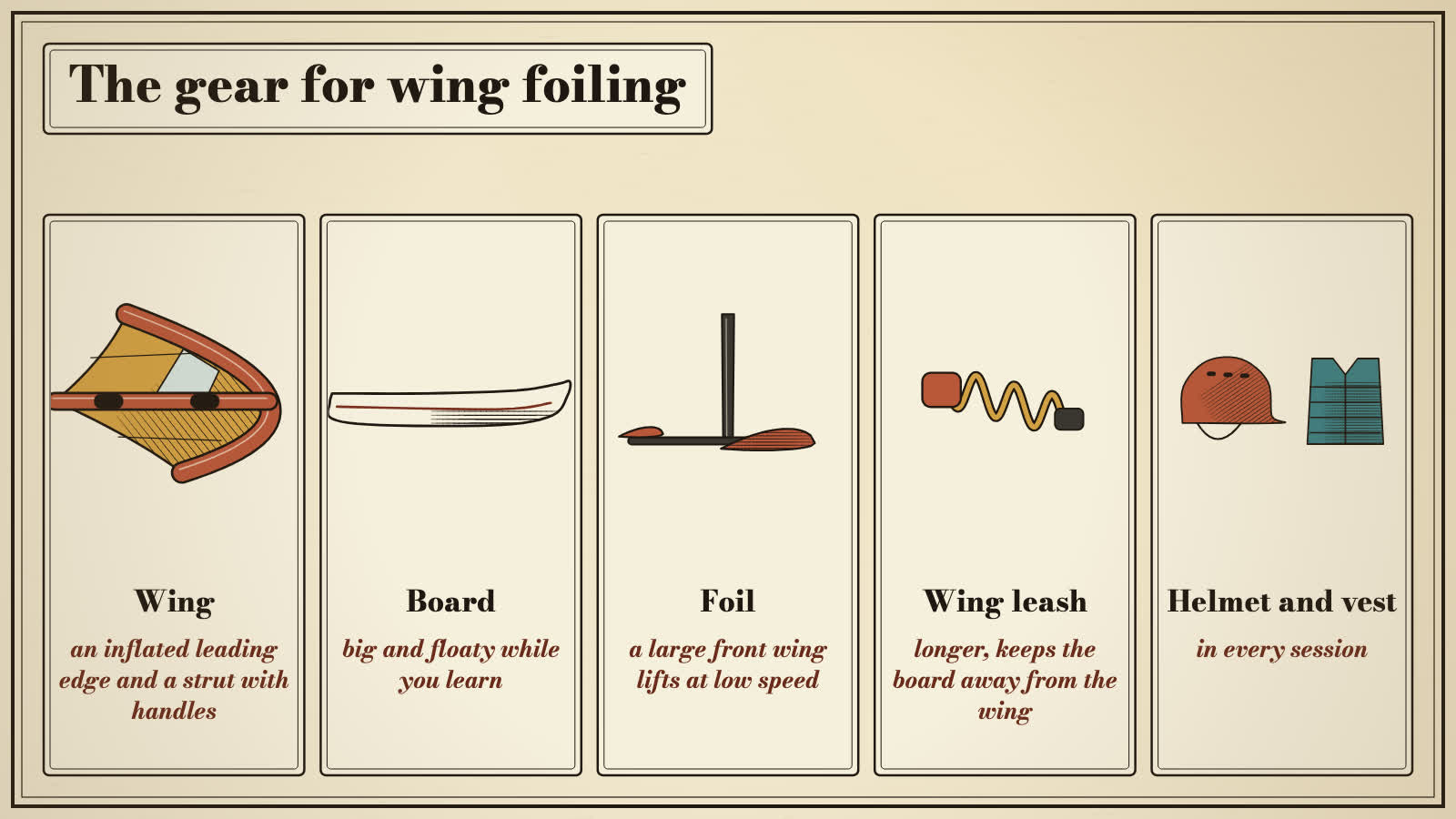
- The wing. An inflated front edge (the leading edge) and a stiff center bar, the strut or boom, that you hold by its handles.3
- The board. Beginners start big and floaty, because the board has to hold you up until the foil lifts. Sizes and rules of thumb are in your first wing foil session.
- The foil. A large front wing that lifts at low speed. Read how a hydrofoil works for why bigger is easier.
- Leashes. Slingshot recommends a wing leash, plus a board leash where your spot and instructor call for it. The wing leash is longer, so the board and foil are less likely to bounce into your wing when you fall.4
- Safety gear. Helmet and impact vest, covered in foil safety basics.
How it differs from other kinds of foiling
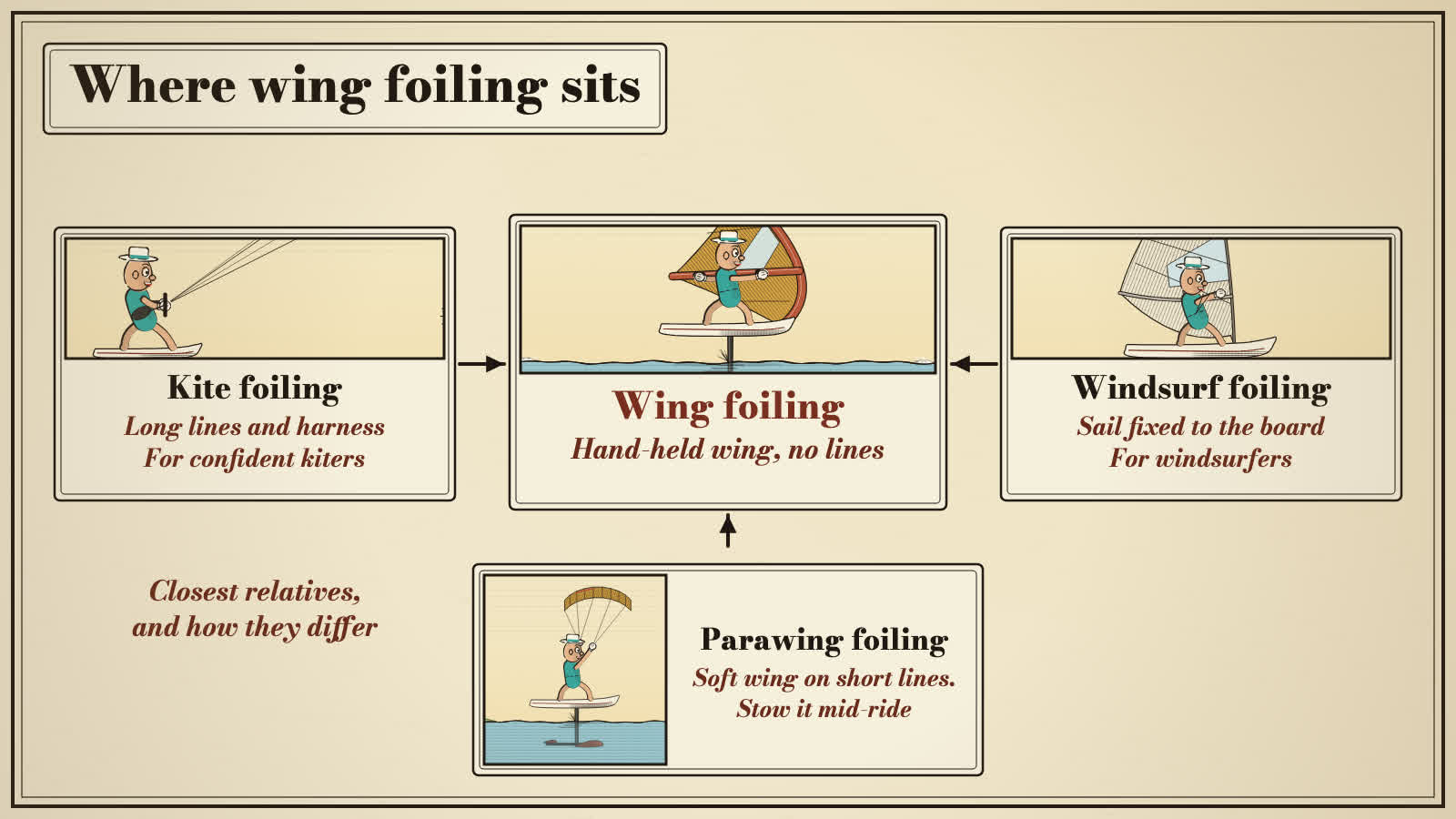
Wing foiling vs kite foiling
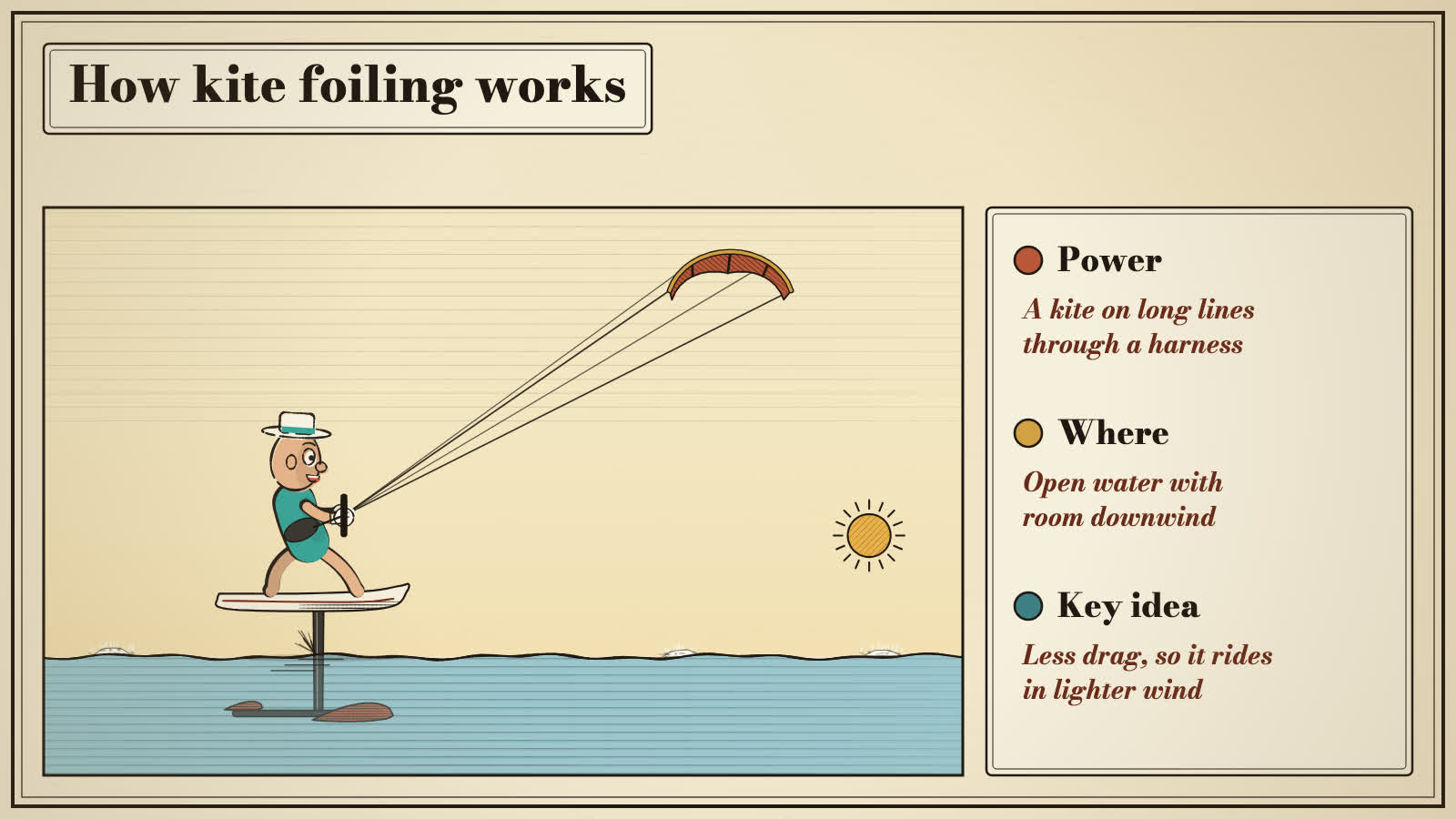
A kite flies high above you on long lines, and you hang from it with a harness. A wing is close to you, in your hands, with no lines at all. Kite foiling is a specialty for confident kiters who can already stay upwind, says REAL Watersports, and most new foil students are better off starting elsewhere. Full guide: kite foiling.1
Wing foiling vs windsurf foiling
A windsurf sail is fixed to the board through a mast foot, so the board and rig move as one. A wing is free: you can turn it, lift it out of the way or let it fly loose. Windsurf foiling suits people who already windsurf. Full guide: windsurf foiling. Sailors fly too: see foiling sailboats.
Wing foiling vs parawing foiling
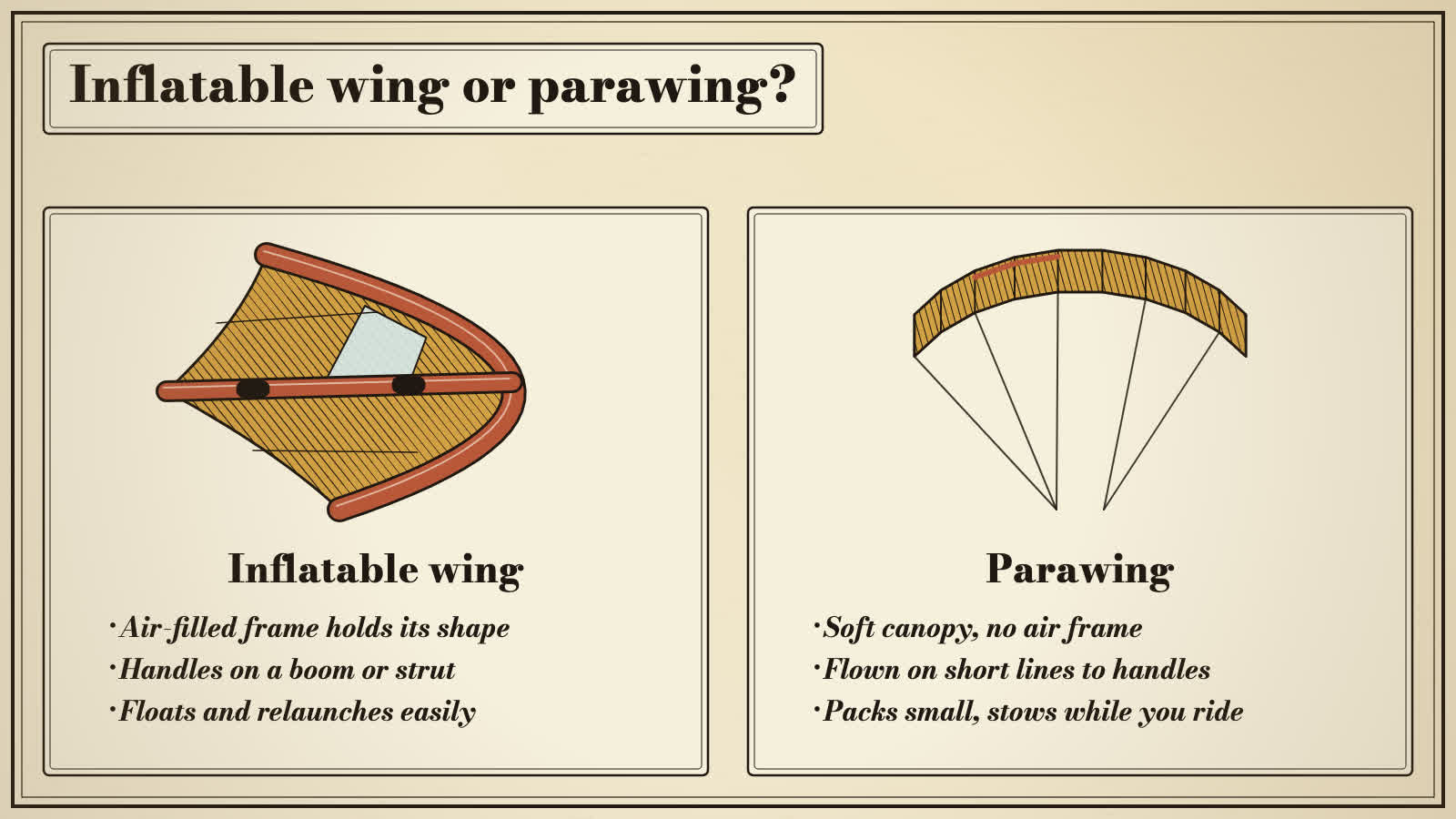
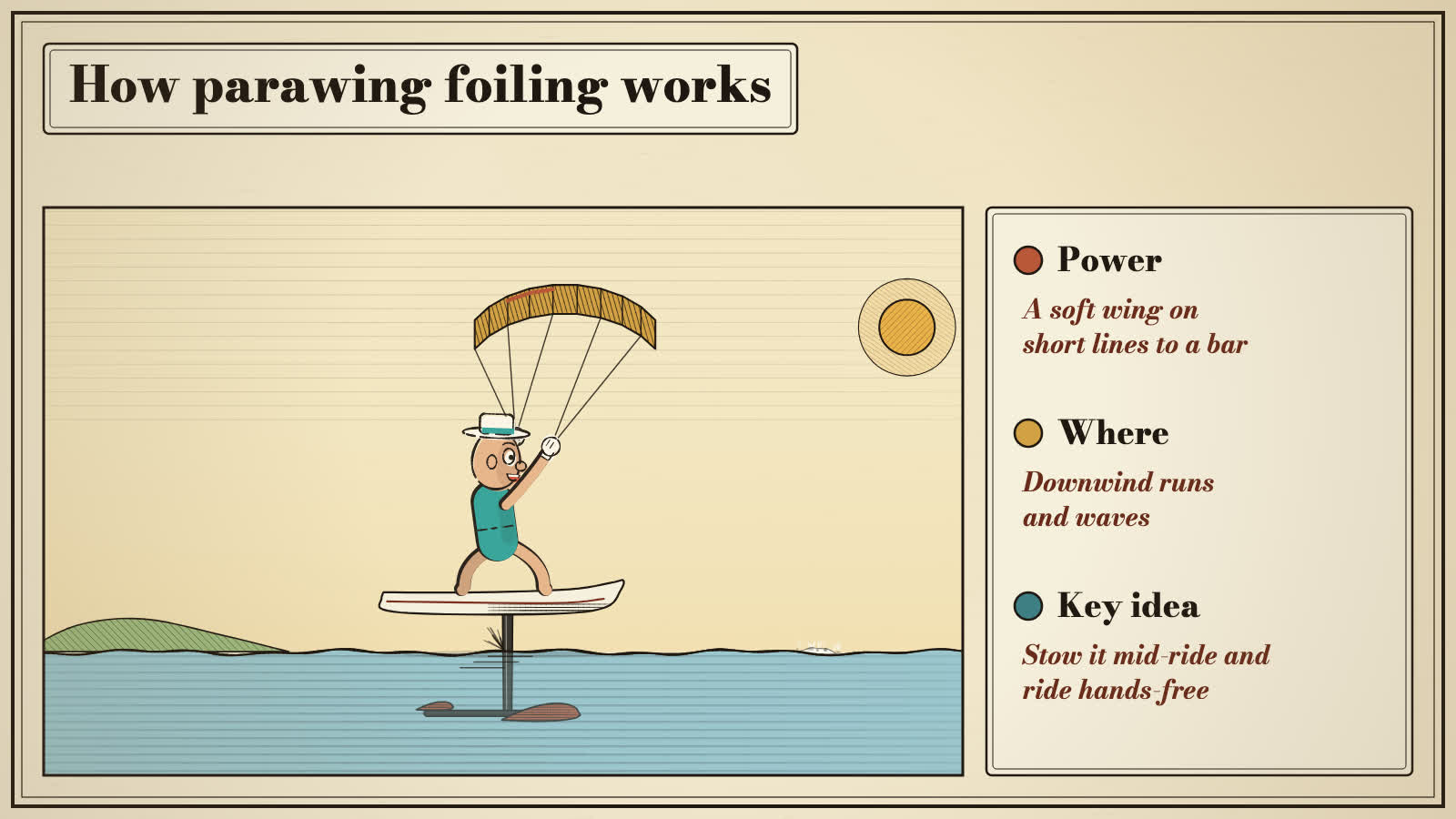
A parawing has no frame: it flies on lines, and you can stuff it into a belt while you ride. The inflatable wing is easier to learn and better for cruising and light wind. We compare them side by side in parawing or wing, and the parawing has its own guide: parawing foiling. Many riders also use a wing to start a downwinder: see downwind foiling.
Who it suits
Wing foiling is a good fit if you:
- want a wind sport with no lines and gear that packs small
- already windsurf, kite, surf or pump foil: those skills carry over
- live near a lake, bay or beach with regular, steady wind
Probably not your first foil sport if:
- your local water has almost no wind, or only gusty, offshore wind
- you want to ride without any wind at all (look at e-foiling or pump foiling)
Getting started: lessons, renting, buying
Lesson or not? Yes. Slingshot's beginner guide says a lesson from a local wing foil school or certified instructor is the best thing you can do before you buy gear.4
Where to find one. Look for a wing or kite school near flat water. Many kite schools teach wing foiling too, and some put you on an e-foil or behind a boat first so you learn to fly before you add the wing.
Rent or buy? Rent first. School gear is sized for learners, and you will change sizes as you improve.
What to buy first. Usually the wing and safety gear. The beginner board is what you outgrow first, so borrow it or buy it used. MACkite's learning don'ts are gear you have to grow into, waves, and wind under about 15 mph (13 knots).5
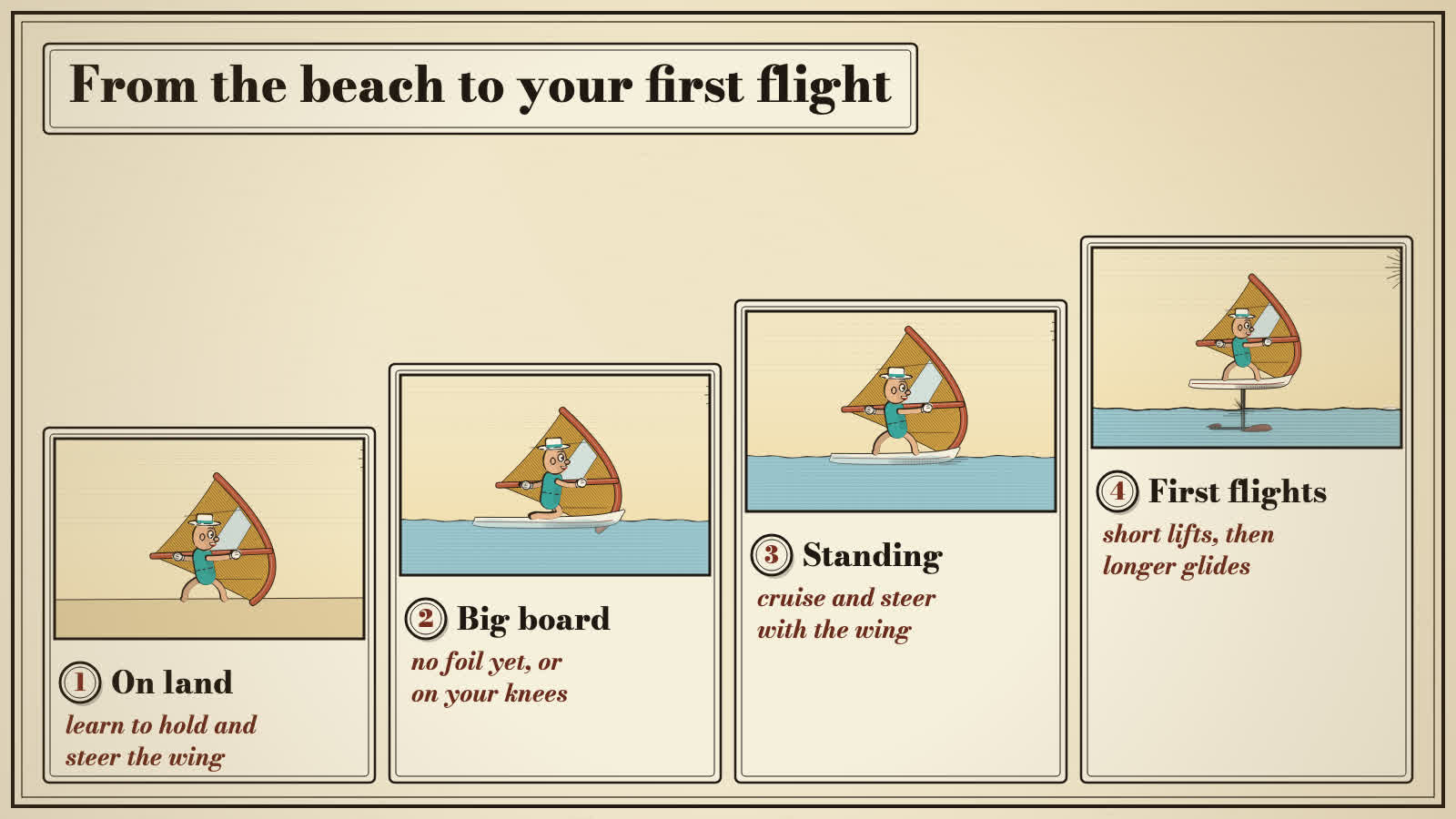
What your first sessions look like. You may start on a big board with no foil, learning to steer the wing and get upwind. That is called wingsurfing, and the RYA says confident wingsurfers can then progress to foiling.3
Then come short lifts on the foil, longer glides, and finally riding back and forth on foil. How long that takes is in your first wing foil session.
Safety notes
The basics are the same in every kind of foiling: read our foil safety guide. On top of those:
- Offshore wind and drifting. You drift downwind while you learn, and offshore wind carries you away from land. Spot advice is in your first wing foil session.
- Look before you turn. The wing hides what is downwind of you. Look under it or through its window before you turn or bear away (turn away from the wind), and keep clear of kiters and swimmers.
- Waves later. Wave riding comes after you can foil comfortably on flat water. MACkite lists waves among its don'ts for learners.5
- Two leashes, two lengths. If you use both, give the wing the longer one.4
Not sure this is the one? Compare every kind on what is foiling.
FAQ
Is wing foiling easier than kitesurfing?
For most people starting foiling from zero, yes. There are no long lines, harness or launch helper, and REAL Watersports steers most new foil students to wing, e-foil or surf foil coaching before kite foiling.1
How much does it cost to start wing foiling?
You need a wing, a board, a foil and safety gear, so it costs more than most board sports. Start with lessons and rentals, and buy once you know what sizes suit you.
Can you wing foil without a foil?
Yes. Using the wing on a board without a foil, such as a windsurf board with a centerboard or a WindSUP (a paddleboard with a center fin), is called wingsurfing. It is a common first step before you add the foil.3
Do you need a lesson to learn wing foiling?
It is strongly recommended. An instructor picks the conditions, sizes your gear and gets you past the slow early stages faster.4
Keep learning
Sources
Facts checked against the sources below in November 2026.
- REAL Watersports, Foiling lessons and FAQ realwatersports.com ↩
- Source surf-magazin.de ↩
- RYA, Winging: what is it and how do I get started rya.org.uk ↩
- Slingshot Sports, A beginner's guide to wing foiling slingshotsports.com ↩
- MACkite, Wing foiling: how hard is it to learn mackiteboarding.com ↩