 Foilopedia
Level 2 · Pick your sport
Parawing or wing: what is different, and which to learn first
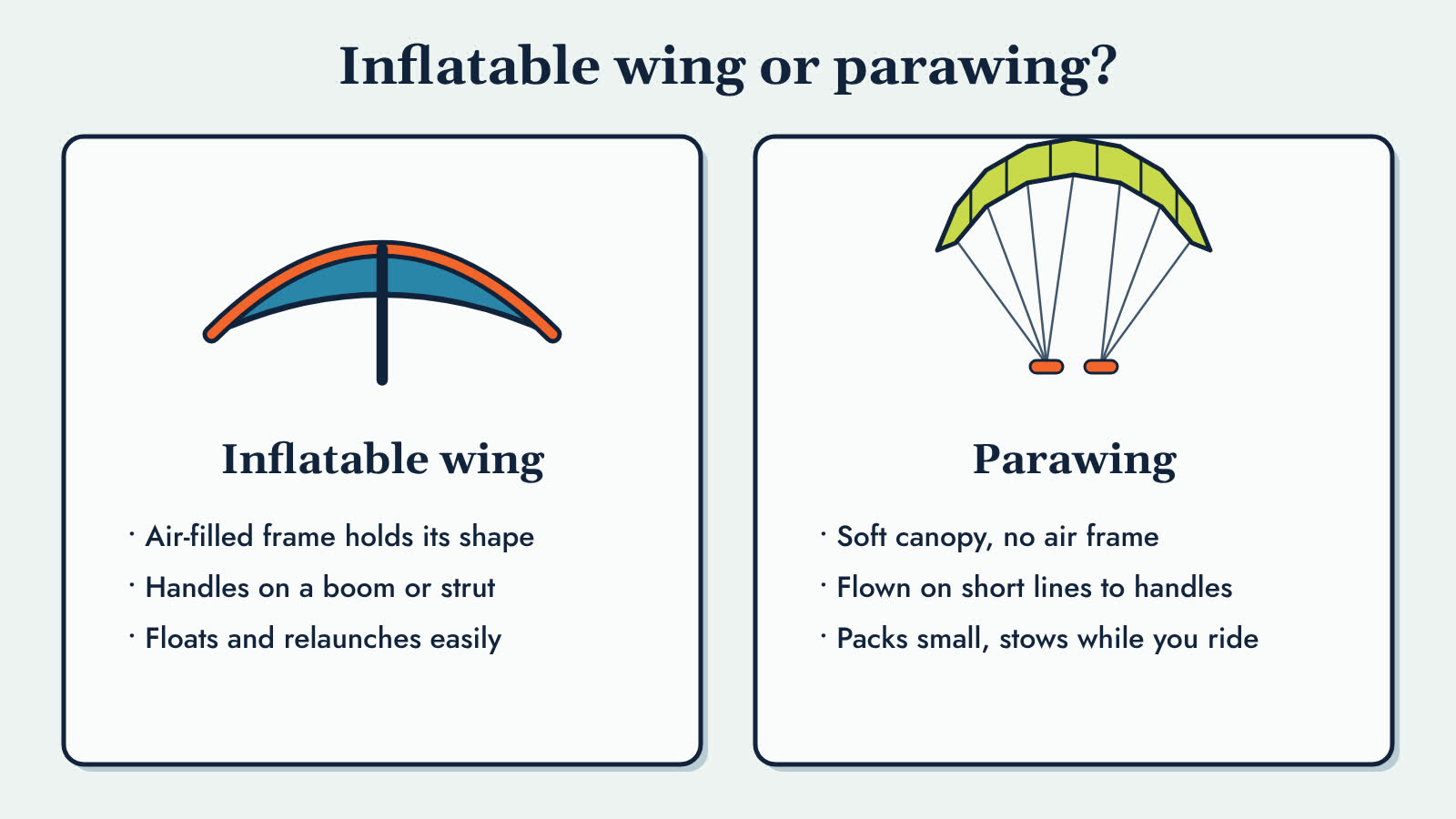
A parawing is a soft wing with no air-filled frame, flown on short lines to a bar, a bit like a small kite held close to you. Its big trick is that you can pull it in and pack it away while you are riding, then fly hands-free on swell or wind bumps and take it out again to ride back upwind.1
An inflatable wing is the one most people picture when they hear "wing foiling": a light wing with an air-filled frame and handles that you hold in your hands the whole time. Both pull you along with the wind. They feel very different.
How a parawing is built
There is no inflatable tube holding the shape. The canopy fills with wind like a paraglider, and lines run from its front edge to a bar you hold. The bar is color-coded so you always know which end is up.2
There are two main types. A single-skin canopy has one layer of fabric, packs smaller and is easier to restart from the water. A double-surface canopy is more stable in the air and usually better upwind.3
What a parawing is good at
- Downwind runs and waves. Once you are up on foil, you stow the wing and ride the bumps with nothing in your hands. That free feeling is why most riders buy one.1
- Pack size. It folds small enough to carry in a backpack or stow in a waist belt or vest pocket while you ride.3
- Getting to the good part. On a downwinder it replaces the hard paddle-up of a foil board, so you start riding bumps sooner.4
Where an inflatable wing is easier
- Light wind. A parawing has a narrower wind range and is very hard to use in light wind, because you can't pump it the way you pump an inflatable wing.1
- Going upwind. Only some parawing models go upwind well, and it is tiring on the arms.3
- Control and turns. The connection to a parawing is less direct, so it is less stable, turns and tricks are harder, and you are more often over- or underpowered.5
- Tangles. Lines can tangle, especially when you take the wing out while you are already foiling. An inflatable wing has no lines to tangle.3
- Cruising and freestyle. For riding back and forth on flat water, an inflatable wing is still the better tool.2
Which one to learn first
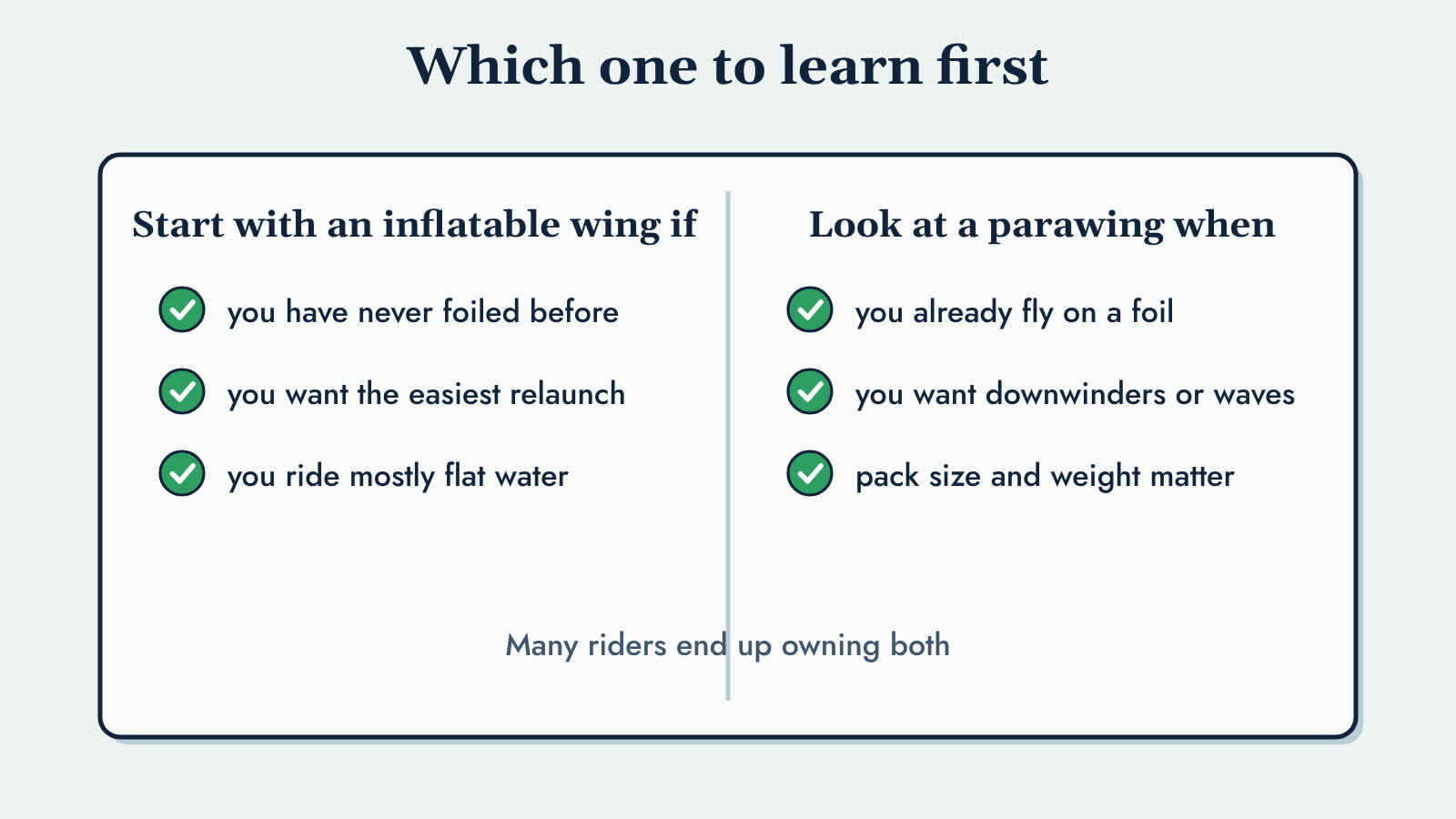
Learn to foil first, usually on an inflatable wing. Duotone recommends foiling experience before you try a parawing, and The Inertia's tester would not suggest it as anyone's first foil sport.5
If you can already foil, the parawing comes quickly. Parawing pioneer Balz Müller says riders with wing or pump foiling experience are flying within a few hours, though turns take longer.2
Beginner tip: new to foiling? Start with our guide to your first wing foil session. The parawing will still be there when you can fly.
Sizes and gear
- Parawing size: about the same size as your inflatable wing. Duotone suggests about half a square meter bigger while you are making the switch.3
- Board and foil: go a little bigger than you use for wing foiling, because a parawing gives less pull to get you up.3
- A stow system: a waist belt, vest or shirt with a pocket for the packed wing.
Safety with a parawing
- Use a straight board leash, not a coiled one. Coiled leashes catch the lines.2
- Start in steady wind on flat water, never in offshore wind, and practice launching and packing on the beach first.2
- If you let go, get to it quickly. A dropped parawing collapses and floats for a while, then starts to sink.3
- On long downwinders, carry a phone in a waterproof case and wear something bright.2
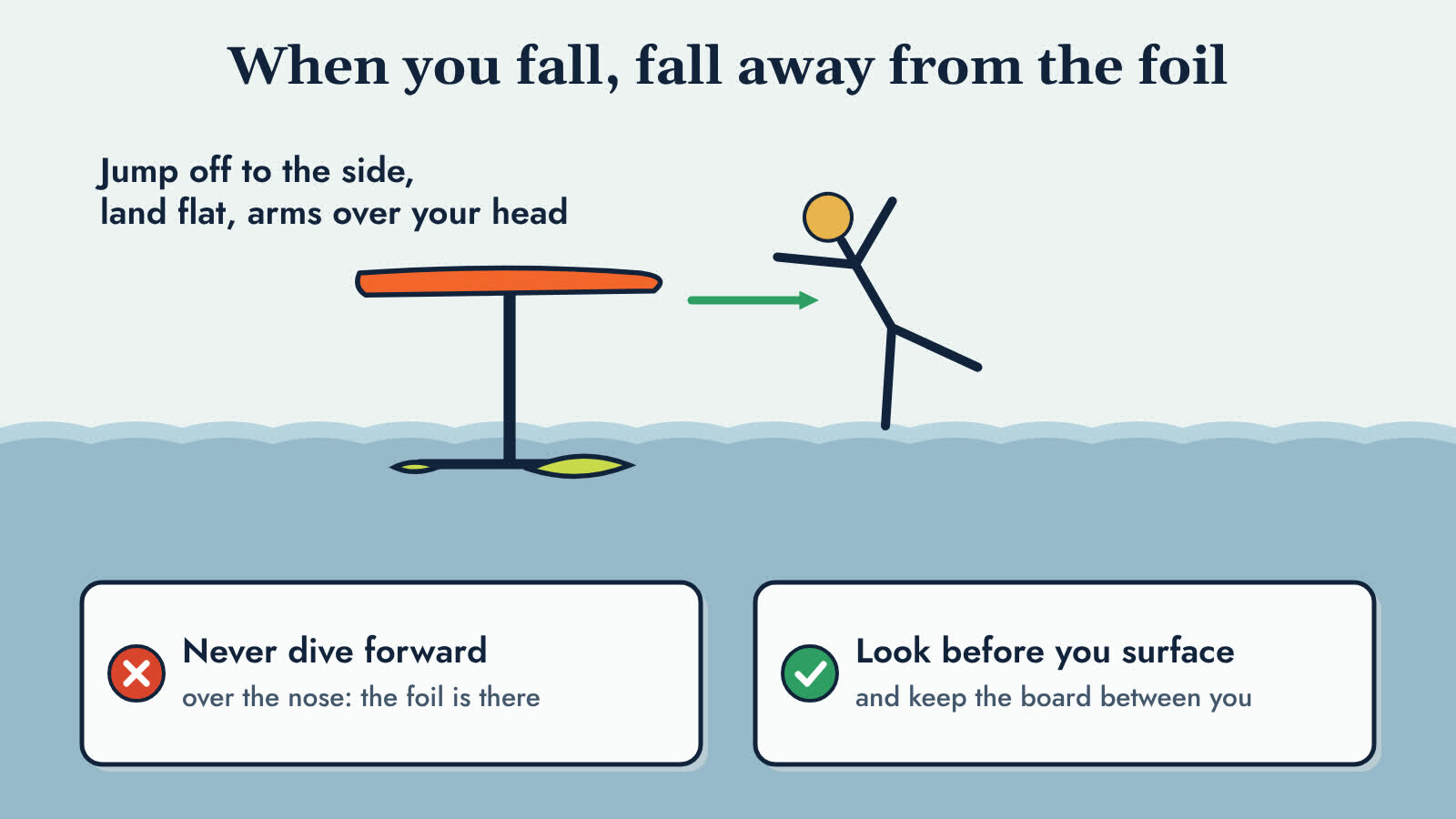
The general foiling rules still apply. Read our foil safety basics.
FAQ
What is a parawing?
A soft wing with no inflatable frame, flown on short lines to a bar. You can pack it away while you ride and take it out again when you need power.1
Can a beginner learn on a parawing?
It is not recommended. Learn to foil first, usually with an inflatable wing, then move to a parawing.5
What size parawing should I get?
About the same size as your inflatable wing, or about half a square meter bigger while you learn it.3
Can you go upwind on a parawing?
Some models can, especially double-surface ones, but it is harder work than on an inflatable wing.3
Keep learning
Sources
Facts checked against the sources below in November 2026.
- The Inertia, Parawing foiling explained theinertia.com ↩
- SURF magazine, Parawing basics from Balz Müller surf-magazin.de ↩
- Duotone, Parawings FAQ duotonesports.com ↩
- Duotone help center, Advantages and disadvantages of parawinging duotone-wing-and-foiling-helpcenter-copy.gorgias.help ↩
- Duotone help center, How difficult is parawinging compared to wing foiling duotone-wing-and-foiling-helpcenter-copy.gorgias.help ↩