 Foilopedia
Level 1 · Start here
What is foiling? The eight kinds, explained
Foiling is riding a board that has a small wing underneath it, on the end of a tall fin called a mast. Once you are moving fast enough, water flowing over that wing lifts the whole board out of the water, and you glide above the surface with only the mast and the wing underwater.1
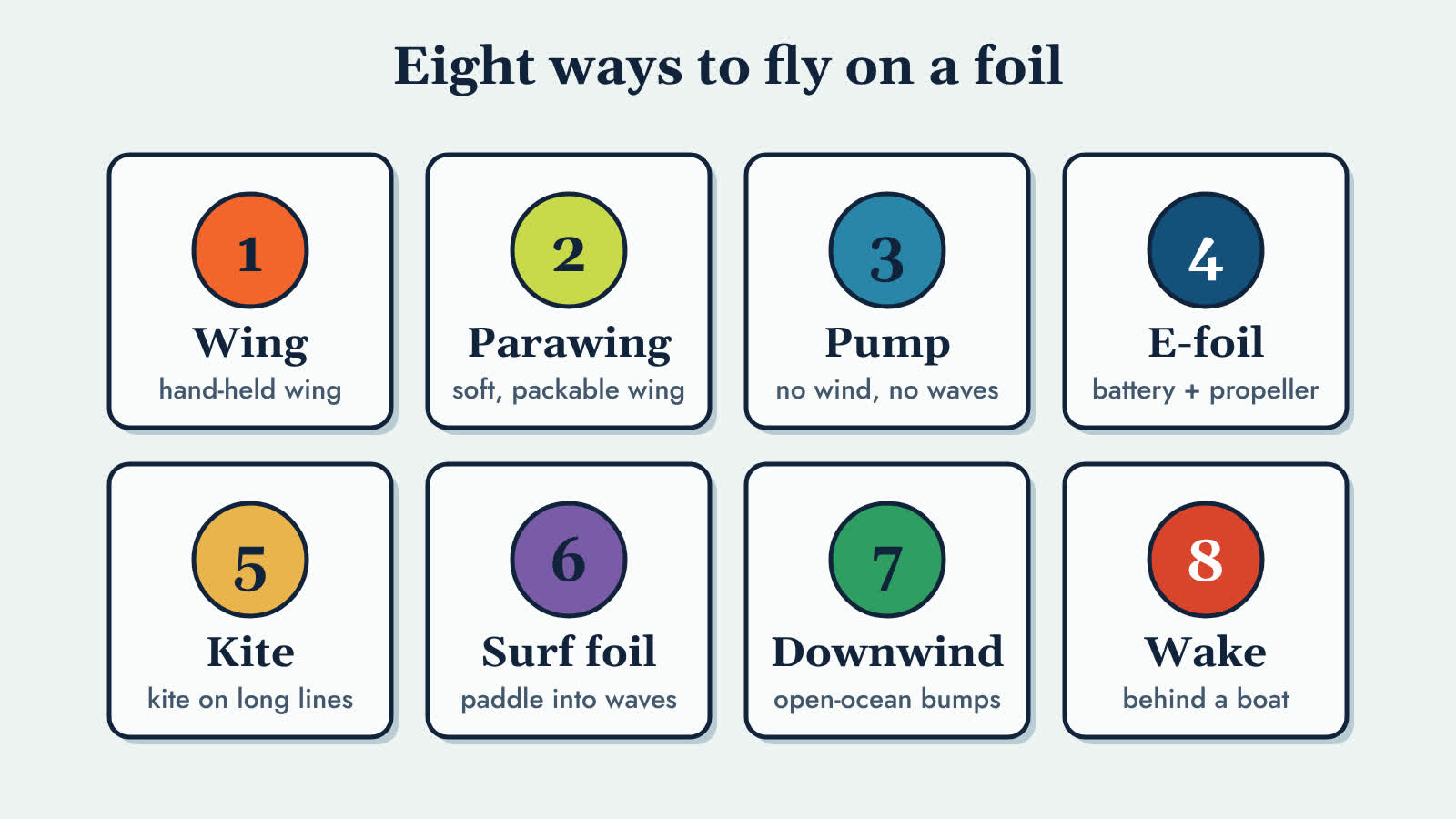
That is the whole trick, and it is the same in every kind of foiling. What changes from one kind to the next is what gets you up to speed: a hand-held wing, a kite, a boat, a battery, a wave or your own legs.
Why riders love it
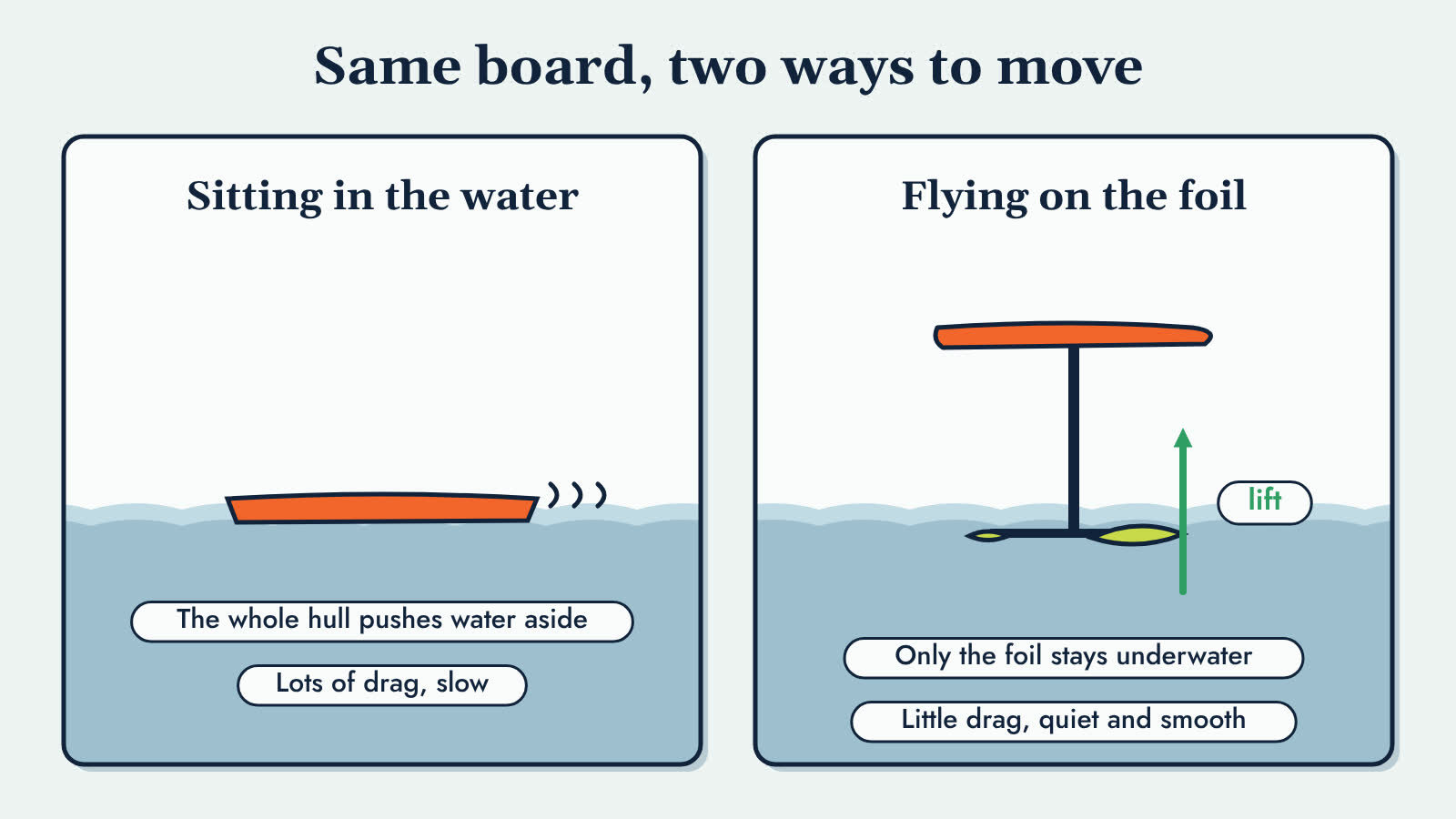
With the board out of the water, drag drops sharply, so it takes very little power to keep going. The ride turns smooth and quiet, and chop that would rattle a normal board passes underneath you.1,2
Low drag also means foils work in conditions that are too weak for other boards. A foil picks up fat, rolling waves that are no fun on a surfboard, and a good rider can pump a foil along with leg power alone between waves.3
The parts in one line each
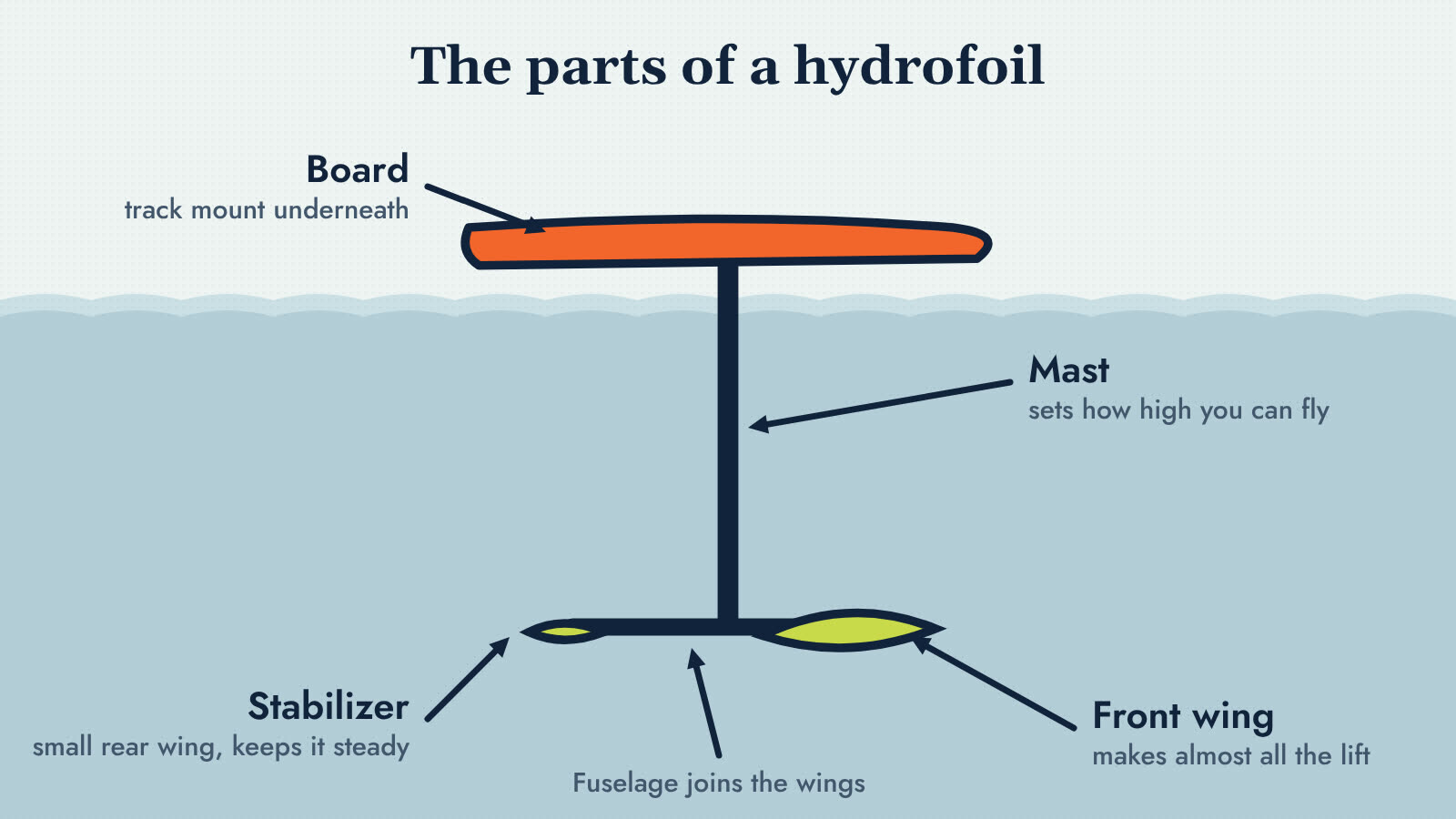
- Board: smaller than you might expect, because the foil does the work once you are flying.
- Mast: the tall, thin strut that joins the board to the wing and sets how high you can fly.
- Front wing: makes almost all the lift. Bigger wings lift at lower speeds and feel calmer.1
- Fuselage and stabilizer: a short bar with a small rear wing that keeps the foil steady.4
There is more on each part, and on what the numbers on a foil mean, in our guide to how a hydrofoil works.
The eight kinds of foiling
1. Wing foiling
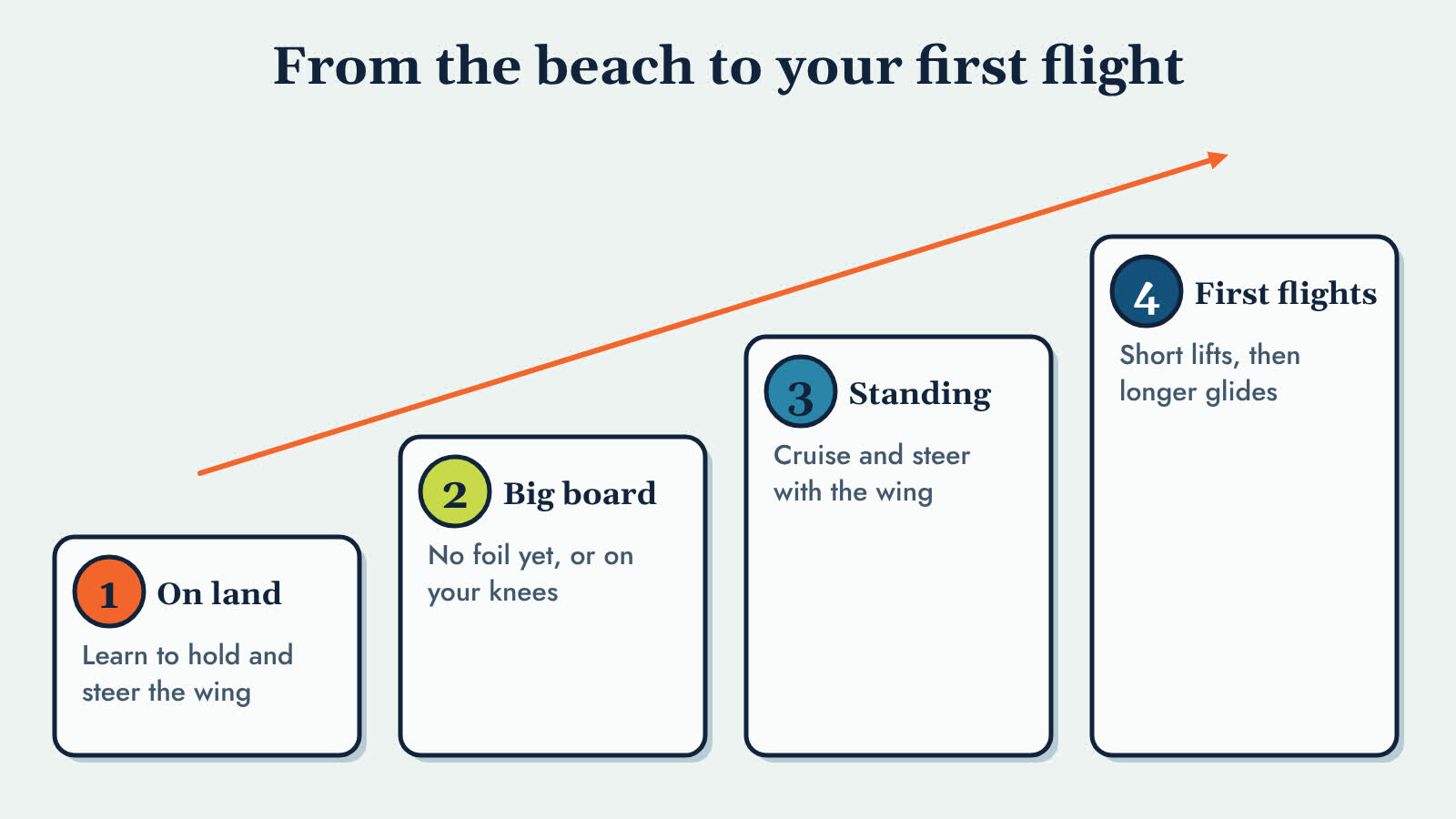
You hold a light, inflatable wing in your hands and the wind pulls you along. There are no lines, no boat and no motor, which is a big part of why it is the kind most newcomers start with today. Beginners learn on a big, floaty board and a large front wing. Start with our guide to your first wing foil session.5
2. Parawing foiling
A parawing is a soft wing with no air-filled frame, flown on short lines like a small kite. Its big trick is that you can pack it away while you ride, then fly hands-free on swell or wind bumps and pull it out again to get back upwind. It is best learned after you can already foil. We compare the two in parawing or wing.6
3. Pump foiling
No wind, no waves, no motor: you jump onto the board from a dock or the shore and keep it flying by pumping with your legs. It takes a light board and a foil that glides well. Riders who learn behind a boat often practice dock starts on calm days.7
4. E-foil
An e-foil has a battery in the board and a small electric propeller on the mast, controlled by a handheld remote. It is the gentlest way to feel what flying is like, because you choose your speed. See your first e-foil ride.8
5. Kite foiling
Kite foiling is kitesurfing on a foil board: a kite on long lines pulls you, and the foil lifts you above the chop. It suits riders who already kite.
6. Surf foiling
You paddle into waves on a foil board, just as on a surfboard, then ride the energy of the wave far beyond where a surfboard would stop. Foils suit fatter, rolling waves and waves breaking further out. Learn at a quiet spot on a small day, away from busy lineups.3
7. Downwind foiling
Riders travel long distances with the wind behind them, linking open-water bumps, usually with a paddle, a wing or a parawing to get up on foil. It uses a different setup from surf foiling. It is an advanced kind of foiling, best left until you are confident on foil.3
8. Wake foiling
A boat tows you up, then you can drop the rope and ride the boat's wake, keeping speed by pumping. Beginners usually learn at about 9 to 12 mph, much slower than wakeboarding.7
Which kind should you try first?
Beginner tip: if you have never foiled, a lesson on an e-foil or a wing foil is the easiest door in. Both use big, stable gear and an instructor can control the conditions for you.
- You live near steady wind: wing foiling.
- You want to feel flying in one afternoon: an e-foil lesson.
- You already surf: surf foiling, on a small, quiet day.
- You already kite: kite foiling.
- You have a boat: wake foiling.
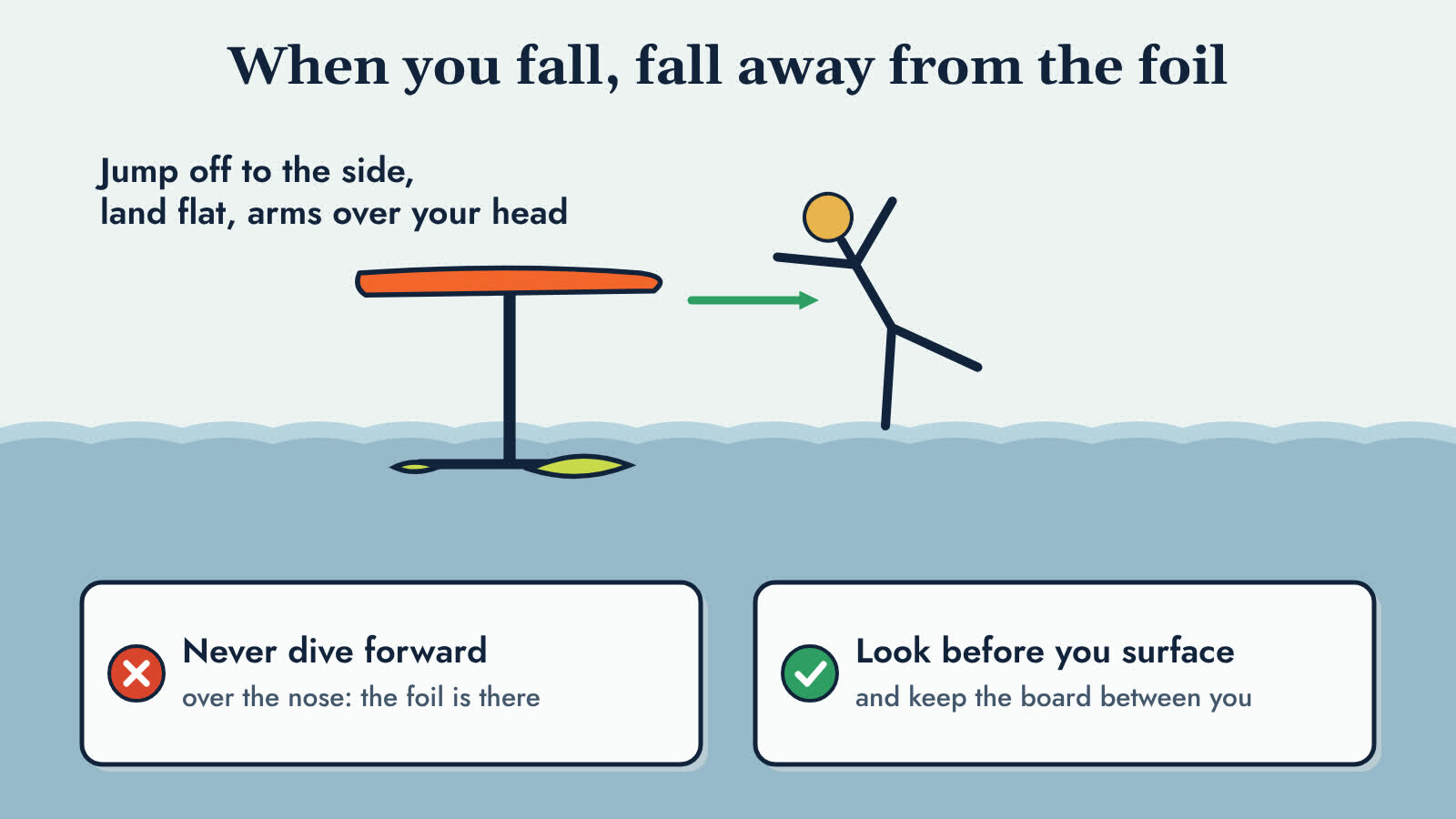
Whatever you pick, read our foil safety basics first. A foil is sharp and sits under you at all times, so how you fall matters more than in any other board sport.
FAQ
Is foiling hard to learn?
It takes patience. On a wing foil, a rough guide is a few sessions to handle the wing and the board, then around 5 to 10 sessions before your first short flights, depending on conditions and how often you go. An e-foil with a lesson is usually much quicker.5
How fast do you need to go to foil?
Lift builds with speed. On an e-foil, takeoff usually happens around 8 to 12 mph, depending on the size of the foil, your weight and the board.2
Is foiling dangerous?
It has real risks, mainly being hit by the board or the foil when you fall. Riders wear a helmet and an impact vest, fall away from the foil and learn away from other people.9
What is the difference between a foil and a hydrofoil?
None in everyday use. "Hydrofoil" is the full name of the underwater wing, and riders shorten it to "foil".
Keep learning
Sources
Facts checked against the sources below in November 2026.
- Cabrinha, How to choose the right foil cabrinha.com ↩
- Waydoo, How do eFoils work waydoo.com ↩
- SURFER (via Yardbarker), Never tried foiling? Here's everything you need to know yardbarker.com ↩
- Real Watersports, Anatomy of a foil realwatersports.com ↩
- Slingshot Sports, A beginner's guide to wing foiling slingshotsports.com ↩
- The Inertia, Parawing foiling explained theinertia.com ↩
- MACkite, Wake foil knowledge center mackiteboarding.com ↩
- Fliteboard, How to eFoil: a step-by-step guide fliteboard.com ↩
- MACkite, 3 must-have safety accessories for foiling mackiteboarding.com ↩