 Foilopedia
Level 2 · Pick your sport
E-foil: your first ride, stance and throttle
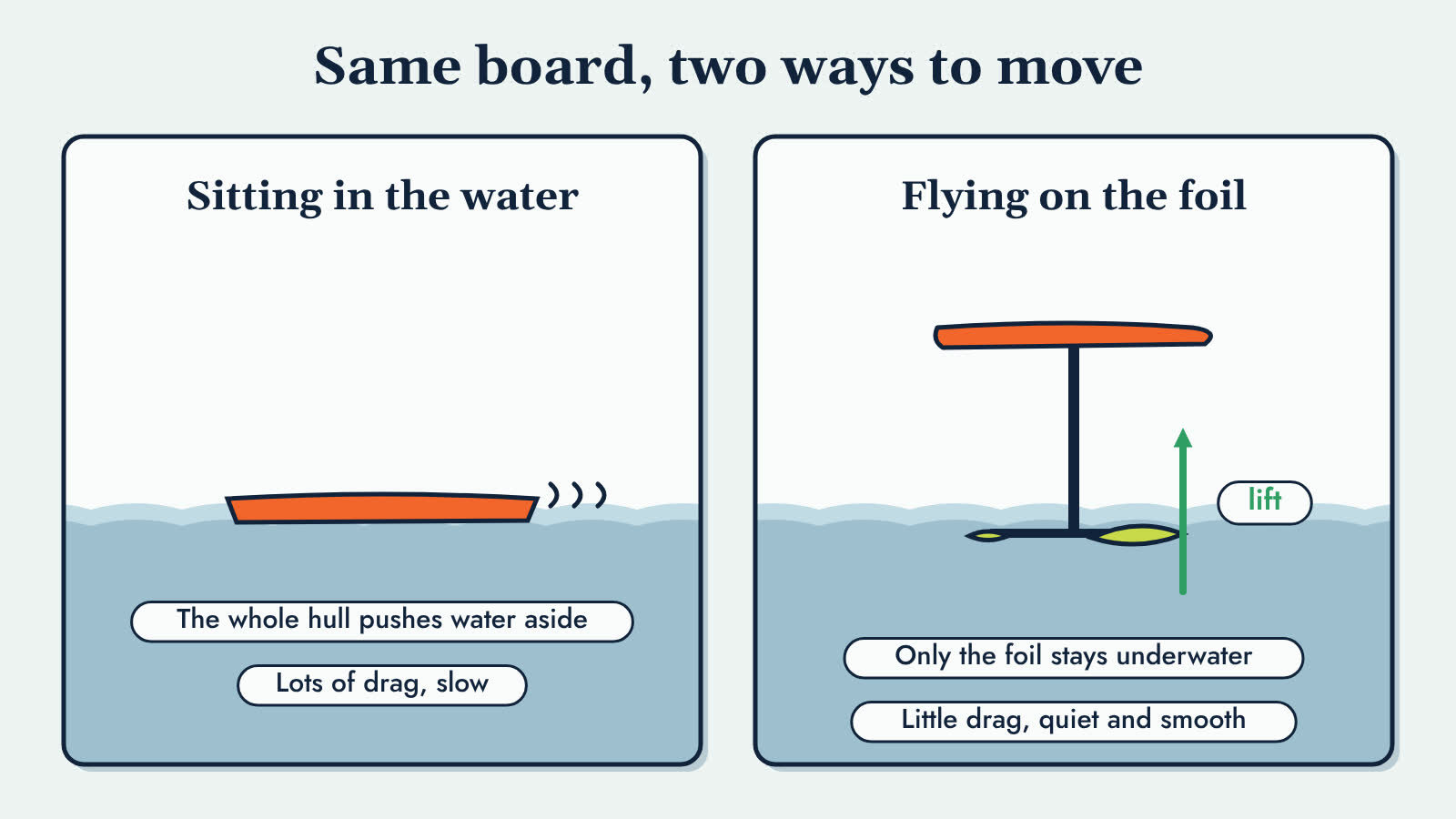
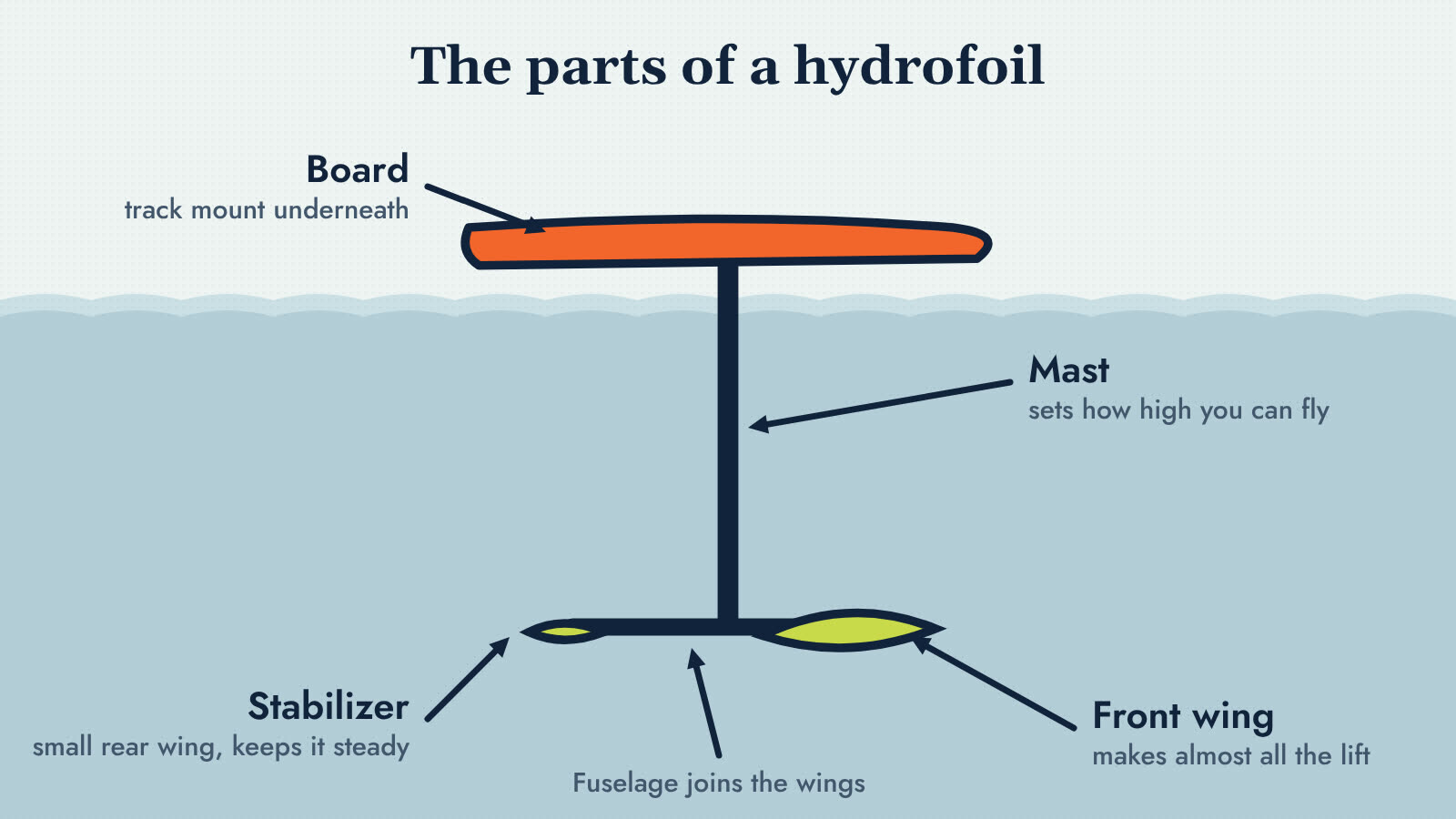
An e-foil is a foil board with a battery inside and a small electric propeller on the mast. You hold a wireless remote and choose your own speed, so you don't need wind, waves or a boat. That makes it the gentlest way to feel what foiling is like.1
Your first ride is about control on the surface, not flying. Get that right and the flying comes on its own.
Before you start
- Take a lesson. Fliteboard and Waydoo both recommend a lesson for your first ride. They set up the board, teach the remote and pick the spot.2
- Deep, quiet water. At least 1.5 m (5 ft), away from breaking waves, swimmers and boats.1
- Helmet and impact vest. The same as any other foiling. See our foil safety basics.1
- Check the remote. Make sure it is paired and its power cut-off works before you go out.2
Lie, kneel, stand, then fly
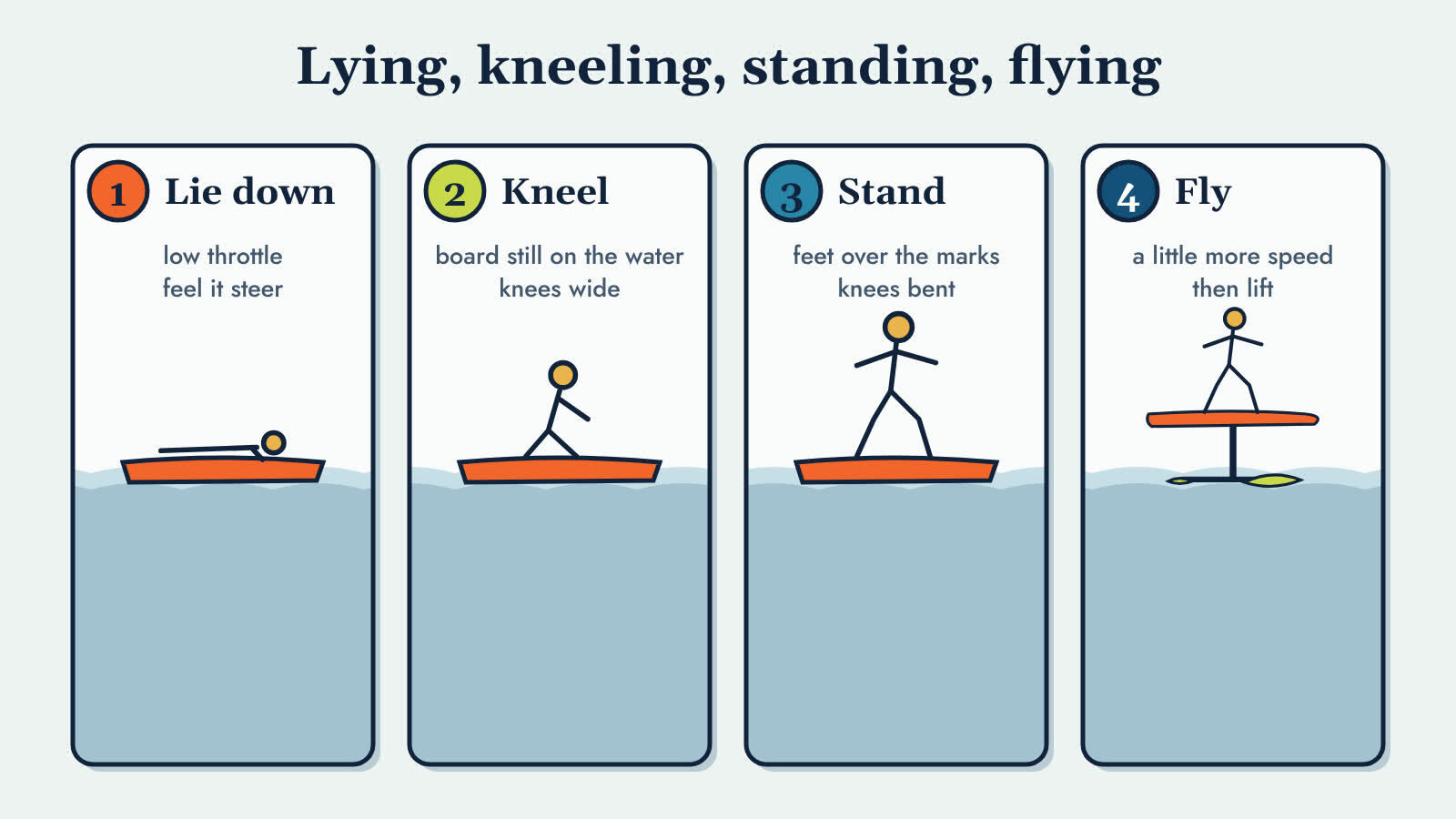
- Lie down. Start on your stomach at low throttle and feel how the board moves and turns.1
- Kneel. Move to your knees and ride along on the surface. Practice stopping and wide turns.
- Stand. Stand up while the board is still on the water, and ride the surface until you can hold a steady line.2
- Fly a little. Add a touch of speed and let the foil lift the board a few inches, then set it back down. Think: skim, lift, touch.2
Don't try to fly on your first run. Waydoo suggests three short sessions: control on your stomach and knees, then standing on the surface, then low flights you can repeat. Move on only when the step before works every time.2
Where your weight goes
Stand with your feet about shoulder-width apart, front foot angled forward, back foot more across the board, knees bent and hips over the middle.2
E-foiling needs more weight on the front foot than surfing does. Find a spot a little forward that keeps you balanced. More front foot lowers the nose; more back foot raises it. Make one small change at a time. There is more on this in how a hydrofoil works.1
Beginner tip: don't lean back to lift off. Let the speed do it, and use small, slow weight shifts.
Smooth on the throttle
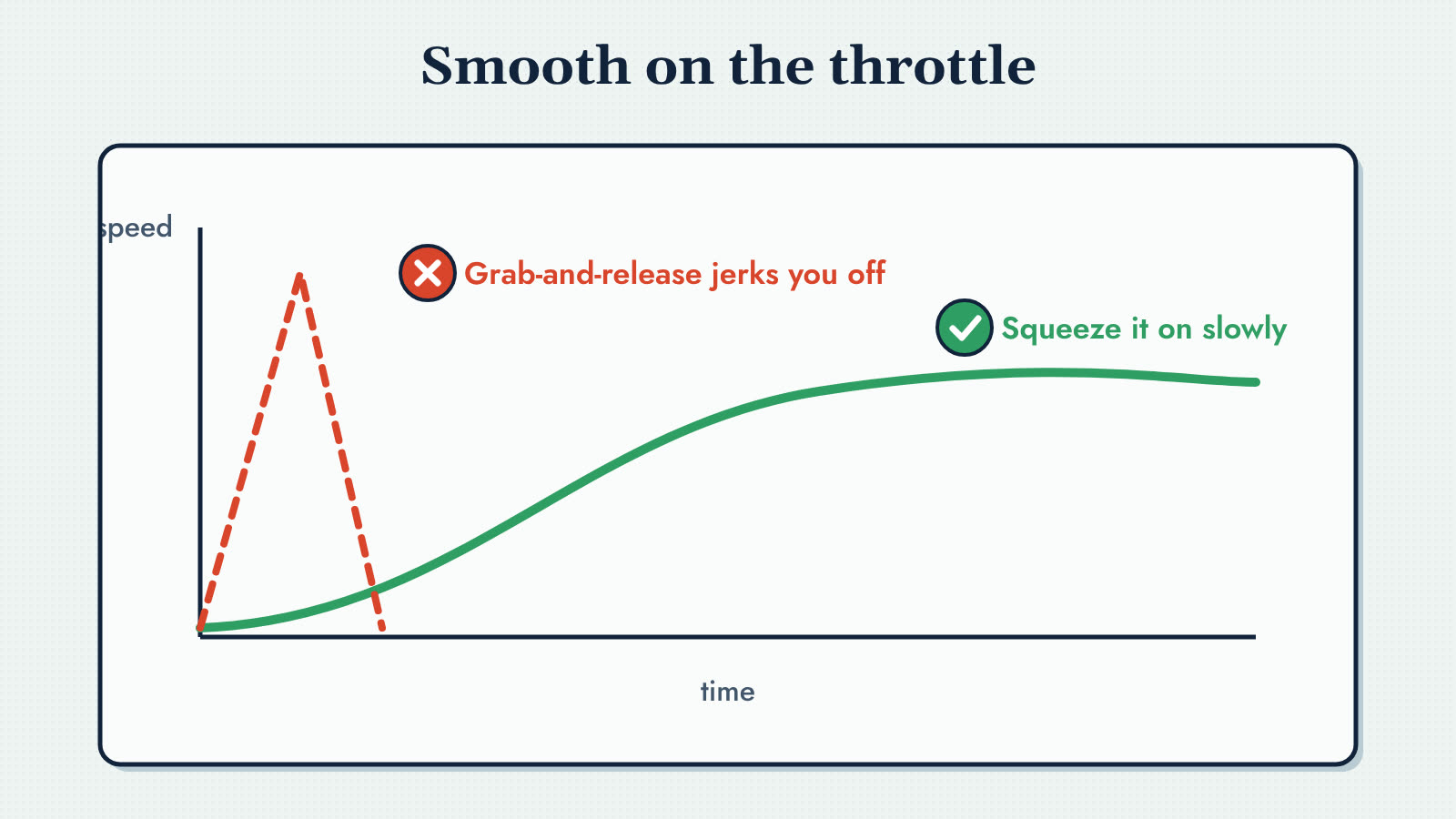
Roll the power on and off smoothly, unless you need to stop right away. A sudden burst of throttle can pull the board out from under you, and a sudden release can pitch you forward.2
Keep your speed moderate while you learn, and steer by shifting your body weight, not by twisting the board. Small changes have big effects.1
When you fall
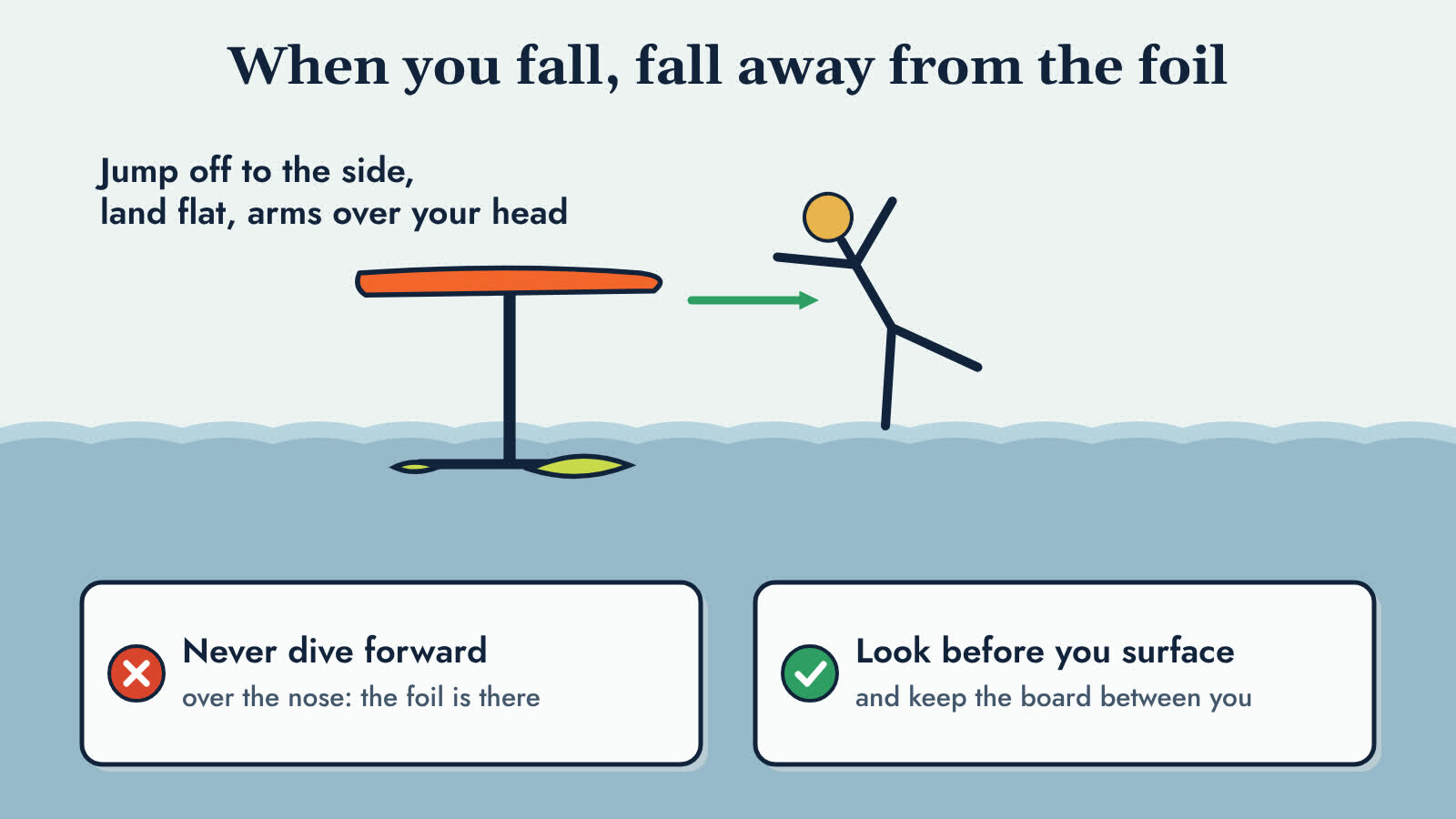
- Let go of the throttle first. Then jump clear to the side, never over the mast or foil.2
- Fall the way the board is tipping, so you land away from the foil and its wings.1
- Cover your head, come up, find the board, and approach only once it is disarmed. Never swim toward a powered propeller.2
- Disarm before you come ashore. Power down before you reach the beach or the dock.2
Common mistakes
- Trying to fly too soon. Surface control first. It makes the flights longer and the falls rarer.
- Jerky throttle. Squeeze it on, ease it off.
- Leaning back. It sends the board up too steeply and it breaches.
- Foot straps on day one. Many beginners ride without locked-in straps so their feet come free in a fall.2
FAQ
Is e-foiling hard to learn?
It is the easiest kind of foiling to start, because you choose your speed. With a lesson, most people need a few sessions before it feels comfortable.1
How fast does an e-foil go before it lifts?
Takeoff usually happens around 8 to 12 mph, depending on the foil, your weight and the board.3
Where should you put your feet on an e-foil?
About shoulder-width apart, front foot angled forward, back foot across the board, knees bent. Follow the marks your instructor gives you.2
How deep does the water need to be for an e-foil?
Deeper than the whole mast and foil, with a margin. Fliteboard recommends at least 1.5 m (5 ft).1
Keep learning
Sources
Facts checked against the sources below in November 2026.
- Fliteboard, How to eFoil: a step-by-step guide fliteboard.com ↩
- Waydoo, How to eFoil waydoo.com ↩
- Waydoo, How do eFoils work waydoo.com ↩