 Foilopedia
Level 1 · Start here
Foil safety: how to fall, what to wear, where to ride
The foil is the sharpest and hardest part of your gear, and it is always under you. Most foiling injuries come from falling onto the board or, worse, onto the foil. A fall from a flying board starts a couple of feet above the water, plus your own height.1
That sounds scary, but the habits that keep you safe are simple, and they are the same in every kind of foiling. Learn them before your first flight.
How to fall
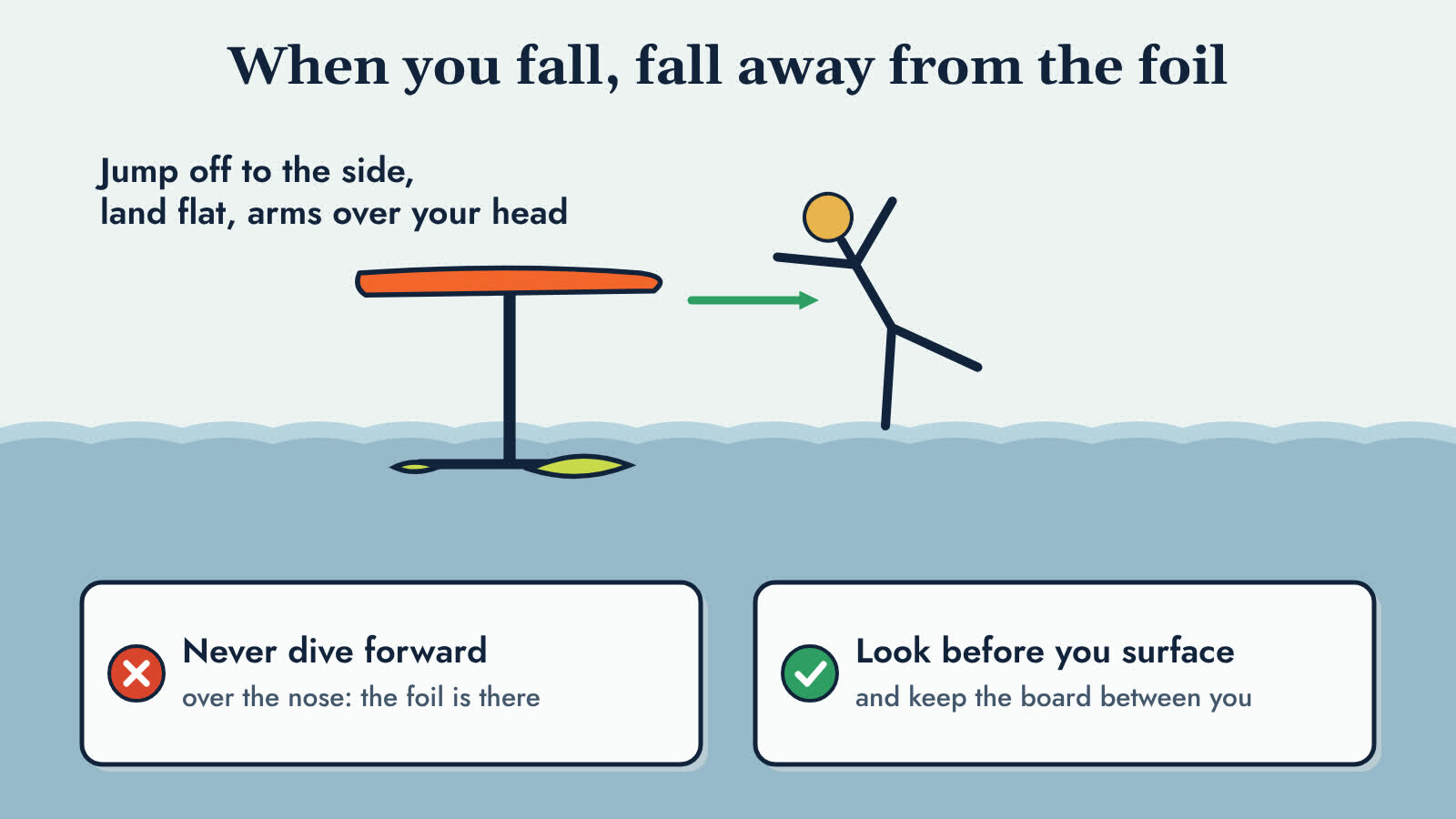
When you lose your balance, don't fight it. Let go and fall in the same direction the board is tipping, so you land away from the foil and its wings.2
- Jump clear to the side. Push away from the board rather than stepping down onto it. Never step over the mast or the foil.3
- Land flat. A flat, wide landing keeps you shallow and away from the wing under the board.
- Cover your head. Put your arms over your head as you go in and as you come up.3
- Look before you surface, then find the board. Approach it from the side, not from the foil end, and don't reach for it while you are still falling.
Beginner tip: practice falling on purpose in your first session, at slow speed. A fall you have already rehearsed is a fall you will do right without thinking.
What to wear
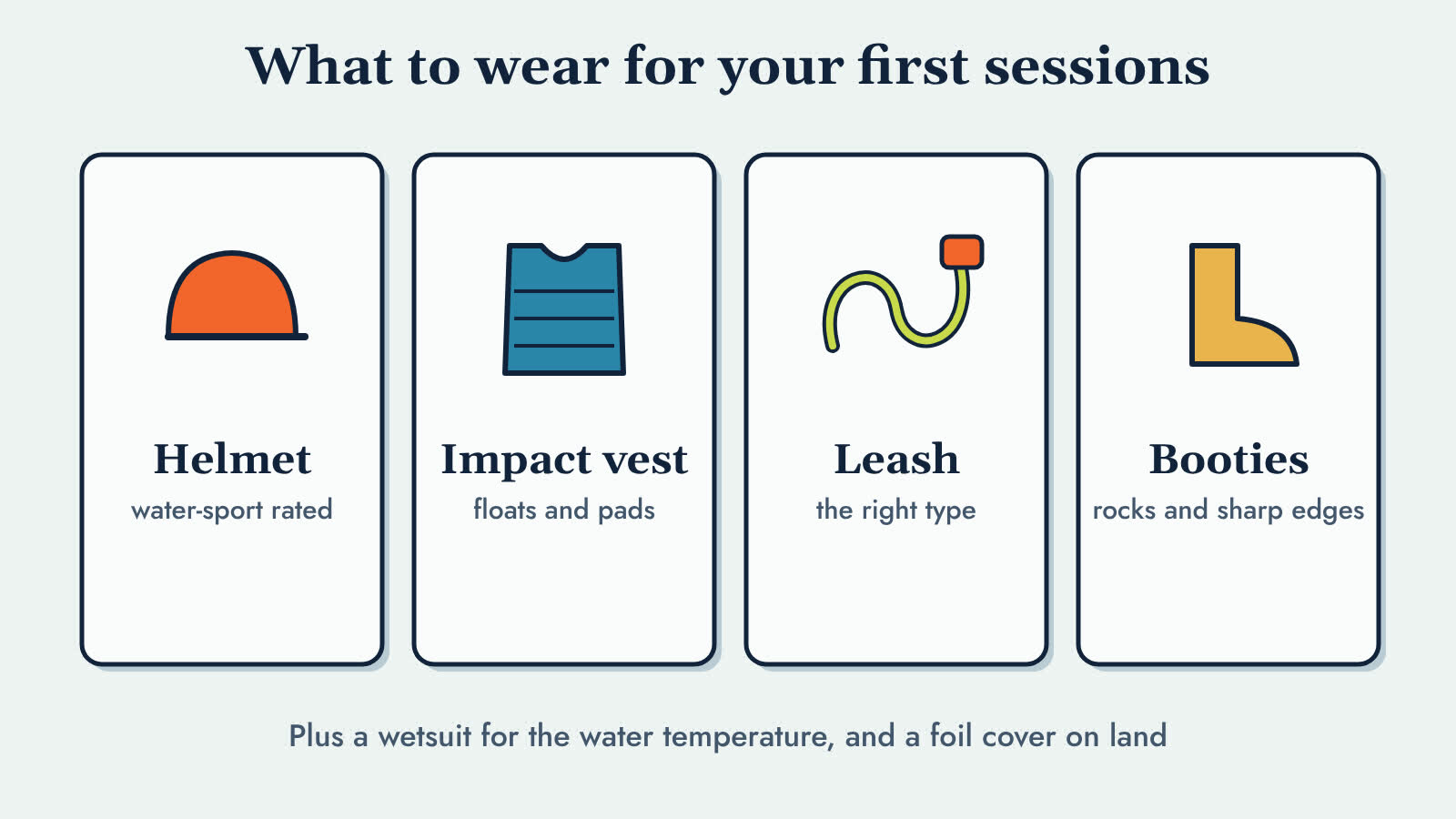
- Helmet. A hard-shell water-sports helmet or a padded protective cap. It is the first piece of safety gear most foil shops recommend.1
- Impact vest. A foil-specific vest adds padding over a normal buoyancy vest, so it floats you and softens a hit from the board.1
- Leash. The right leash depends on the sport. Wing foilers often use a board leash and a wing leash, with the wing leash longer than the board leash so the board is less likely to spring back into you. Ask your instructor how they set it up.4
- Wetsuit and booties. A wetsuit for the water temperature also adds a little padding. Shin and knee pads help if you keep knocking the mast.1
- Eye protection. If you wear sunglasses, pick ones with a frame that won't fold the lenses into your face on impact.1
On an e-foil, also check that the remote is paired and that its power cut-off works before you go out.3
Where and when to learn
- Deep enough water. The whole mast and foil need to clear the bottom with room to spare. One e-foil maker recommends at least 1.5 m (5 ft).2
- Room around you. Stay clear of swimmers, other riders and boats, and away from breaking waves while you learn.2
- Steady conditions. Gusty wind, shorebreak, strong current and crowds all make learning harder.4
- Don't go further than you could swim back. If anything breaks, you need to get home without it.2
- Take a lesson. An instructor picks the spot, sets up your gear and watches your first falls. Every foil maker we checked recommends one.
On land
Carry the board with the foil pointing away from people, and put a cover on the front wing when it is not in the water. Front wing edges are thin enough to cut on a careless knock.
Common mistakes
- Diving forward over the nose. The foil is right under it. Fall to the side.
- Holding on too long. Fighting a fall pulls you onto the board. Let go early.
- Swimming straight to the board. Come up, look, then approach from the side. Never swim toward a powered e-foil propeller.3
- Locked-in foot straps too early. Many beginners ride without straps so their feet come free cleanly in a fall.3
FAQ
Do I need a helmet for foiling?
It is strongly recommended, especially while learning, because the board and foil can hit your head in a fall. Most foil shops list a helmet as the first piece of safety gear.1
How do you fall safely off a foil board?
Let go early, jump to the side away from the foil, land flat and cover your head with your arms. Look before you surface.3
How deep does the water need to be for foiling?
Deeper than your mast and foil, with a margin. One e-foil maker recommends at least 1.5 m (5 ft).2
What is an impact vest?
A buoyancy vest with extra padding, made to soften hits from the board and the water. Riders wear one in most kinds of foiling.1
Keep learning
Sources
Facts checked against the sources below in November 2026.
- MACkite, 3 must-have safety accessories for foiling mackiteboarding.com ↩
- Fliteboard, How to eFoil: a step-by-step guide fliteboard.com ↩
- Waydoo, How to eFoil waydoo.com ↩
- Slingshot Sports, A beginner's guide to wing foiling slingshotsports.com ↩