 Foilopedia
Disciplines · Wave and paddle
Downwind foiling: what it is and how it works
Downwind foiling is riding a foil board for miles with the wind behind you, gliding from one wind-made swell to the next. You start at one spot, ride the bumps across open water and finish somewhere else. It is a goal for experienced foilers, not a first sport.
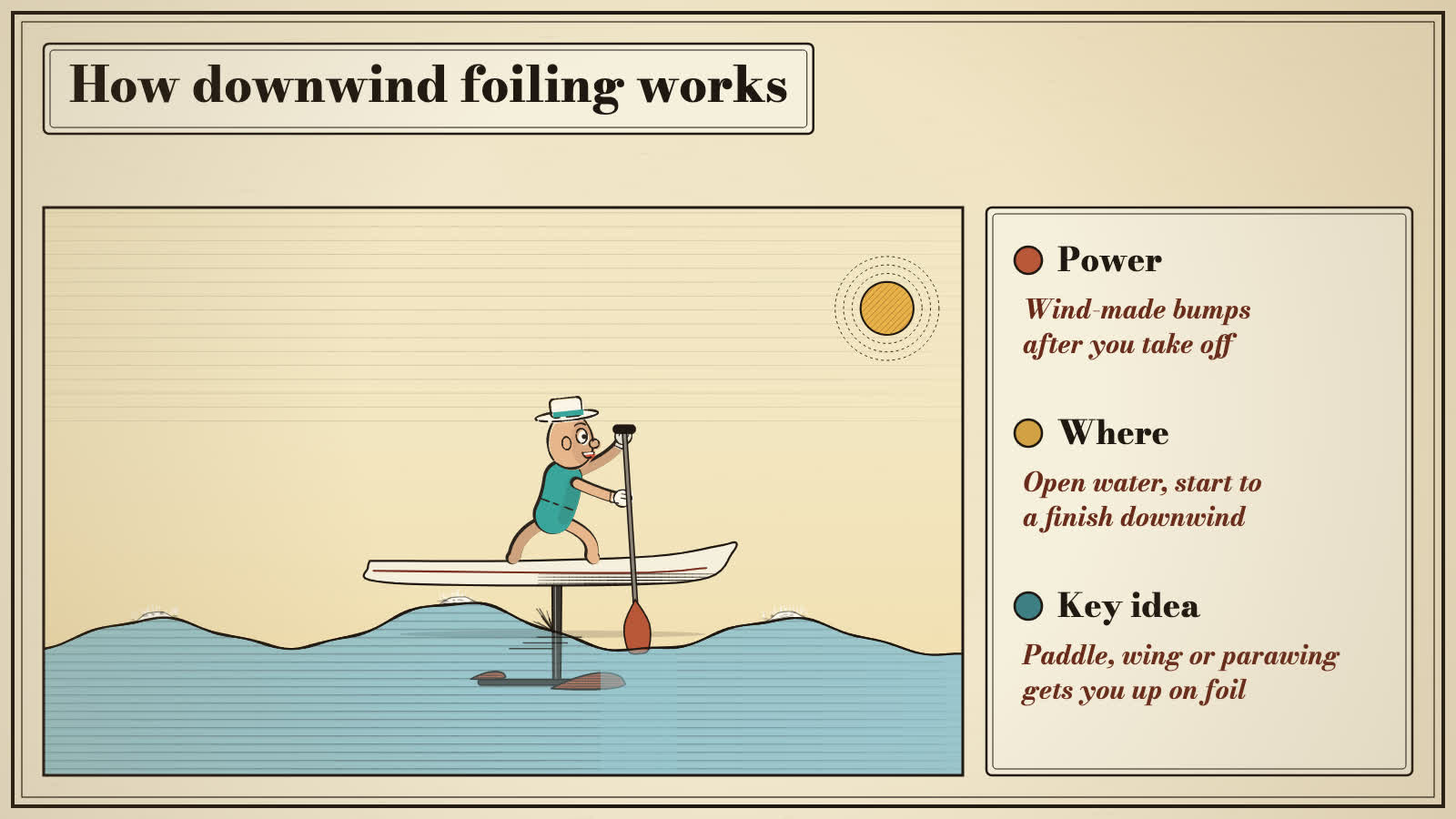
A run is called a downwinder. You only need power to get up on foil at the start, and that power can come from a paddle, a wing or a parawing.
At a glance
- Power: wind swell, after a paddle, wing or parawing gets you up
- Where: open water with steady wind, from a start point to a finish downwind
- Learn from zero? No. Learn after you can already foil
- Typical first step: short runs with experienced downwinders
- Gear to start: long, narrow board, big glide foil, safety kit
- Closest relatives: SUP foiling, parawing foiling
How it works
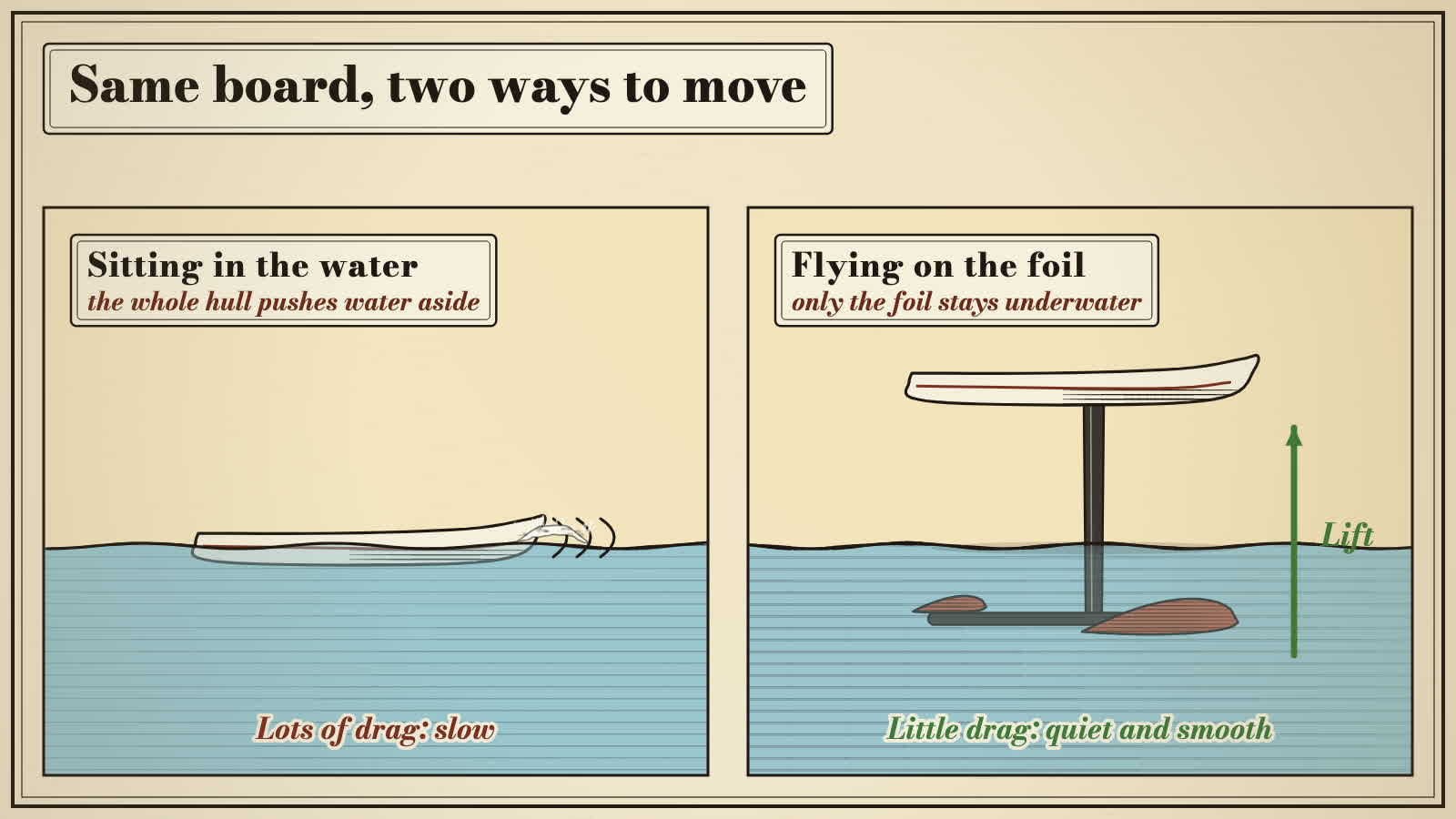
When wind blows over open water for a while, it builds small, steep waves that run the same way as the wind. Riders call them bumps. They are too weak and choppy for a surfboard, but a foil needs very little push to keep flying, so each bump is enough to keep you moving.
You start a run by getting up to speed and onto foil. Then you drop down the face of one bump, glide, and steer across to the next one before you slow down. Linking bumps like this, with a little pumping in between, is the whole sport. Pumping has its own page: pump foiling.
Smaller, slower but steeper wind waves are easier to learn on than big, fast swell.1
A quick history:
- SUP downwinding grew fast in Hawaii from about 2014, and foils took it over in the early 2020s.2
- In 2016 The Inertia profiled Kai Lenny paddling a SUP with a foil out into open-ocean swell, with no jet ski to tow him.3
- Molokai 2 Oahu, a famous channel-crossing race in Hawaii, added a hydrofoil division in 2018, and Lenny won that first race.4
- By 2026 it ran as a Foil Edition with SUP foil and wing foil classes.5
The gear
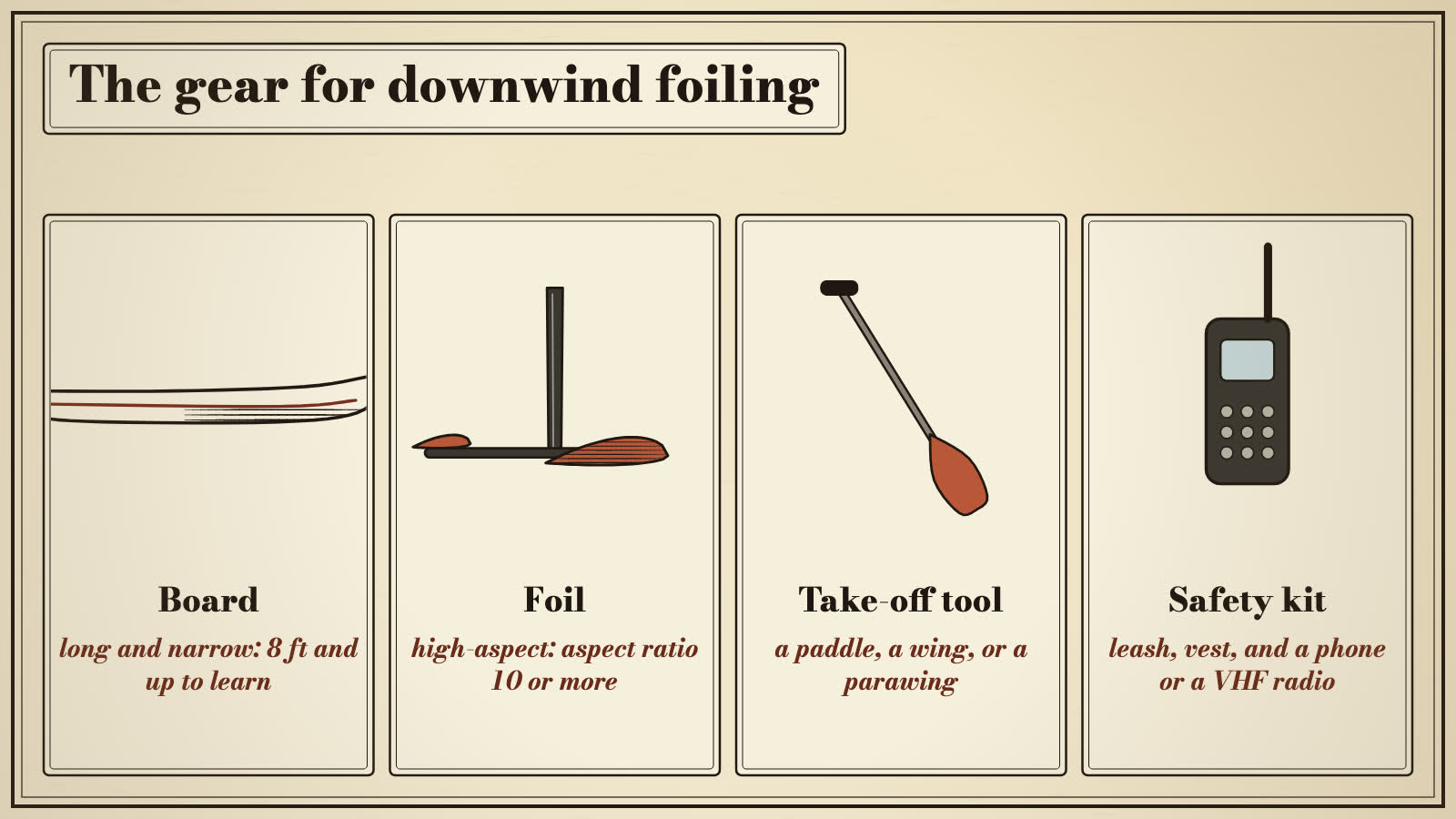
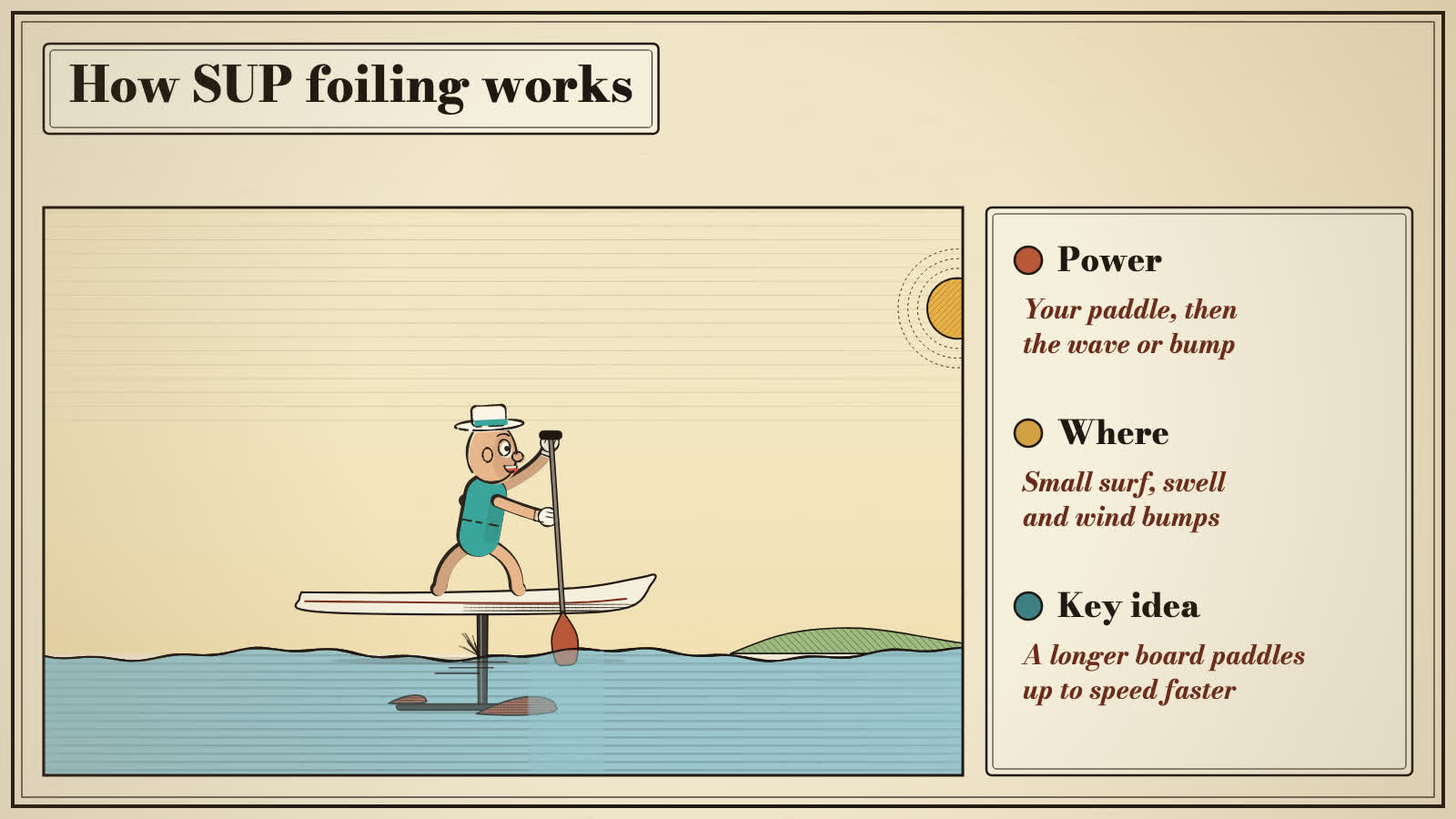
- Board: long and narrow, so you can paddle or pump it up to the speed of the swell. Duotone suggests boards of 8 feet and longer for learning on rounder swell.6
- Board for winging: if you take off with a wing, a slightly more compact downwind board works better, because extra length gets in the way.7
- Foil: a high-aspect front wing that glides far between bumps. Duotone points learners to wings with an aspect ratio of 10 or more. What aspect ratio means is covered in how a hydrofoil works.8
- Your take-off tool: a SUP paddle, a wing, or a parawing you can stow once you are flying.9
- Safety kit: a leash, a flotation vest, a phone in a waterproof case or a VHF radio (a handheld marine radio), a wetsuit in cold water, and possibly a helmet.10
Words you'll hear
- Bumps: the small wind-made waves you ride.
- Run: one downwinder, from start to finish.
- Glide: how far the foil carries you without pumping.
- A to B: a one-way trip that ends at a different spot.
- Paddle-up: paddling hard enough to lift onto the foil, with little help from a wave.
- Downwind board: the long, narrow board built for this.
How it differs from other kinds of foiling
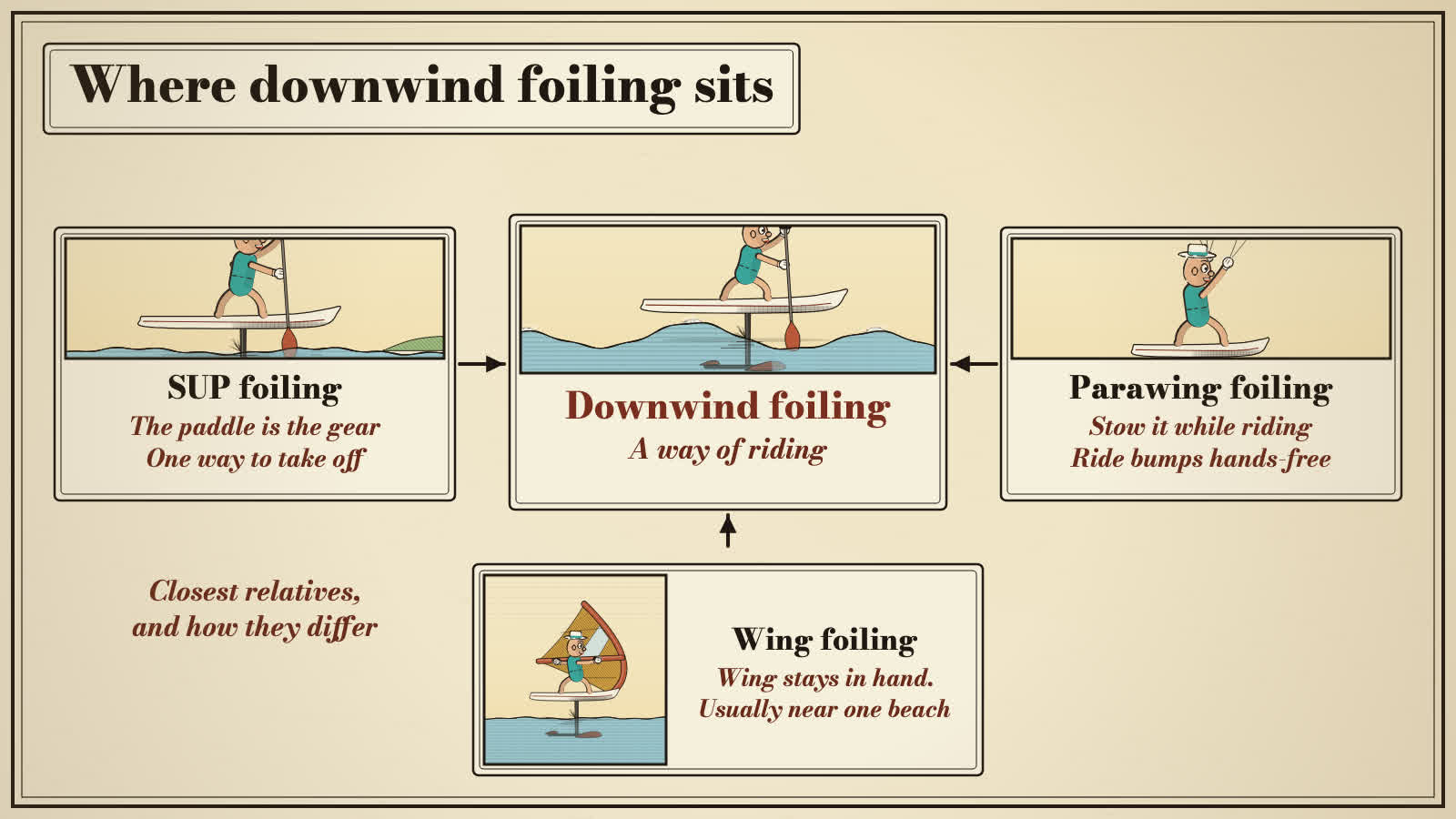
Downwind foiling vs SUP foiling
SUP foiling is the gear and the skill: standing on a foil board and paddling onto swell or small waves. Downwind foiling is what many SUP foilers do with it, a long run across open water. The paddle is one way to start a downwinder. Read SUP foiling for the gear side. Prone surf foilers ride waves at a break instead: see surf foiling.
Downwind foiling vs parawing foiling
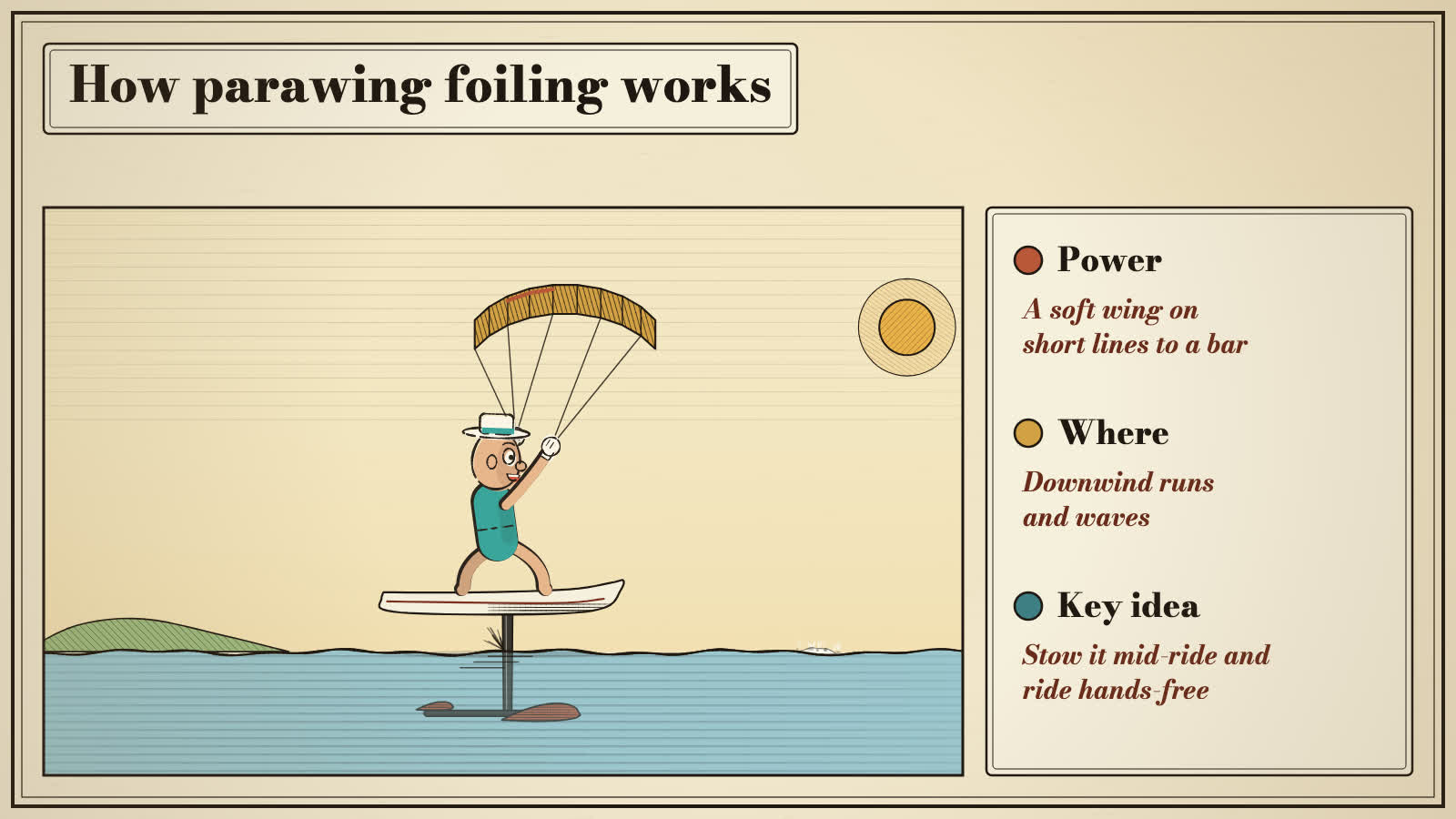
A parawing is a soft wing on short lines that you can pack away while riding. Downwinders use it as an easier way to get up: fly it to take off, stow it, ride the bumps hands-free, and pull it out again if you need power. See parawing foiling.
Downwind foiling vs wing foiling
Wing foiling keeps the wing in your hands the whole time, usually riding back and forth near one beach. Downwinding with a wing uses it mostly as an engine to reach the bumps. Many riders prefer to ride with no power at all once they are up. See wing foiling.
Who it suits
A good fit if you:
- already foil well, on a wing or prone. Duotone rates downwinding among the more challenging foil disciplines and recommends wing or prone experience first.1
- paddle well, from SUP racing, outrigger canoes or prone paddling
- enjoy long sessions and planning a trip
Probably not your first foil sport if:
- you have never foiled
- you have no riding partners or local downwind group
- you live where there is no safe finish downwind of your start
Getting started: lessons, renting, buying
- Lesson or not? The usual way in is to ride with experienced downwinders rather than book a classic lesson. Duotone recommends doing your first runs in waves with them, and practicing paddle-ups on flat water first.1
- Where to find one. Local downwind groups and the shops that sell downwind boards. Before that, learn to foil on a wing or behind a boat. Start with your first wing foil session.
- Rent or buy? Try before you buy. Downwind boards are long, specific and hard to resell if the size is wrong, so ask local riders about demos.
- What to buy first. The board and foil, plus a plan for logistics. You finish somewhere else, so you need a car at the end, a shuttle, or a friend to pick you up. A parawing lets you fly up, pack the wing away and ride the bumps, and some riders see it replacing the paddle for downwinders.9
- What your first sessions look like. Short. Greg Closier tells learners to expect flights of 2 to 5 minutes at first, and to keep the first runs under 2 km (about a mile).10
Beginner tip: do your first downwinder along a coast with an easy finish beach, never offshore, and with someone who has done that run before.
Safety notes
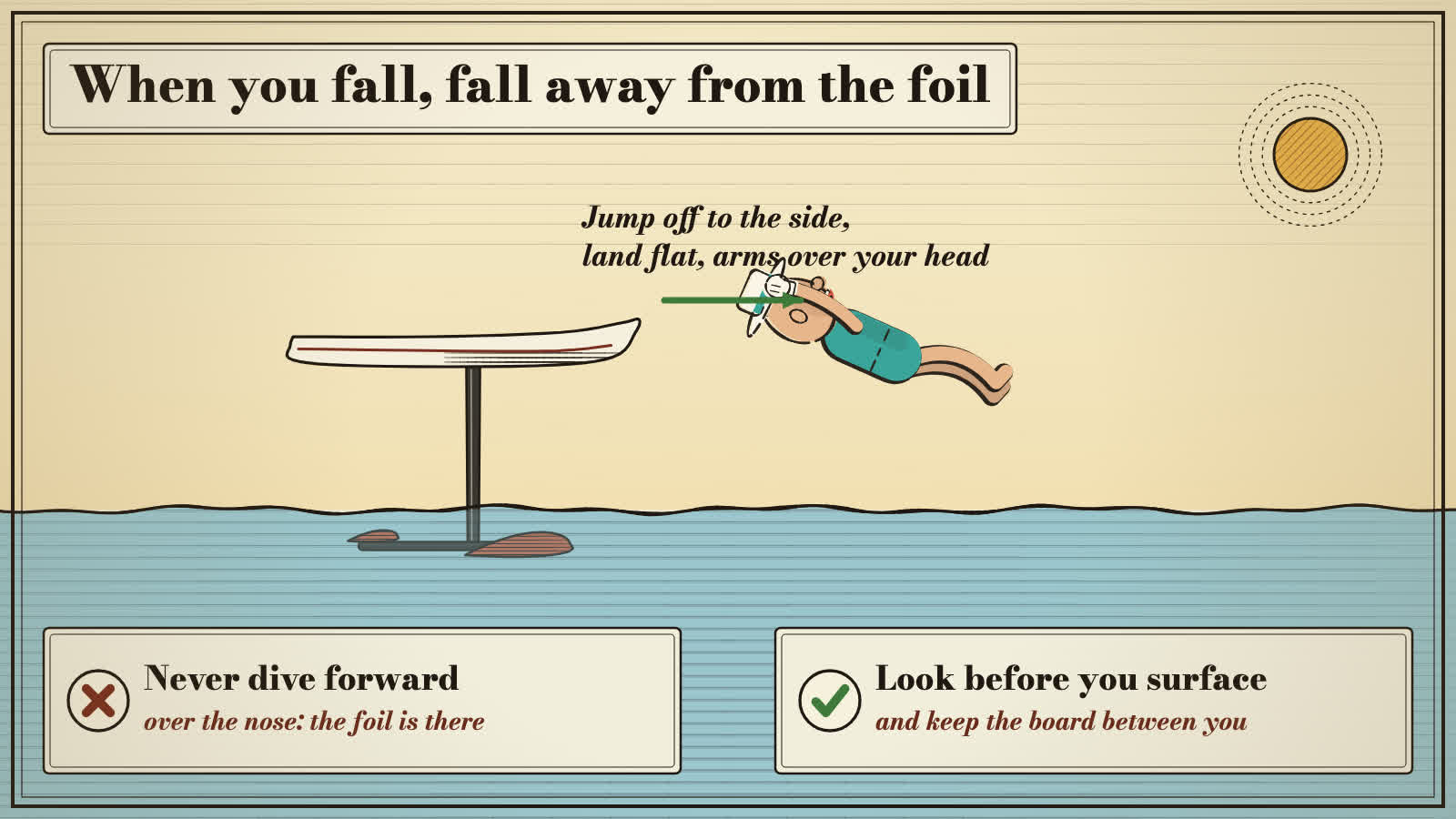
The basics are the same in every kind of foiling: read our foil safety guide. Downwinding adds more risk than any other kind, because you are far from where you started:
- Ride with others. Go with a buddy or a group, and tell someone your start, finish and time.
- Carry a way to call for help. A phone in a waterproof case or a VHF radio, plus a flotation vest.10
- Always wear the leash. In open water your board is your life raft. Losing it far from shore is the most serious risk in downwinding.
- Check the wind and the water. Offshore wind pushes you away from land, so choose runs where it blows along or toward the coast. Wind can build or die mid-run, and current, cold water and boat traffic matter more far from shore.
- Plan your finish, exits and energy. Pick a landing spot you can reach and a few places to get out early. A long paddle-up after a fall is tiring, and you can't paddle back upwind, so use your exits and come in early when you tire.
Not sure this is the one? Compare every kind on what is foiling.
FAQ
What is a downwinder?
A one-way foil run with the wind behind you. You start upwind, ride wind-made bumps across open water and finish at a different spot, then get a ride back.
How long does it take to learn downwind foiling?
It depends on how well you already foil and paddle. Greg Closier suggests being able to stay up non-stop for 3 minutes before you try longer runs.10
Can you downwind foil with a wing?
Yes. Many riders use a wing to get up on foil and reach the bumps. Duotone suggests a slightly more compact downwind board for winging than for paddling.7
Do you need a shuttle for downwind foiling?
You need a way back. A shuttle, a second car at the finish or a friend who drives the coast all work.
Keep learning
Sources
Facts checked against the sources below in November 2026.
- Duotone help center, How and where do I learn downwind foiling duotone-wing-and-foiling-helpcenter-copy.gorgias.help ↩
- SURF magazine, Wingfoil history with Ken Winner surf-magazin.de ↩
- The Inertia, Kai Lenny and downwind hydrofoiling theinertia.com ↩
- Molokai 2 Oahu, 2018 post-race report molokai2oahu.com ↩
- Molokai 2 Oahu, 2026 Foil Edition molokai2oahu.com ↩
- Duotone help center, What is the right board to learn downwind foiling duotone-wing-and-foiling-helpcenter-copy.gorgias.help ↩
- Duotone help center, Long and narrow or wider and shorter downwind boards duotone-wing-and-foiling-helpcenter-copy.gorgias.help ↩
- Duotone help center, What is the right foil to learn downwind foiling duotone-wing-and-foiling-helpcenter-copy.gorgias.help ↩
- The Inertia, Parawing foiling explained theinertia.com ↩
- Total SUP, How to downwind foil with Greg Closier totalsup.com ↩