 Foilopedia
Disciplines · Wave and paddle
Surf foiling: what it is and how it works
Surf foiling is surfing waves on a board with a hydrofoil underneath it. You paddle into a wave lying down, pop up, and the foil lifts the board so you glide above the water on the wave's energy. Riders also call it prone foiling.1
There is no wind, boat or motor involved. That makes it the purest wave sport in foiling, one of the hardest to learn, and a sport for people who can already surf.
At a glance
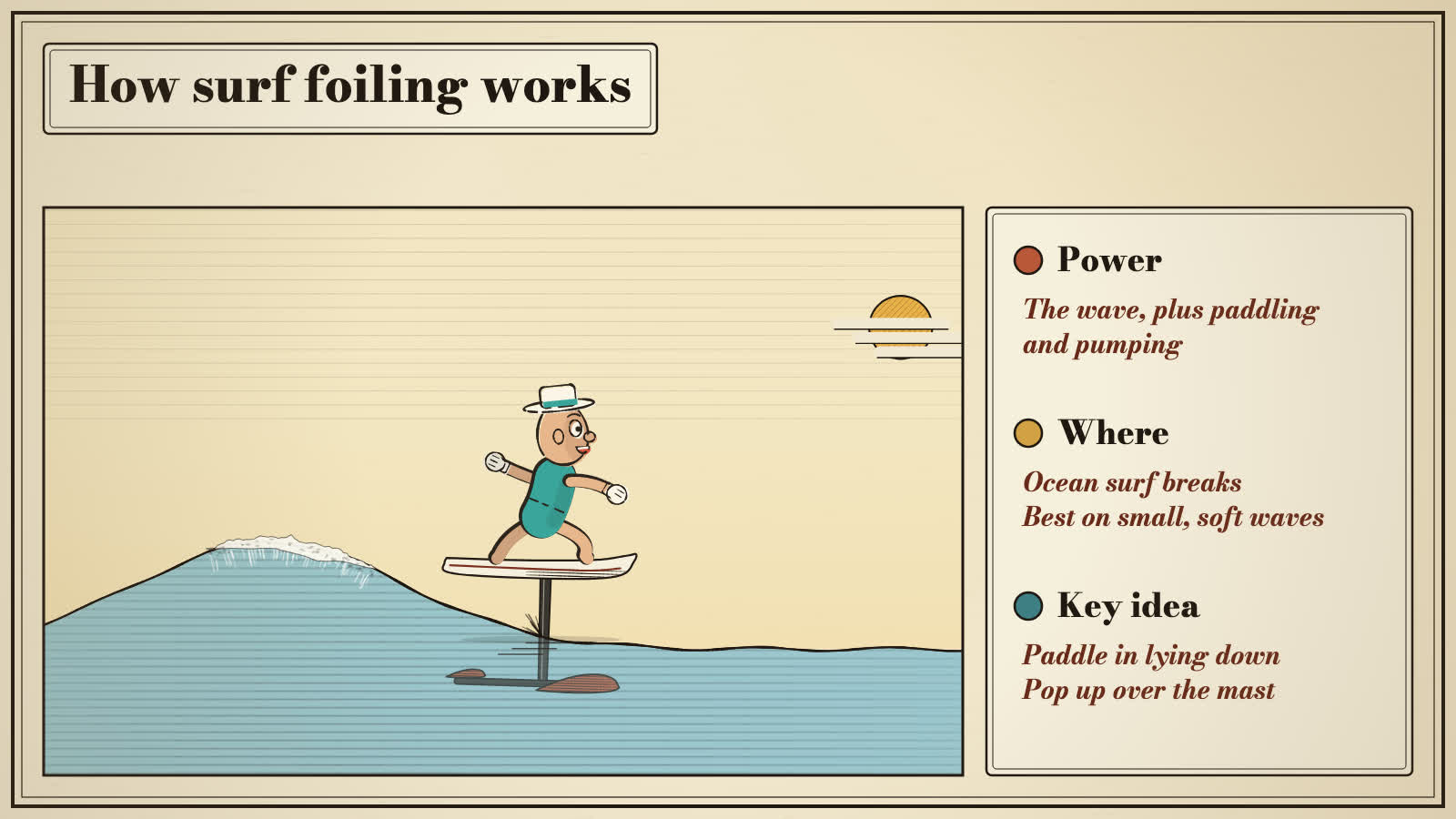
- Power: the wave, plus your paddling and pumping
- Where: ocean surf breaks, best on small, soft waves
- Learn from zero? No. Learn to surf first, ideally get towed on a foil too
- Typical first step: a tow behind a boat or an e-foil session, then small, quiet waves
- Gear to start: compact prone foil board, surf foil, leash, helmet
- Closest relatives: SUP foiling, pump foiling
How it works
"Prone" means lying on your stomach. You paddle the board like a surfboard, catch a wave, then stand up in one move. Once the board is moving fast enough, the foil lifts it clear of the water.
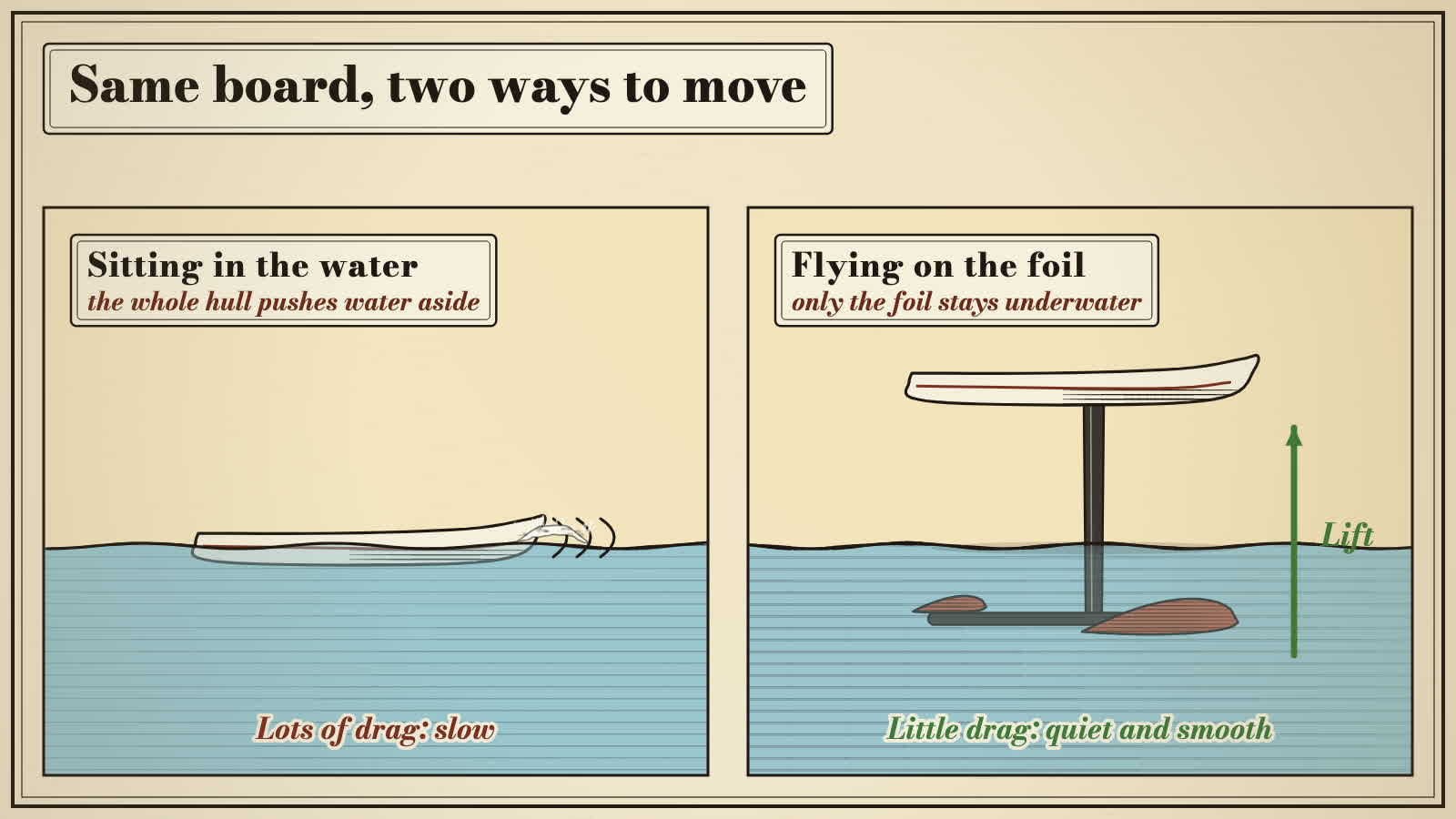
From there the wave is your engine. With the board out of the water there is very little drag, so a soft, slow wave that would leave a surfboard stalled still has enough push to keep a foil flying, and on waves that break further out than a normal surf break.2
When the wave runs out, good riders keep flying by pumping: a rhythmic up-and-down drive with the legs that pushes the foil along. Skilled surf foilers pump back out to the peak and link one wave to the next. Pumping is a whole skill of its own, covered in pump foiling.
The idea is older than most people think. Back in the early 2000s, Laird Hamilton's crew fixed a foil from an Airchair, a sit-down water-ski foil, to a surfboard and towed into big waves wearing snowboard boots. Foils you could ride without boots came in 2006, and prone foiling caught on slowly after that.3
The foil itself works the same in every sport. For the parts and how height control works, see how a hydrofoil works.
The gear
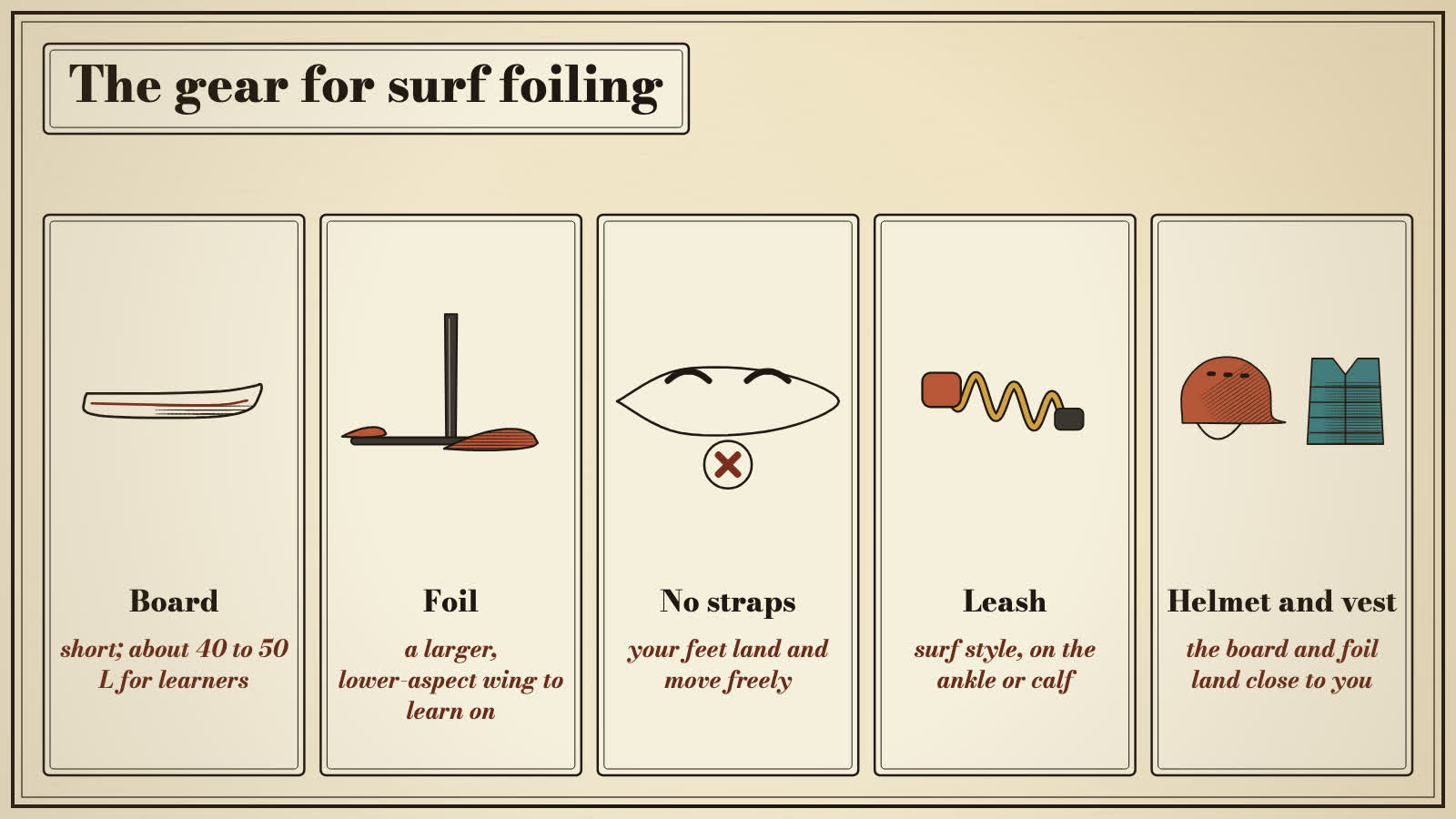
- Board: short and compact, with just enough volume to paddle into a wave. Duotone suggests around 40 to 50 liters for learners, and at least 10 liters more than your regular shortboard.4
- Foil: a surf-style front wing. Small-area wings are built to carve, and high-aspect (long, thin) wings glide on the smallest bumps. Learners start on larger, lower-aspect wings.5
- No straps. Your feet need to land and move freely, like on a surfboard.
- Leash: a surf-style leash, usually worn on the ankle or calf. Ask a shop which setup keeps it away from the foil.
- Helmet and impact vest: Duotone advises protective gear like these for prone foiling, because the board and foil land close to you when you fall.6
A prone board is much smaller than a wing or SUP foil board. It has to paddle and let you pop up, but it never needs to float you standing still.
Words you'll hear
- Prone: lying down to paddle, as in surfing.
- Pop-up: standing up from lying to riding in one move.
- Pumping: driving the foil with your legs to keep it flying without wave power.
- Linking: pumping from one wave to the next without paddling.
- Breach: when the front wing comes out of the water and you lose lift.
How it differs from other kinds of foiling
Surf foiling vs SUP foiling
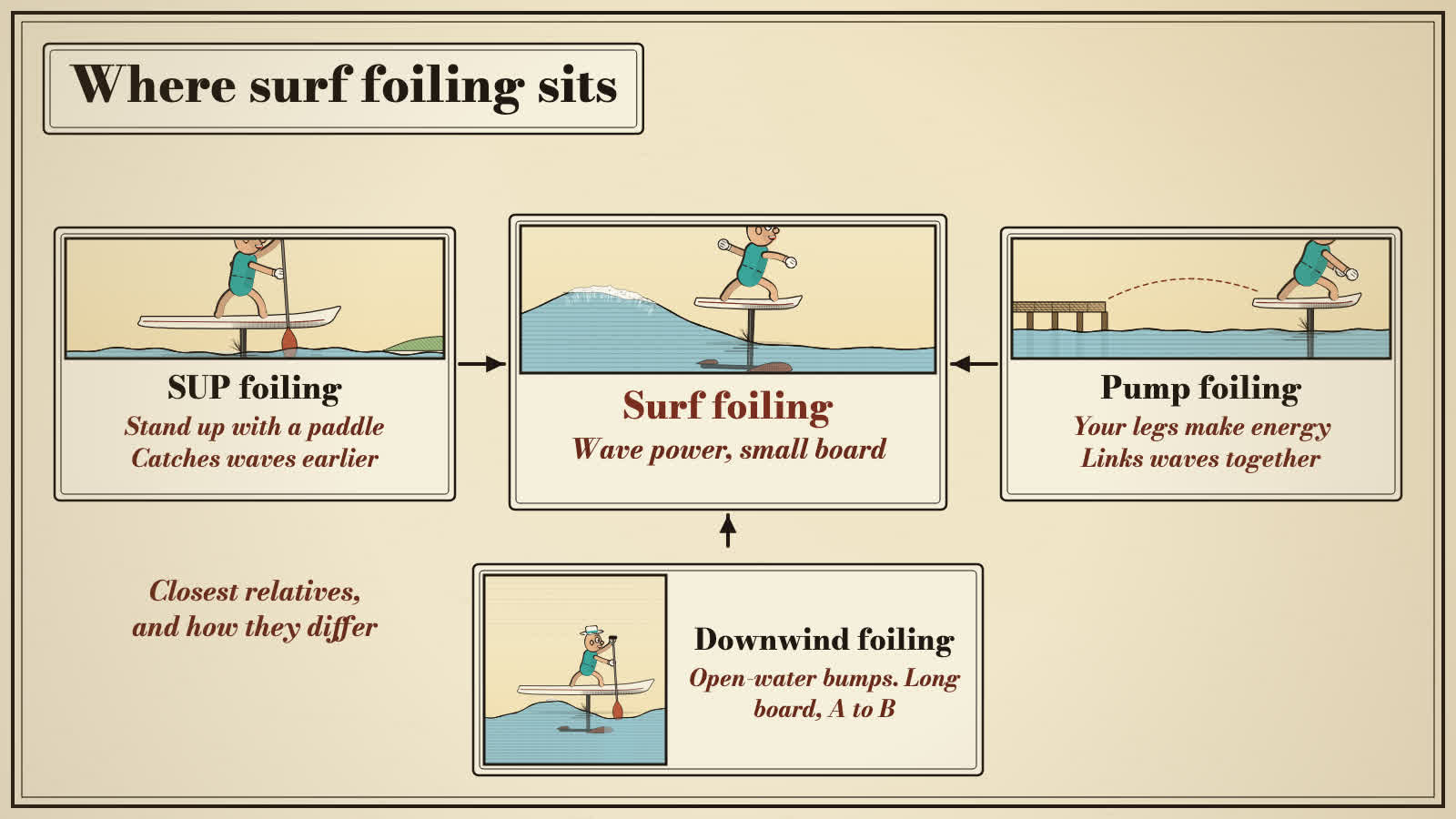
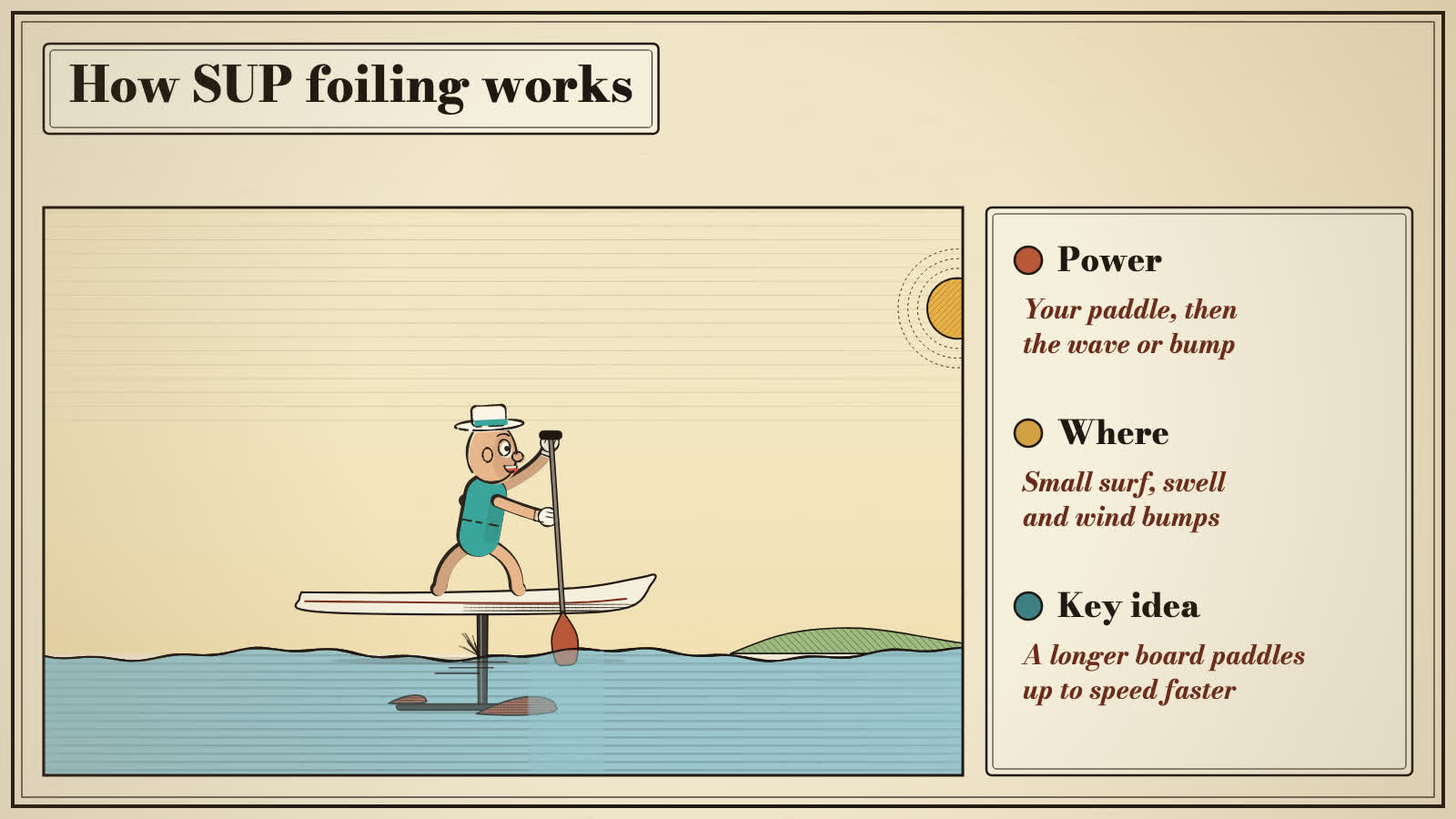
Both ride waves. In SUP foiling you stand on a bigger board and use a paddle, which lets you catch swell earlier and see it coming. Prone boards are smaller and more agile, but catching waves takes more effort. Read SUP foiling for the paddle version.
Surf foiling vs pump foiling
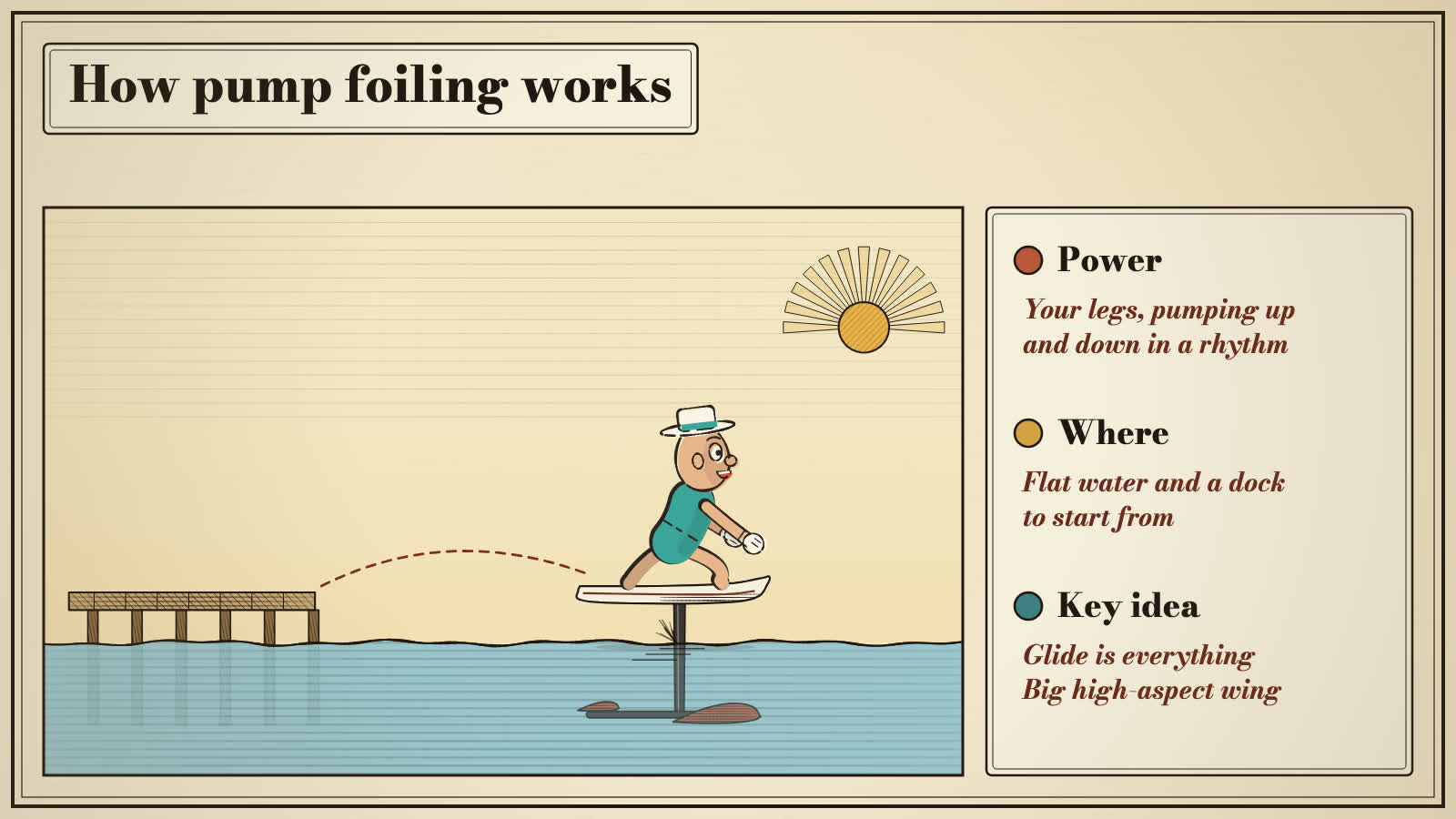
Surf foiling takes its energy from the wave. Pump foiling makes all of its energy with your legs, often from a dock start on flat water. Surf foilers use pumping to connect waves, so the two feed each other. See pump foiling.
Surf foiling vs downwind foiling
Surf foiling happens at a break, riding waves that peel toward shore. Downwind foiling rides wind-made bumps in open water for miles, on a much longer board, and ends somewhere else. See downwind foiling.
Who it suits
A good fit if you:
- already surf and can read waves, paddle and pop up
- live near small, soft surf that is boring on a normal board
- have spent some time on a foil already, behind a boat or on an e-foil
Probably not your first foil sport if:
- you have never surfed. Duotone calls shortboard surfing skills crucial for prone foiling, along with surf etiquette.7
- you want quick progress. Duotone calls prone notably more challenging to learn than wing foiling or kitesurfing.8
- you only surf crowded peaks
Even strong surfers start over as beginners. The pop-up has to land centered over the mast, and the way you weight your feet is new.
Getting started: lessons, renting, buying
- Lesson or not? Few schools offer prone foiling courses. Duotone suggests building foil experience behind a boat, a jet ski or at a cable park first, then taking it to the waves.7
- Where to find one. Fly before you surf. Time behind a boat (wake foiling) or on an e-foil shows you how a foil feels without the wave.
- Rent or buy? Borrow or demo first. A friend's prone setup or a shop demo tells you a lot before you spend money.
- What to buy first. Spend on the foil first. Start on a bigger, forgiving board you can borrow or buy used, because it is the part you outgrow.
- What your first sessions look like. Short and full of falls. Learners do best on soft, crumbly waves of around 1 to 2 feet.9
Beginner tip: your first goal is a few seconds of flight in a straight line. Turns and linking waves come much later.
Safety notes
The basics are the same in every kind of foiling: read our foil safety guide. Surf foiling adds a few of its own:
- Other people in the lineup. A foil has sharp tips and edges, and a drifting foil board is dangerous for others. Avoid crowded spots and learn where nobody is in your path.6
- Lineup manners. A foil can catch waves earlier and further out than a surfboard, so it is easy to drop in on people. Ride away from the pack, respect priority and give waves away.
- Steep, pitching waves. Taking off on a steep section throws you forward over the foil. Small, soft waves are safer.
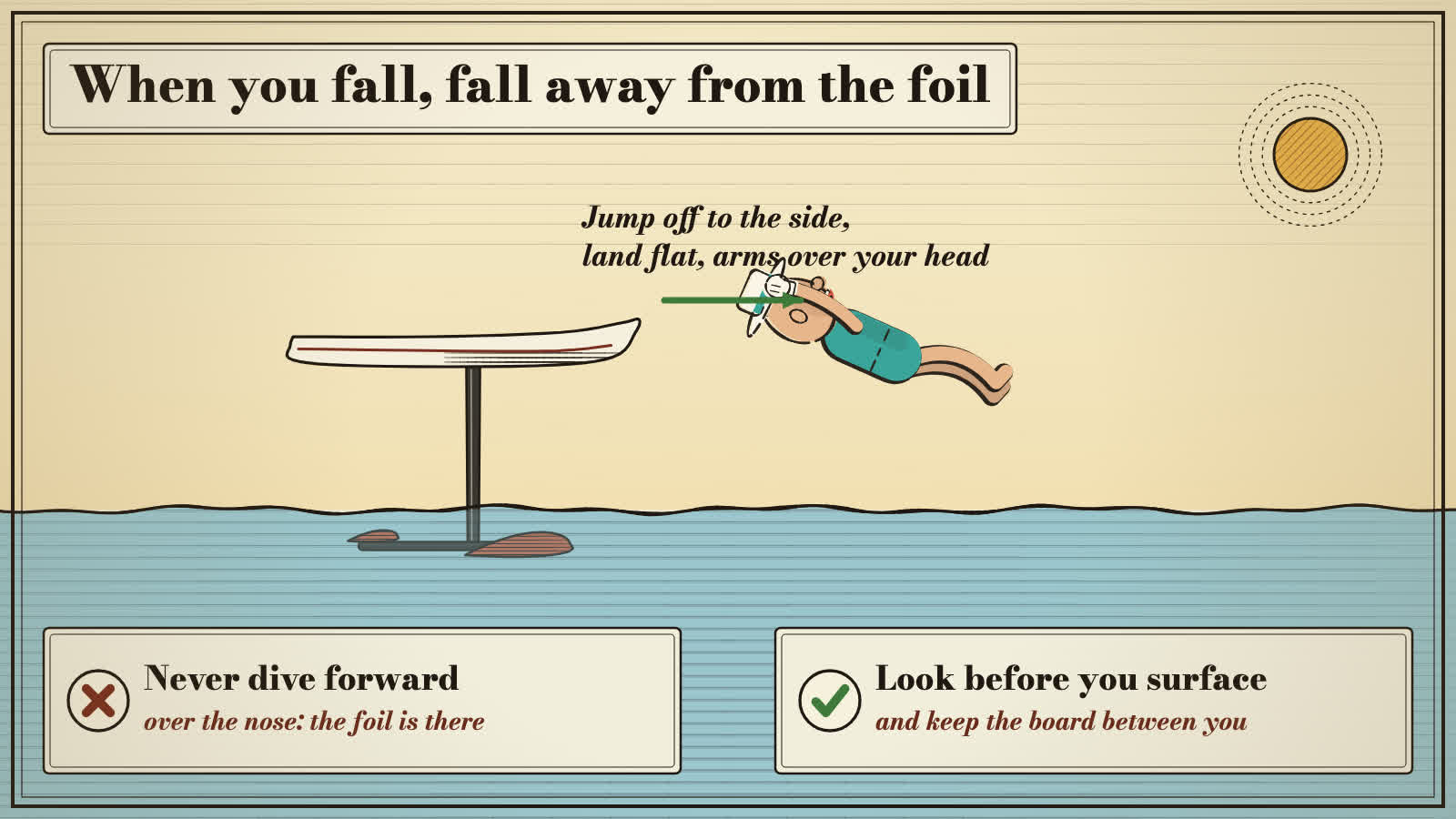
- How you fall. The leash keeps the board close, which also keeps the foil close. Fall flat and away from the board, never dive head first, and cover your head.
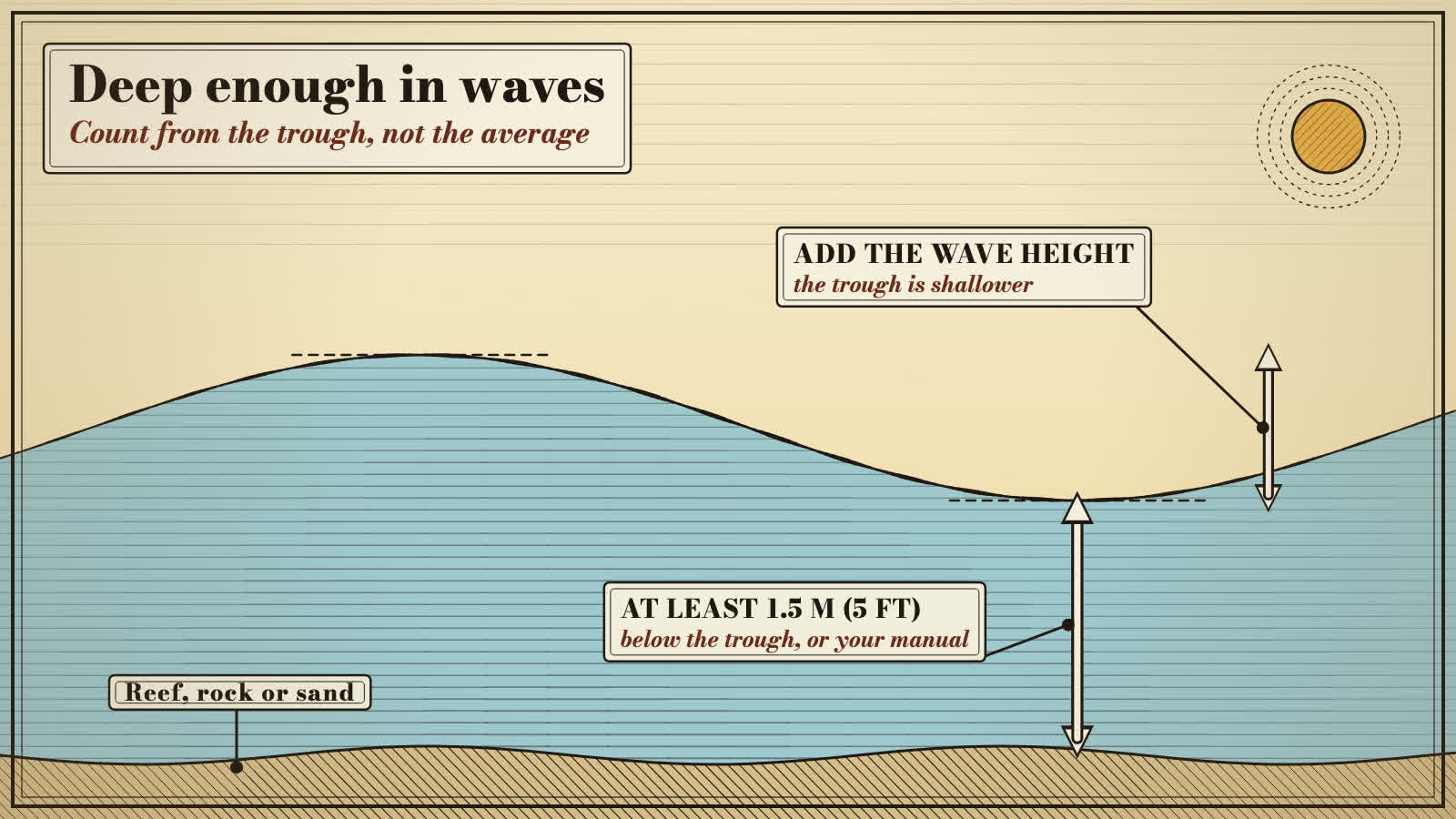
- Shallow reefs and sandbars. The foil hangs well below the board, so it hits bottom long before a surfboard fin would.
Not sure this is the one? Compare every kind on what is foiling.
FAQ
What does prone foiling mean?
It means foiling where you paddle into the wave lying down, as on a surfboard, with no wind, boat or motor. "Prone foiling" and "surf foiling" mean the same thing.1
Can a beginner surf foil?
Not a beginner surfer. You need solid surfing skills first, and foil time behind a boat or on an e-foil helps a lot. Duotone ranks prone among the hardest kinds of foiling to learn.8
Is surf foiling banned at some beaches?
Rules depend on the beach and on local lifeguards, so check before you paddle out. Even where it is allowed, keep well away from other surfers and swimmers.
What size waves are best for surf foiling?
Small, soft waves. Learners do well on crumbly waves of about 1 to 2 feet, the kind that feel too weak for a surfboard.9
Keep learning
Sources
Facts checked against the sources below in November 2026.
- Duotone help center, What is prone foiling duotone-wing-and-foiling-helpcenter-copy.gorgias.help ↩
- SURFER (via Yardbarker), Never tried foiling? Here's everything you need to know yardbarker.com ↩
- The Inertia, Foiling and the future of surfing theinertia.com ↩
- Duotone help center, How big should my board be for prone foiling duotone-wing-and-foiling-helpcenter-copy.gorgias.help ↩
- Slingshot Sports, How to understand and choose a hydrofoil slingshotsports.com ↩
- Duotone help center, How dangerous is prone foiling duotone-wing-and-foiling-helpcenter-copy.gorgias.help ↩
- Duotone help center, How and where can I learn prone foiling duotone-wing-and-foiling-helpcenter-copy.gorgias.help ↩
- Duotone help center, How difficult is prone foiling duotone-wing-and-foiling-helpcenter-copy.gorgias.help ↩
- Tonic, Transitioning from surfing to prone foiling tonicmag.com ↩