 Foilopedia
Disciplines · Wave and paddle
SUP foiling: what it is and how it works
SUP foiling (SUP is short for stand-up paddle) is stand-up paddleboarding on a foil board. You stand, paddle hard to catch a small wave or swell bump, and once you have enough speed the hydrofoil under the board lifts you out of the water. The paddle gets you up, then the wave keeps you flying.
It suits people who are already comfortable riding waves on a stand-up paddleboard.1
It is also one of the main ways into downwind foiling: most downwind foilers use a paddle to take off onto the foil.2
At a glance
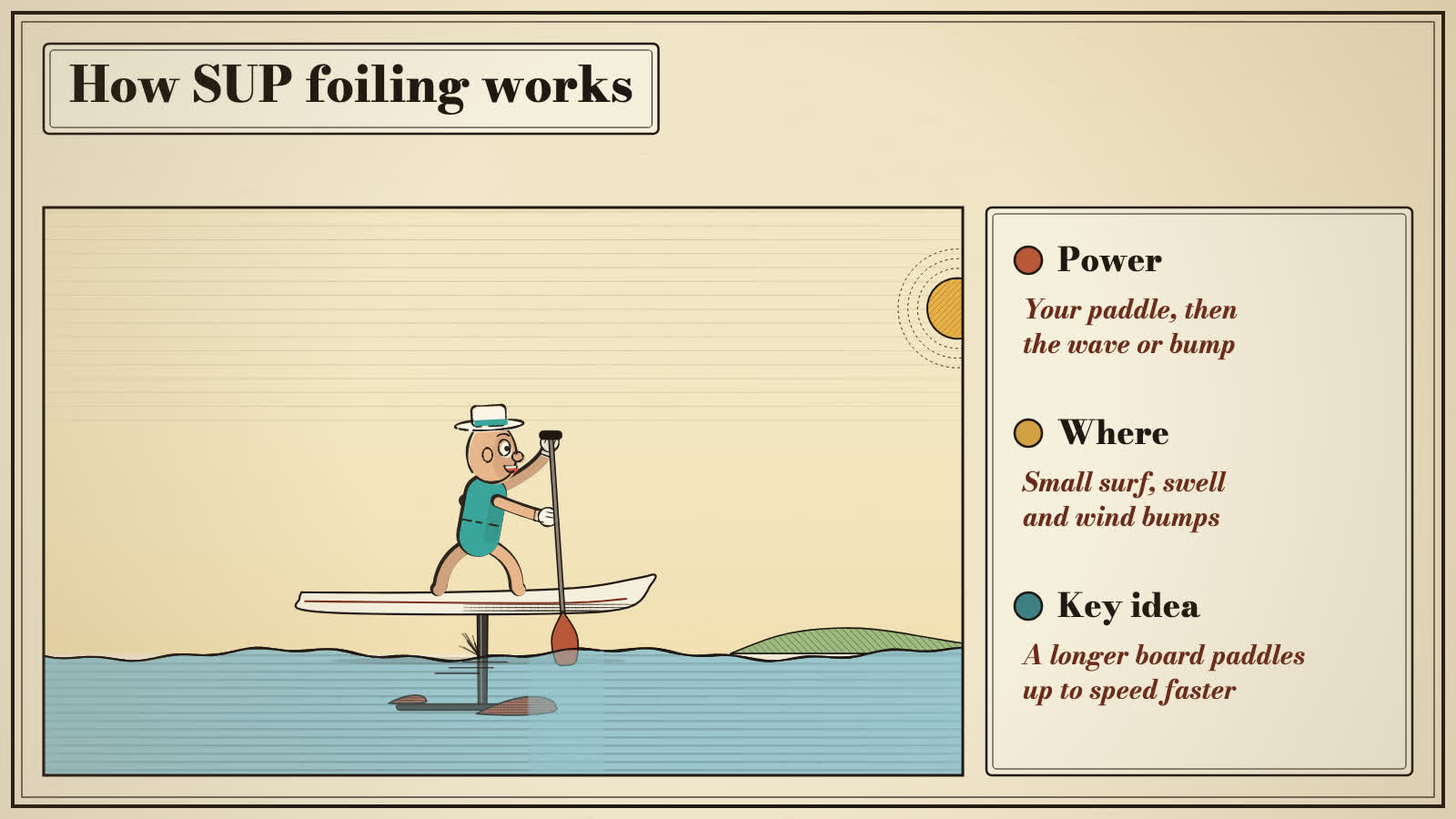
- Power: your paddle, then waves or swell
- Where: small surf, open swell and wind bumps
- Learn from zero? After you can SUP surf
- Typical first step: a tow behind a boat, then small waves
- Gear to start: long foil board, paddle, foil
- Closest relatives: surf foiling, downwind foiling
How it works
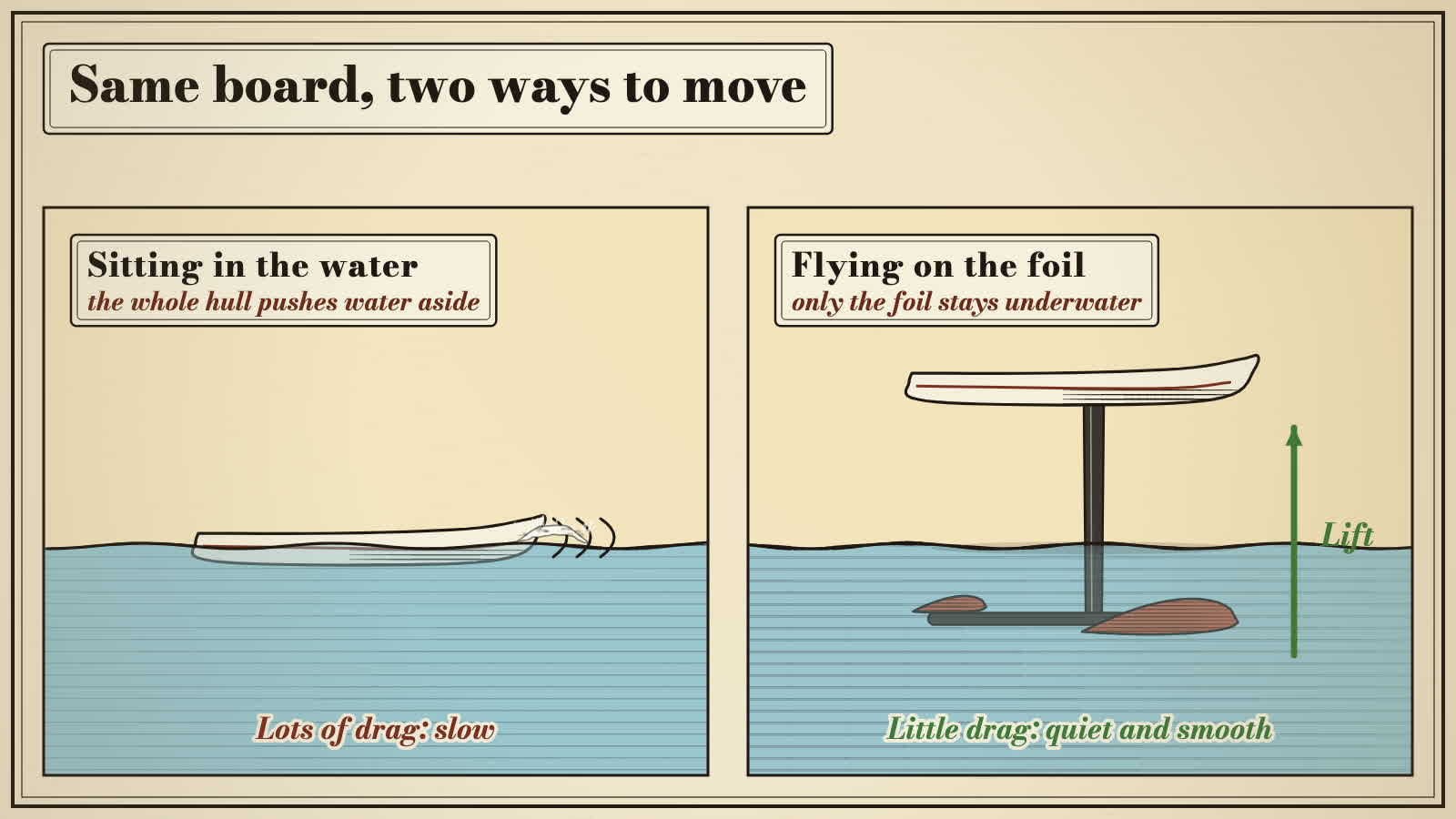
The foil works the same way as in every other kind of foiling. For the parts and how height control works, see how a hydrofoil works.
What makes SUP foiling different is the paddle. A foil needs speed before it lifts, and here you make that speed yourself. You paddle the board up to speed, line up with a passing wave or bump, and let it push you the last bit until the foil takes over.
Standing up gives you two big advantages over lying down. You can see swell coming from further away, and a paddle gives you more power to get moving early, before a wave gets steep. Once you are up, the paddle also works as a balance pole.
To stay up between waves you pump the board with your legs, a skill with its own page: pump foiling.
The gear
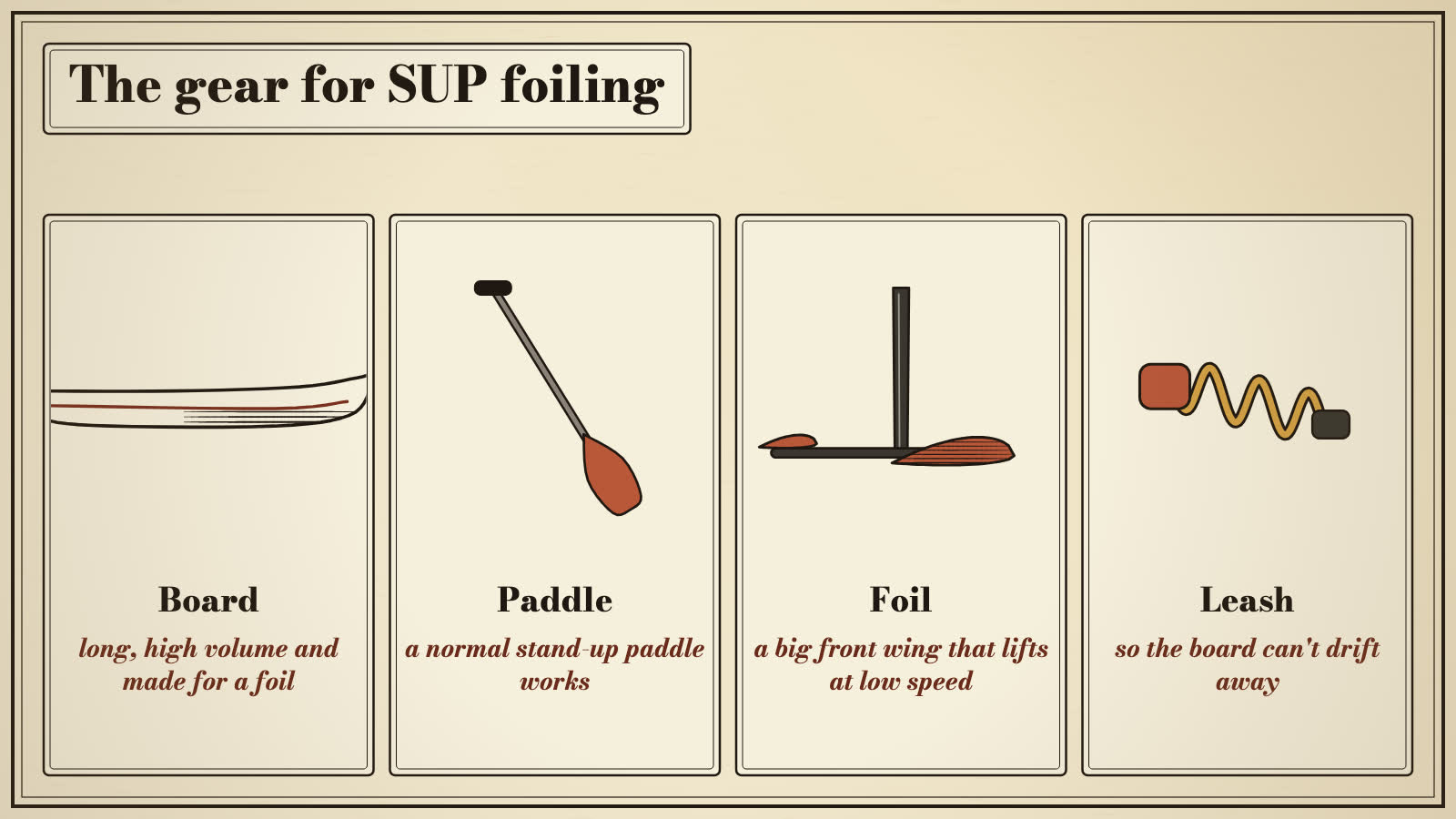
- Board: longer and higher in volume than a prone foil board, so you can stand and paddle it. Longer, narrower boards are easier to paddle up to speed.3
- How big for a beginner: beginners pick the longer sizes. The FAQ below has a rule of thumb for volume.4
- Paddle: a normal stand-up paddle works.
- Foil: a big front wing that lifts at low speed. Bigger is calmer, as with every kind of foiling.
- Leash: a board leash, so the board can't drift away after a fall.
What about my inflatable SUP? Most normal paddleboards, and inflatables in particular, are not built to take a foil. Some boards are sold as foil-ready. Check with the maker before you fit one.
Words you'll hear
- Bump: a small, wind-made wave in open water.
- Paddle-up: paddling hard enough to lift onto the foil, with little help from a wave.
- Downwinder: a long run with the wind behind you, from one spot to another.
- DW board: short for downwind board, a long, narrow foil board.
- Pumping: driving the board up and down with your legs to keep flying.
How it differs from other kinds of foiling
SUP foiling vs surf foiling
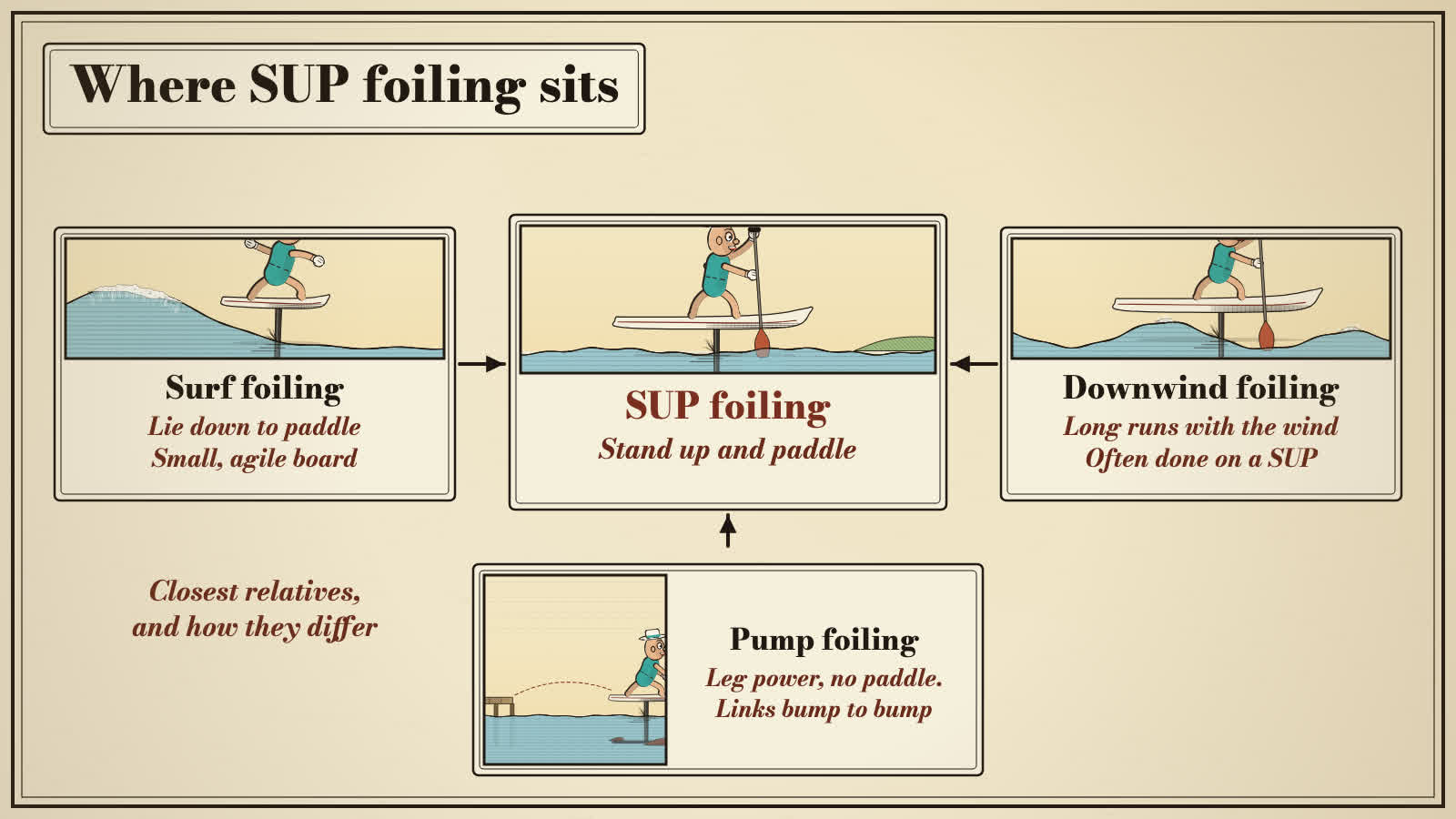
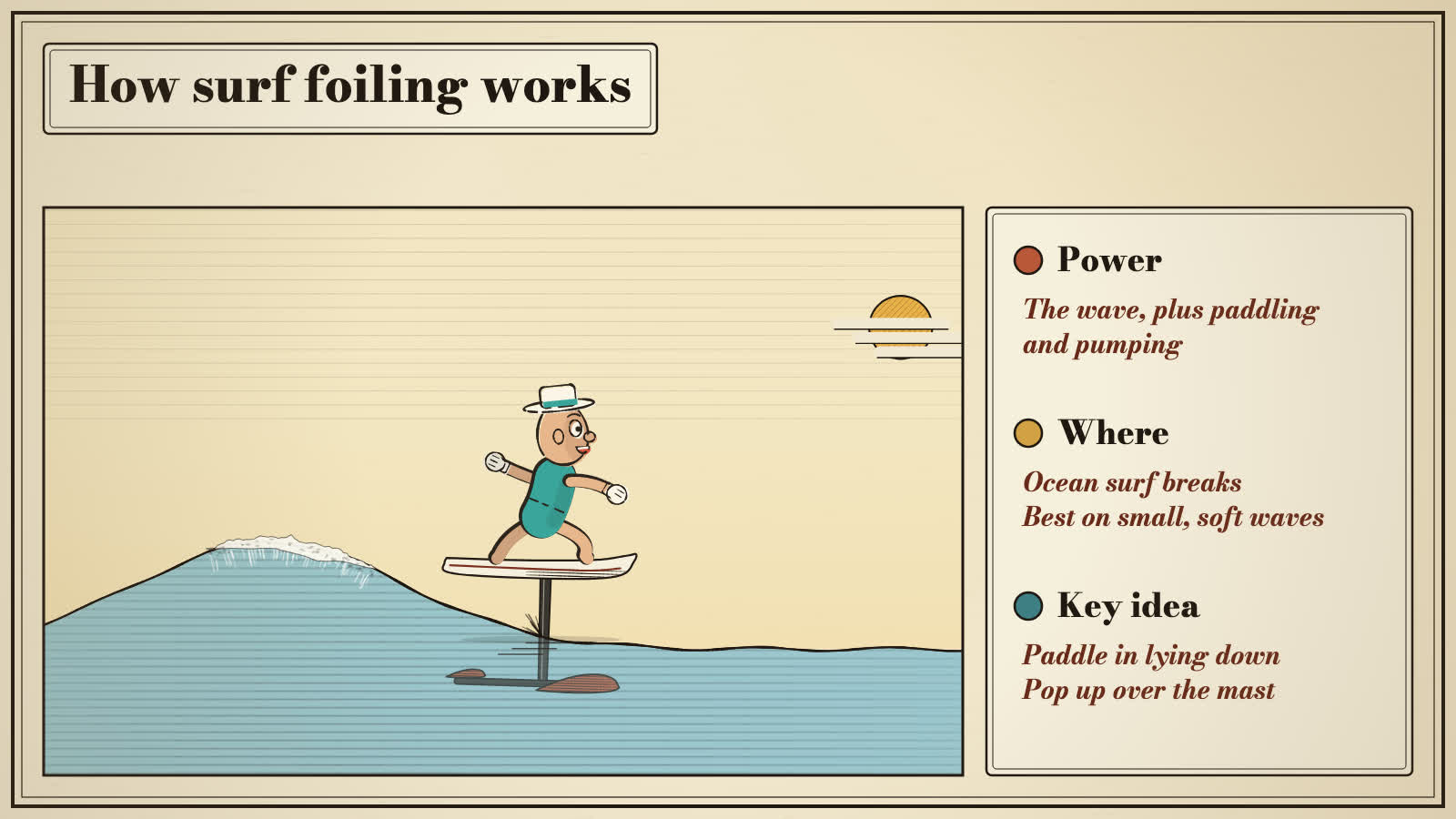
In surf foiling, also called prone foiling, you lie down and paddle into waves with your arms, then pop up. The board is much smaller and more agile. On a SUP foil you stand and paddle from the start, which makes catching waves earlier and easier, but the bigger board is heavier and harder to turn.
SUP foiling vs downwind foiling
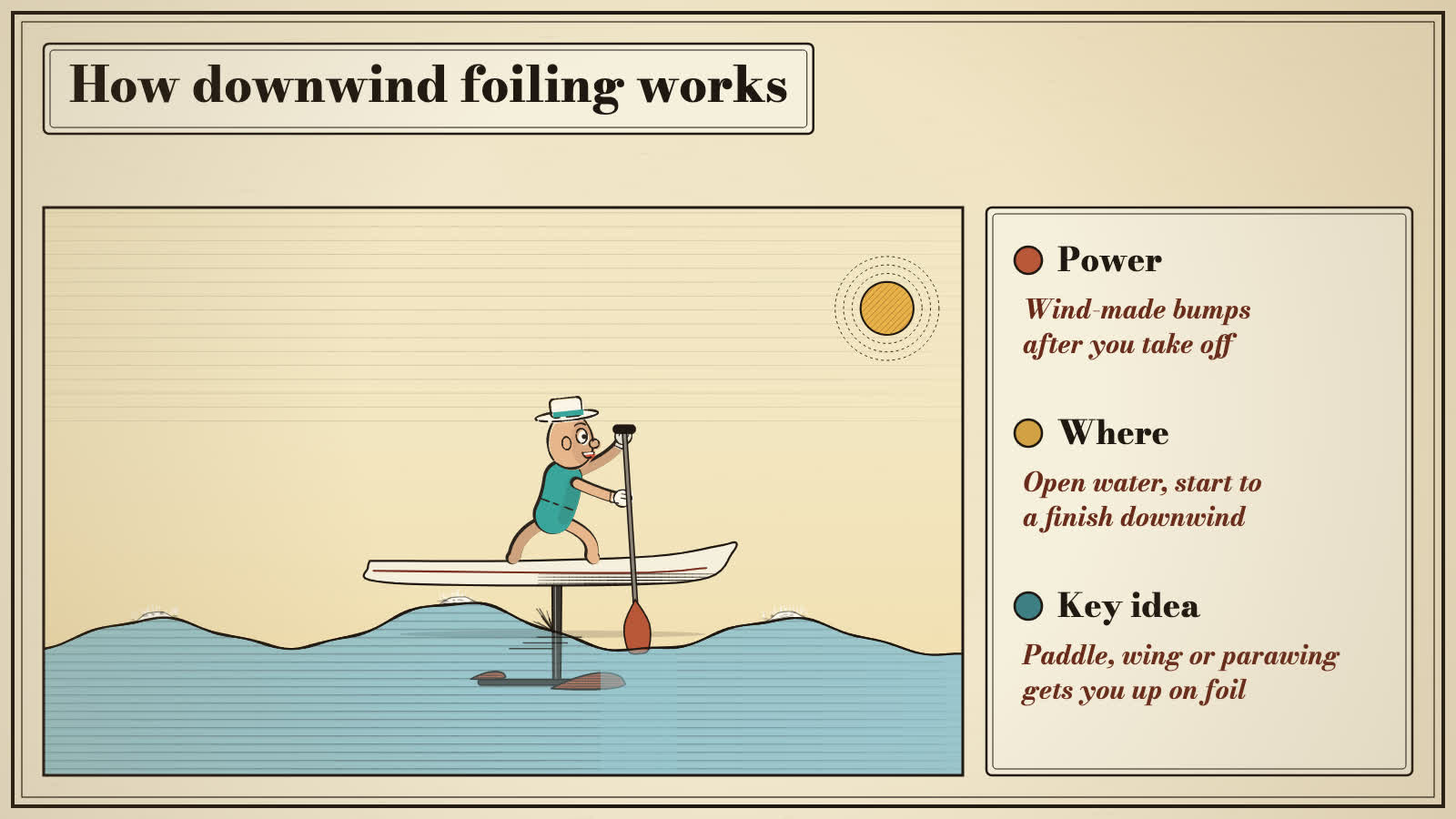
This is the one that confuses people. SUP foiling describes the gear: a foil board you stand on and a paddle. Downwind foiling describes a way of riding: a long run with the wind, linking open-water bumps. Many downwinders ride a SUP foil board, and others use a wing to get up. The full story lives in downwind foiling.
Some downwinders now use a parawing instead of a paddle: see parawing foiling.
Who it suits
A good fit if you:
- already SUP surf and want to ride smaller, weaker waves
- paddle in the ocean and want a way into downwinding
- like a workout: the paddle-up is a real fitness test
- live where waves are small and soft most days
Probably not your first foil sport if:
- you have never stood on a paddleboard in waves
- you mostly surf busy peaks, where a big board and a foil are hard to manage around others
- you want light kit you can carry far or fly with
Getting started: lessons, renting, buying
Lesson or not? Yes, if you can find one. A coach saves you a lot of trial and error with timing and balance.
Where to find one. Ask SUP shops and foil shops near you whether they teach it or know a coach who does. A friend with a boat helps too, see the next point.
Learn the foil first, then the waves. SUPconnect suggests learning the foil behind a boat or jet ski, where the balance is easier to control, then riding a boat's wake for deeper water and more time on each wave.1
Rent or buy? Rent or borrow first if you can. Foil boards come in many lengths and widths, and a test ride tells you more than a size chart.
What to buy first. A board with enough volume and length for your weight, and a big, forgiving front wing. You can keep your normal paddle.
What your first sessions look like. Lots of paddling and short flights. Expect to catch a bump, lift for a few seconds and touch down again while you learn to keep the foil low and steady.
Safety notes
The basics are the same in every kind of foiling: read our foil safety guide.
On a SUP foil, add these:
- Don't get caught inside. A broken wave can throw a long board and its foil back at you. Ride away from the impact zone, where waves break, and never let the board sit between you and an oncoming wave.
- Keep clear of crowds. A long board, a paddle and a foil take up a lot of room. Learn away from surfers and swimmers.
- Push the paddle away when you fall. Throw it wide of you and the foil, not under you.
- Check the wind direction. Offshore wind can push you out to sea once you are tired.
- Open-water runs need a plan. If you head out on a downwinder, read the safety notes in downwind foiling first.
Not sure this is the one? Compare every kind on what is foiling.
FAQ
Can you put a foil on a regular paddle board?
Usually not. A foil needs a strong, built-in mount, and most normal and inflatable paddleboards don't have one. Some boards are made foil-ready, so check with the maker before you try.
Is SUP foiling hard to learn?
It is easier if you already SUP surf. SUPconnect says to get comfortable riding waves on a paddleboard first, then learn the foil behind a boat or jet ski before taking it into the ocean.1
What size board do you need for SUP foiling?
Bigger than you think while you learn. A SkatePro size guide for F-One boards gives beginners their body weight in kilograms plus 40 liters, and suggests the longer sizes of its SUP and downwind board. Brands differ, so treat it as a starting point.4
Is SUP foiling the same as downwind foiling?
No. SUP foiling is the gear, a foil board you stand on with a paddle. Downwind foiling is a way of riding long distances with the wind. Many people do both on the same board.
Keep learning
Sources
Facts checked against the sources below in November 2026.
- SUPconnect, SUP foil 101 supconnect.com ↩
- Duotone help center, What is downwind foiling duotone-wing-and-foiling-helpcenter-copy.gorgias.help ↩
- Duotone help center, Long and narrow or wider and shorter downwind boards duotone-wing-and-foiling-helpcenter-copy.gorgias.help ↩
- SkatePro, F-One foil board size guide skatepro.com ↩