 Foilopedia
Disciplines · Wind-powered
Parawing foiling: what it is and how it works
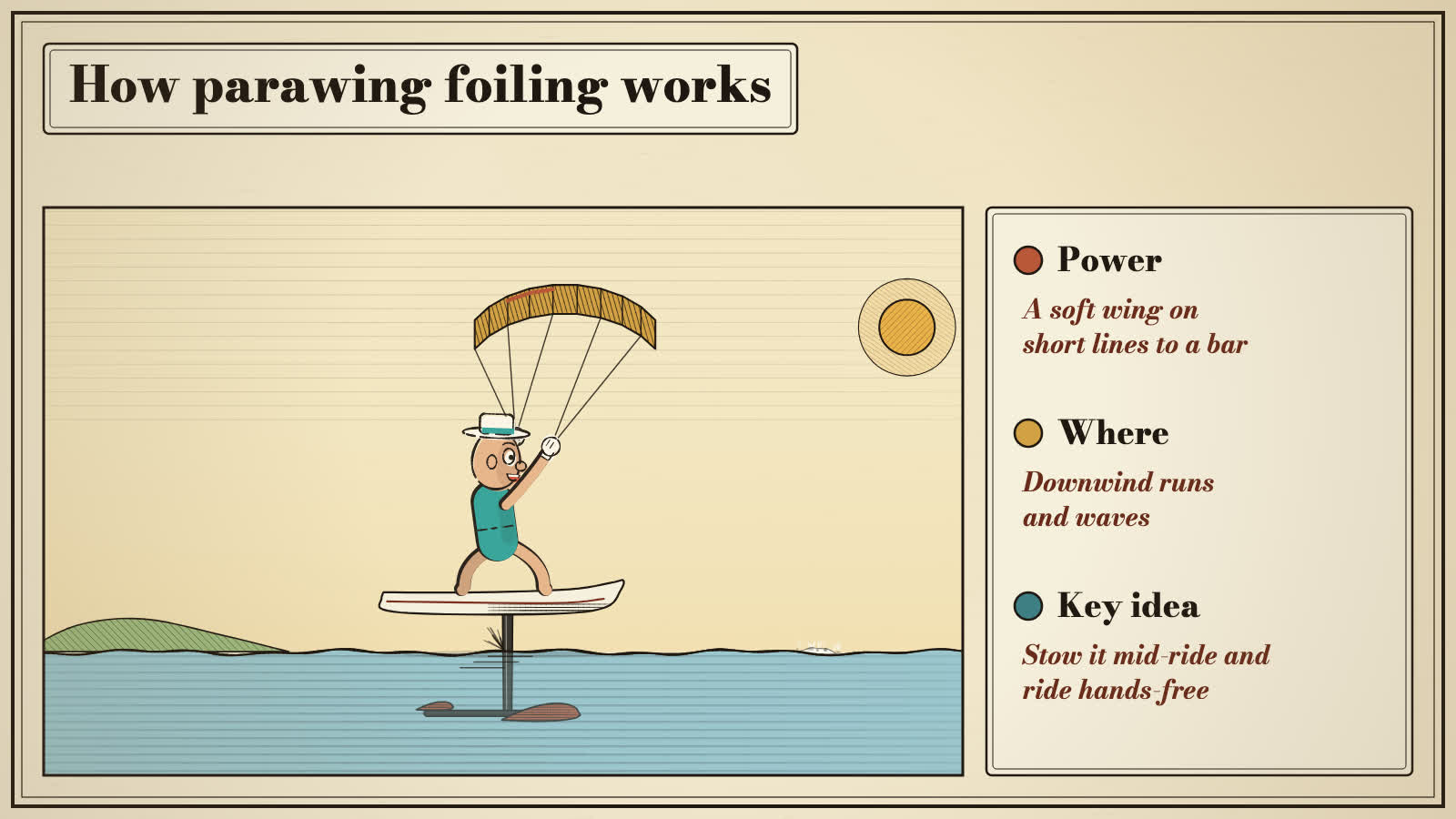
Parawing foiling is foil riding with a soft, frameless wing on short lines. You use it to get up on foil, then pack it into a belt and ride the swell with nothing in your hands. It is built for downwind runs and waves, not for cruising.1
It is not a way into foiling from zero. Duotone calls it considerably harder than wing foiling and recommends foiling experience before you start.2
At a glance
- Power: wind in a soft wing to get going, then swell once it is stowed
- Where: downwind runs along the coast, open-ocean swell and wind bumps
- Learn from zero? After another foil sport, usually wing foiling
- Typical first step: launching and packing it on the beach, then flat water
- Gear to start: parawing, stash belt, foil board, foil
- Closest relatives: wing foiling, downwind foiling
How it works
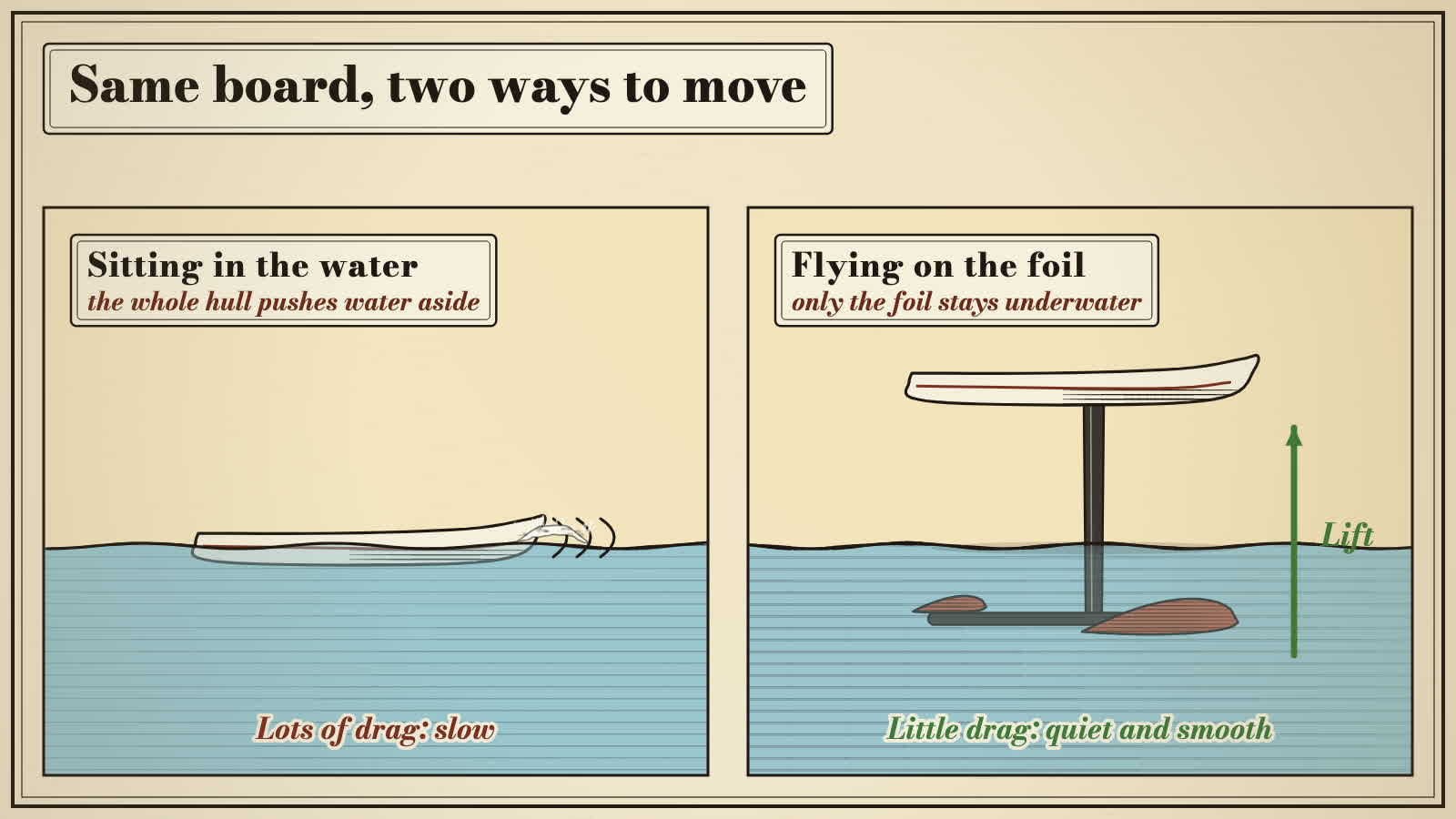
You fly the canopy on its lines to build speed, then the foil lifts the board, the same way as in any wind foil sport. The foil itself works the same everywhere: see how a hydrofoil works.
The difference comes next. Once you are flying on a bump, you collapse the wing and put it away. Now you ride like a surf foiler or downwinder, with nothing in your hands. Duotone describes the result as a completely free foiling feel.3
What stowing looks like, in concept, with one popular belt design:
- Run a hand down the front lines to collapse the canopy.
- Push the wing into the belt's big pocket, so the lines end up inside the fabric where they can't tangle.
- Slide the bar into the smaller pocket on top.4
All of that happens while you are foiling, so it takes practice. Duotone says riders with downwind experience find it easier, and a foil that glides well gives you more time to pack.5
When the bumps run out, you relaunch the wing and head back upwind. At first, Balz Müller suggests keeping the packed wing in your hand instead of the belt, so you can relaunch it quickly.6
The sport is brand new. The Inertia credits Greg Drexler of Boardriding Maui with debuting the Maliko V1, which it calls the first upwind-capable parawing, on August 21, 2024.1
What riders use it for:
- Downwinders. For most people, its suitability for downwinding is the deciding factor, says Balz Müller.6
- Waves and wind bumps. Fly out, stow, ride, then redeploy to get back.1
- Travel. It packs small. The Inertia's tester carried one in a backpack just in case.1
The gear
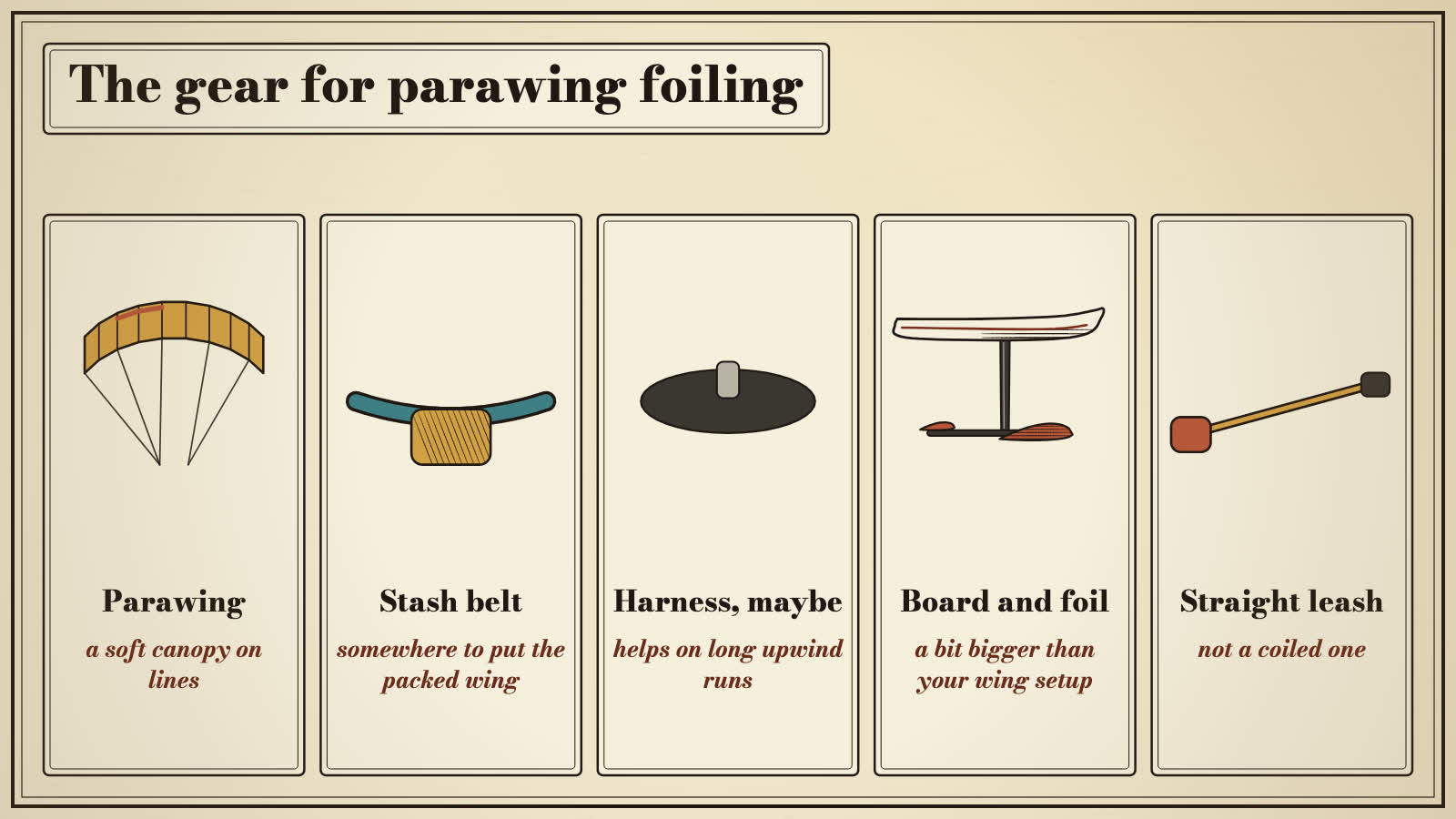
- The parawing. A soft canopy on lines to a bar. How it is built, and single vs double skin, is in parawing or wing.
- A stash belt or vest. Somewhere to put the packed wing. Options range from hip belts to shirts or vests with built-in pockets.5
- A harness, maybe. Not required, but parawinging can be hard on the arms, so Duotone says a harness helps on longer upwind runs.7
- Board and foil. Usually a bit bigger than your wing foil setup (see the FAQ).
- A straight board leash, unlike the coiled leash many foilers use. More in the safety notes.
Words you'll hear
- Canopy: the fabric wing itself.
- A-lines: the front lines, which you run your hand down to collapse the wing.
- Line salad: tangled lines. Often just a spin of the bar sorts it out.6
How it differs from other kinds of foiling
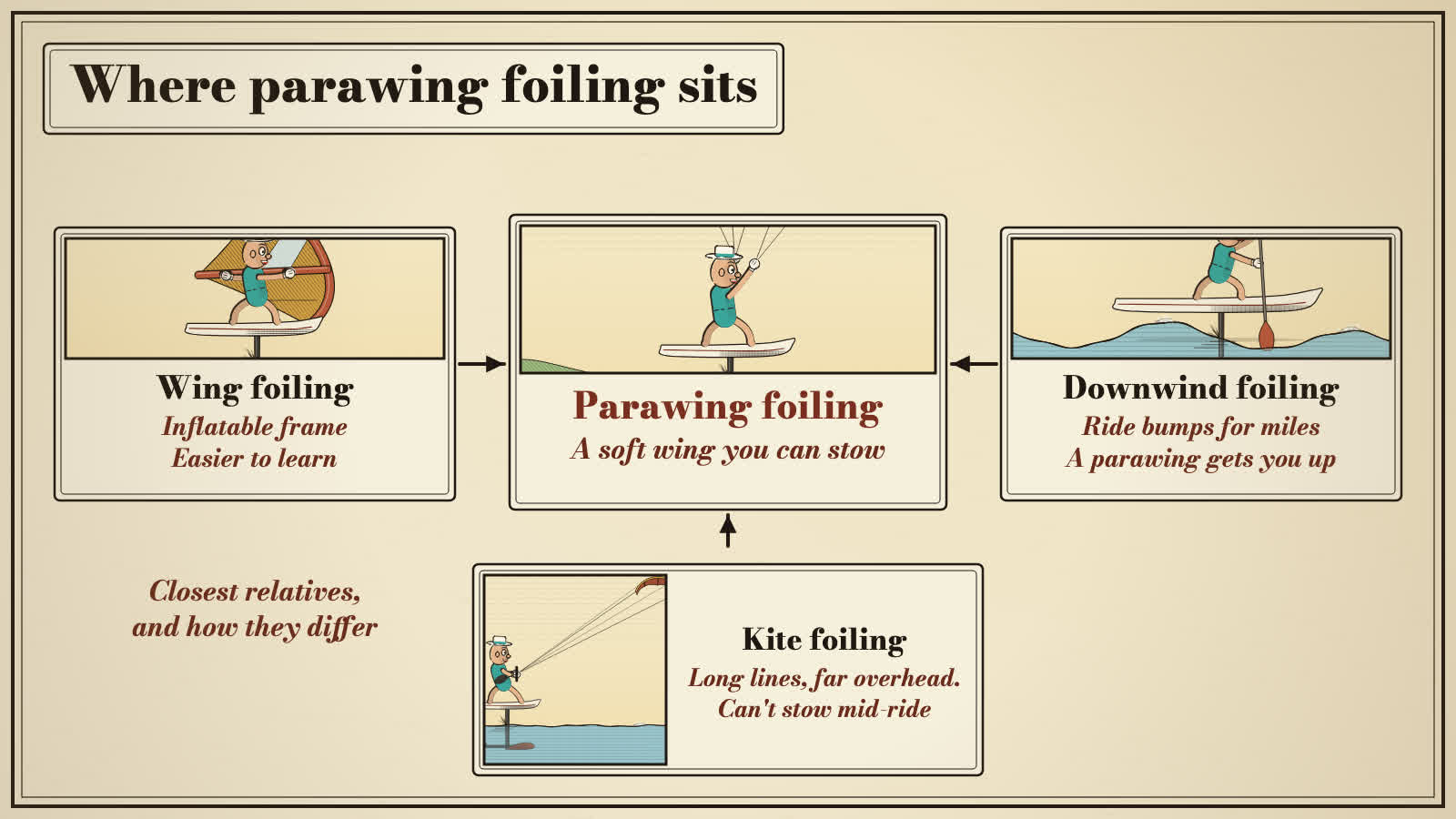
Parawing foiling vs wing foiling
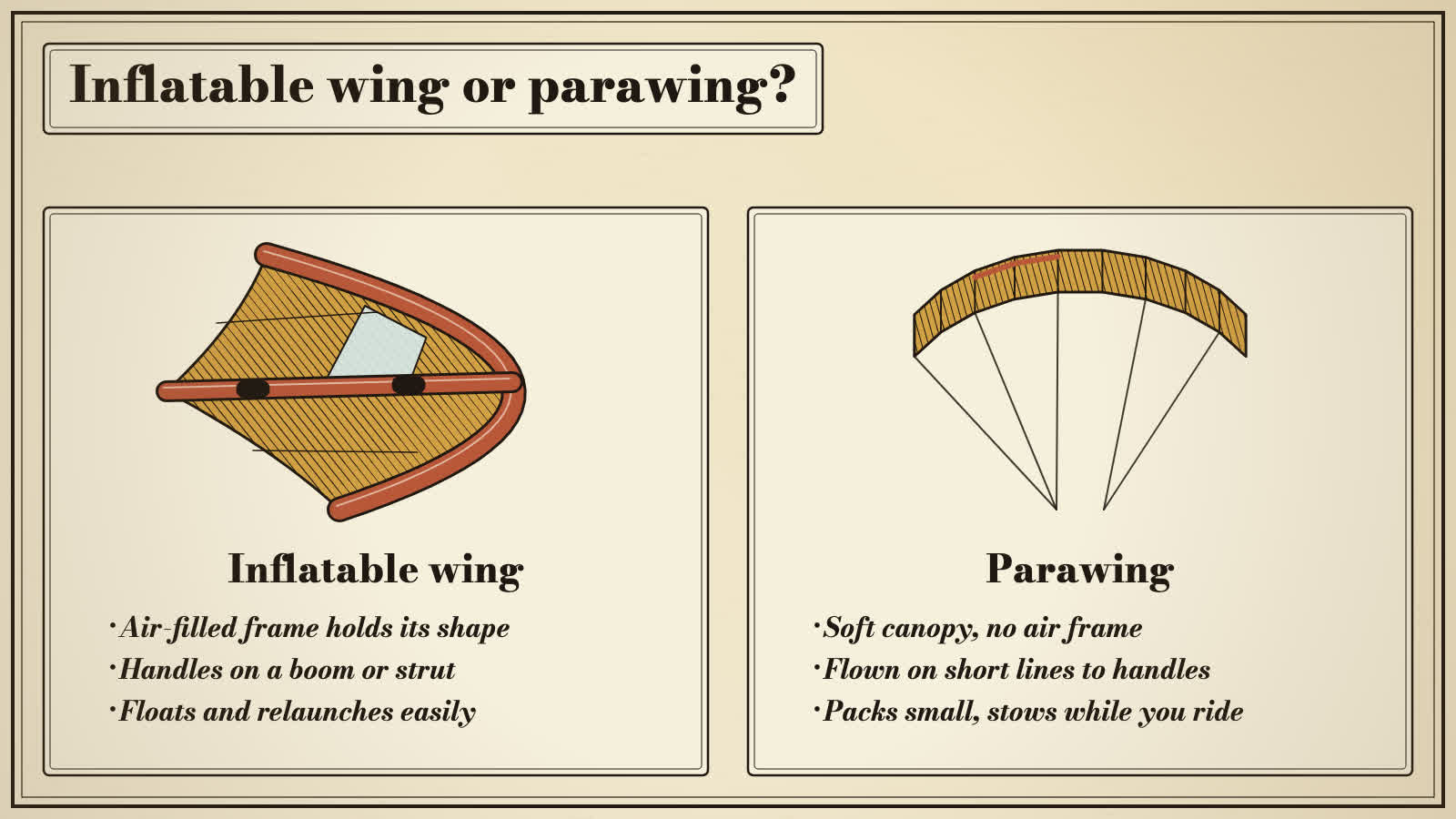
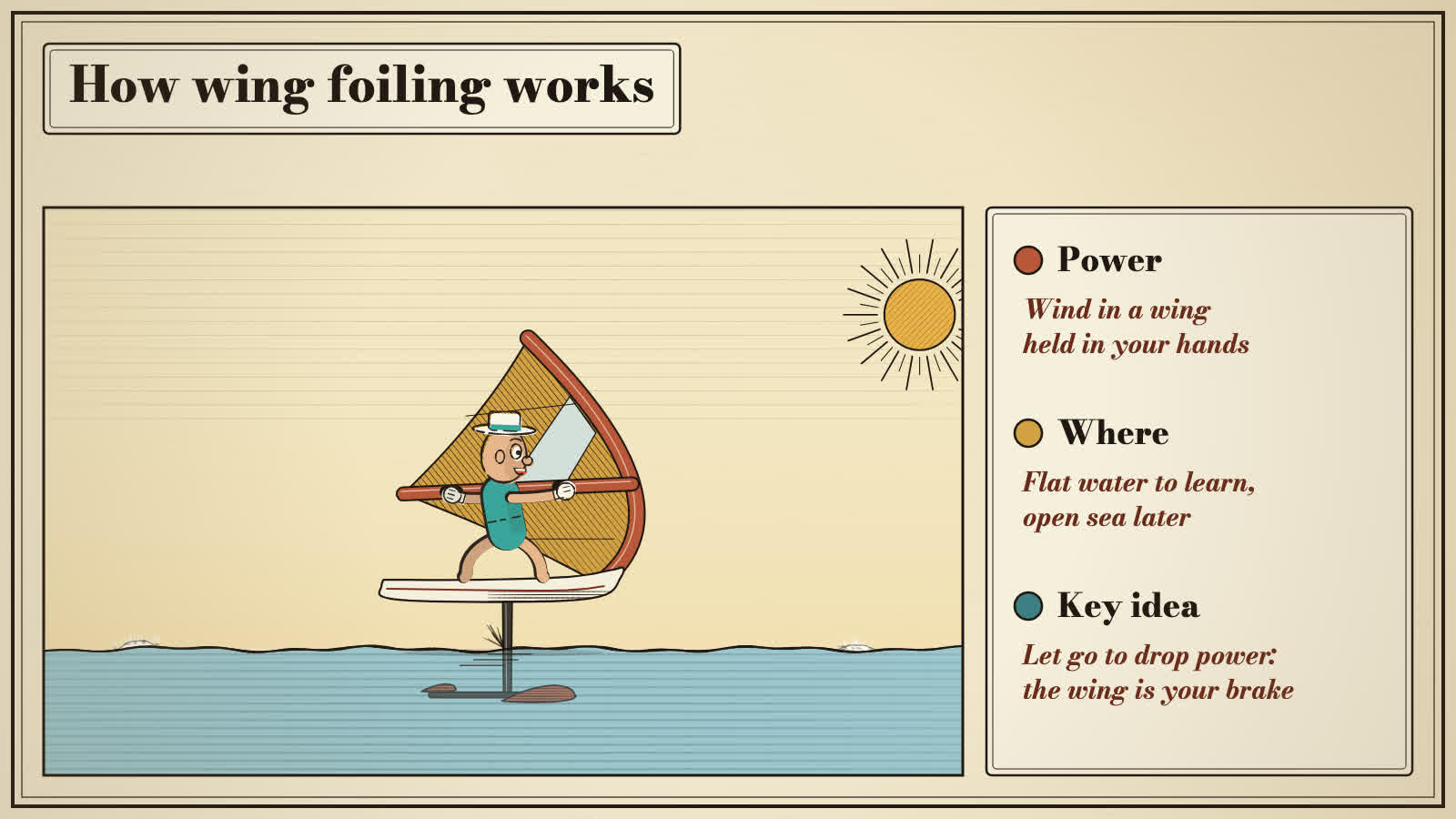
An inflatable wing has an air-filled frame and handles. A parawing is soft, on lines, and packs away. The wing is easier to learn and better in light wind and on flat water, while the parawing is the downwind and wave tool. The full comparison lives in parawing or wing.
Parawing foiling vs downwind foiling
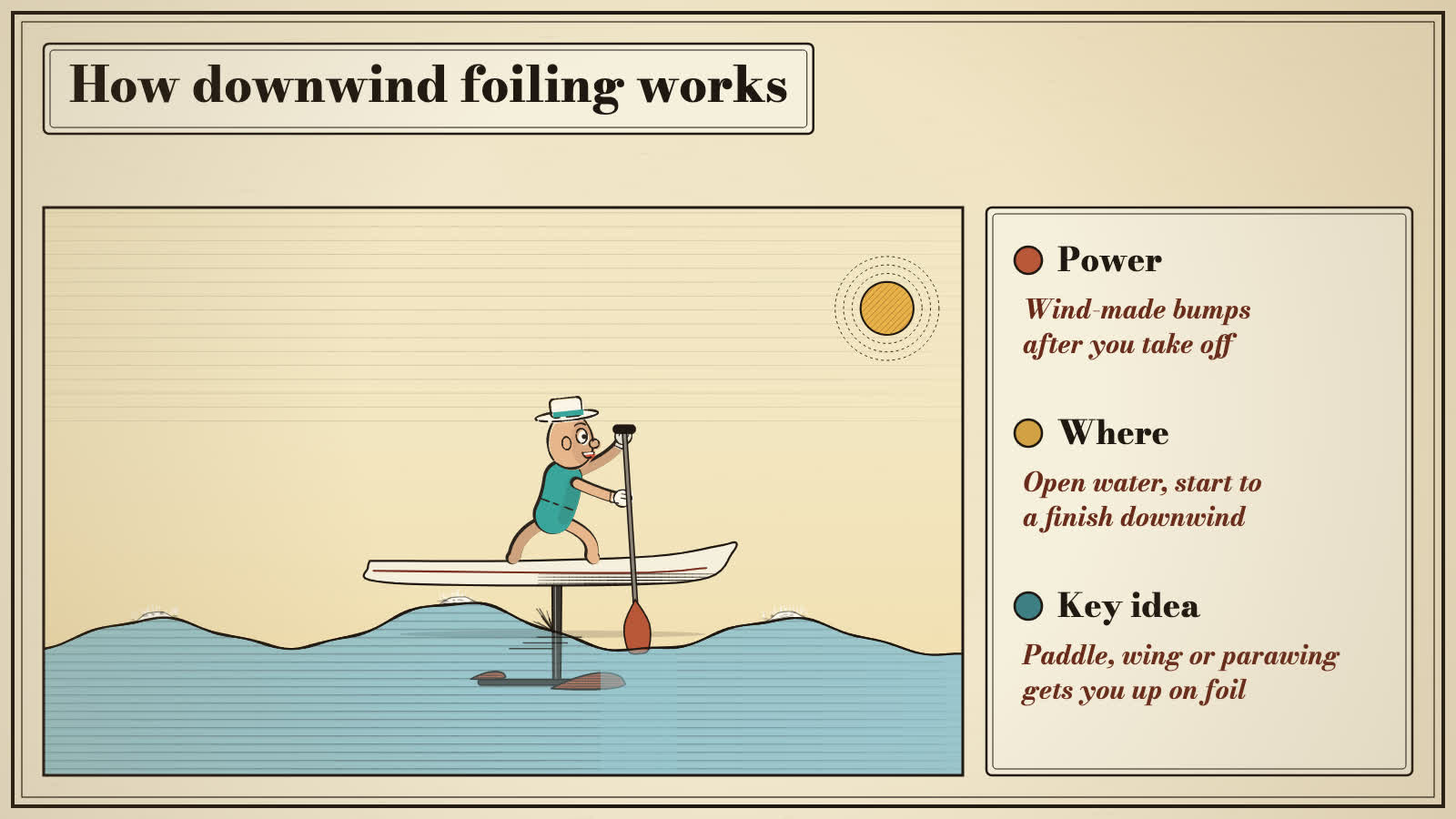
Downwind foiling is a way of riding, not a single piece of gear: you ride bumps for miles with the wind behind you. A parawing is one way to get up on foil for it, instead of a paddle. The Inertia quotes coach Gwen Le Tutor telling would-be downwinders to "skip the struggle" and go straight to the fun. Full guide: downwind foiling.1
Parawing foiling vs kite foiling
A parawing has been called a mini kite, but its lines are short and you hold it close to you. A kite flies far overhead on long lines and can't be stowed mid-ride. Full guide: kite foiling.1
Who it suits
A good fit if you:
- already foil, on a wing or with pumping
- want to downwind without mastering a paddle start
- love riding swell with nothing in your hands
Kite experience helps with the lines, but you still need to foil first.
Probably not your first foil sport if:
- you have never foiled. Learn on a wing first: see parawing or wing.
- your spot has mostly light wind. The Inertia's tester found the wind range much narrower than a wing's.1
- you want freestyle and tricks
Getting started: lessons, renting, buying
Lesson or not? First learn to foil, usually with a wing foil lesson: see your first wing foil session. Then get a coach or experienced friend to help with launching and packing.
Where to find one. Wing and kite schools near downwind runs, and shops that run demo days. It is new, so availability varies by area.
Rent or buy? Try one before you buy if you can, because sizing is less forgiving than with a wing.
What to buy first. If you already wing foil, you may only need the parawing, a stash belt and a straight leash.
What your first sessions look like. Launch, steer and pack the wing on the beach. Then fly it on flat water in steady wind that is a bit stronger than you would choose for a wing, and never offshore. Turns take longer than straight lines, and downwinders come after that.6
Safety notes
The basics are the same in every kind of foiling: read our foil safety guide. Parawing riding adds:
- Know how it depowers. Find out whether your parawing has a safety leash and what letting go of the bar does. In a crash, let go and keep the lines away from the foil, your fingers and your neck. Lines wrapped around a foil or a limb are the hazard a wing doesn't have.
- Never wrap the lines around the packed wing. They are sure to tangle. Pack them inside the canopy.6
- Practice stow and redeploy on land first, not for the first time in deep water.
- Leash and downwind planning. Use a straight leash (parawing or wing explains why), and read the safety notes in downwind foiling before your first run.
- Wind that drops. Don't start a run you can't finish if the breeze fades. The Inertia's tester found the wind range narrow and carries a bigger size for that reason.1
Not sure this is the one? Compare every kind on what is foiling.
FAQ
Is a parawing a kite?
Close. It is often described as a mini kite, but the lines are short, you hold it near you, and you can pack it away mid-ride.1
How do you stow a parawing while riding?
Collapse it with a hand down the front lines, push it into a belt pocket with the lines inside the canopy, then tuck the bar away.4
Is parawing foiling the same as downwind foiling?
No. Downwind foiling means using wind-made waves to glide for miles. Most downwinders paddle up onto the foil, and more and more use a parawing to launch instead.8
Do you need a special board for a parawing?
Not a special one, but go a little bigger on board and foil than you use for winging, because a parawing is less effective for pumping onto the foil.3
Keep learning
Sources
Facts checked against the sources below in November 2026.
- The Inertia, Parawing foiling explained theinertia.com ↩
- Duotone help center, How difficult is parawinging compared to wing foiling duotone-wing-and-foiling-helpcenter-copy.gorgias.help ↩
- Duotone help center, Advantages and disadvantages of parawinging duotone-wing-and-foiling-helpcenter-copy.gorgias.help ↩
- MACkite, Manera pocket wing belt overview mackiteboarding.com ↩
- Duotone help center, How easy is it to stow a parawing duotone-wing-and-foiling-helpcenter-copy.gorgias.help ↩
- SURF magazine, Parawing basics from Balz Müller surf-magazin.de ↩
- Duotone help center, Do I need a harness for parawinging duotone-wing-and-foiling-helpcenter-copy.gorgias.help ↩
- Duotone help center, What is downwind foiling duotone-wing-and-foiling-helpcenter-copy.gorgias.help ↩