 Foilopedia
Disciplines · Wind-powered
Kite foiling: what it is and how it works
Kite foiling is kitesurfing on a board that flies: a kite high above you on long lines does the pulling, and a hydrofoil under the board lifts you clear of the water. You steer the kite with a bar and hang from it through a harness. It is a sport for people who can already kitesurf.1
Most of the challenge is the kite, not the foil. That is why "learning kite foiling from zero" really means a kite course first.
At a glance
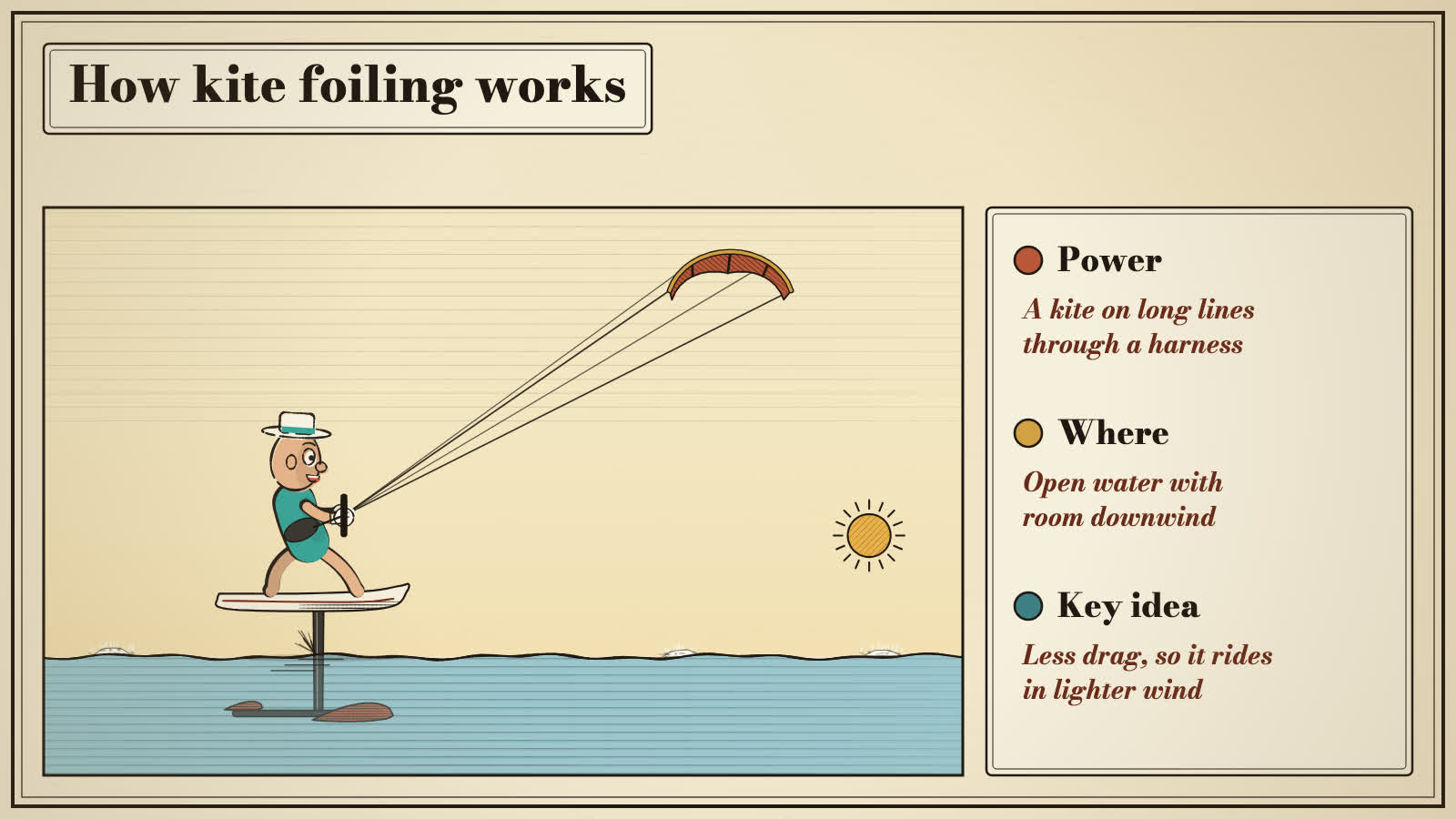
- Power: wind, caught by a kite on long lines
- Where: open water with a clear beach to launch from and room downwind
- Learn from zero? After another sport: learn to kitesurf first
- Typical first step: a kitesurfing course, then foil coaching
- Gear to start: kite, bar and lines, harness, foil board
- Closest relatives: wing foiling, windsurf foiling
How it works
The kite flies high in the wind window, the area of sky downwind of you where it can pull. Steering the kite through it makes power, and the harness passes the pull to your hips. You start in the water, like any kitesurfer, and the kite pulls you up onto the board.
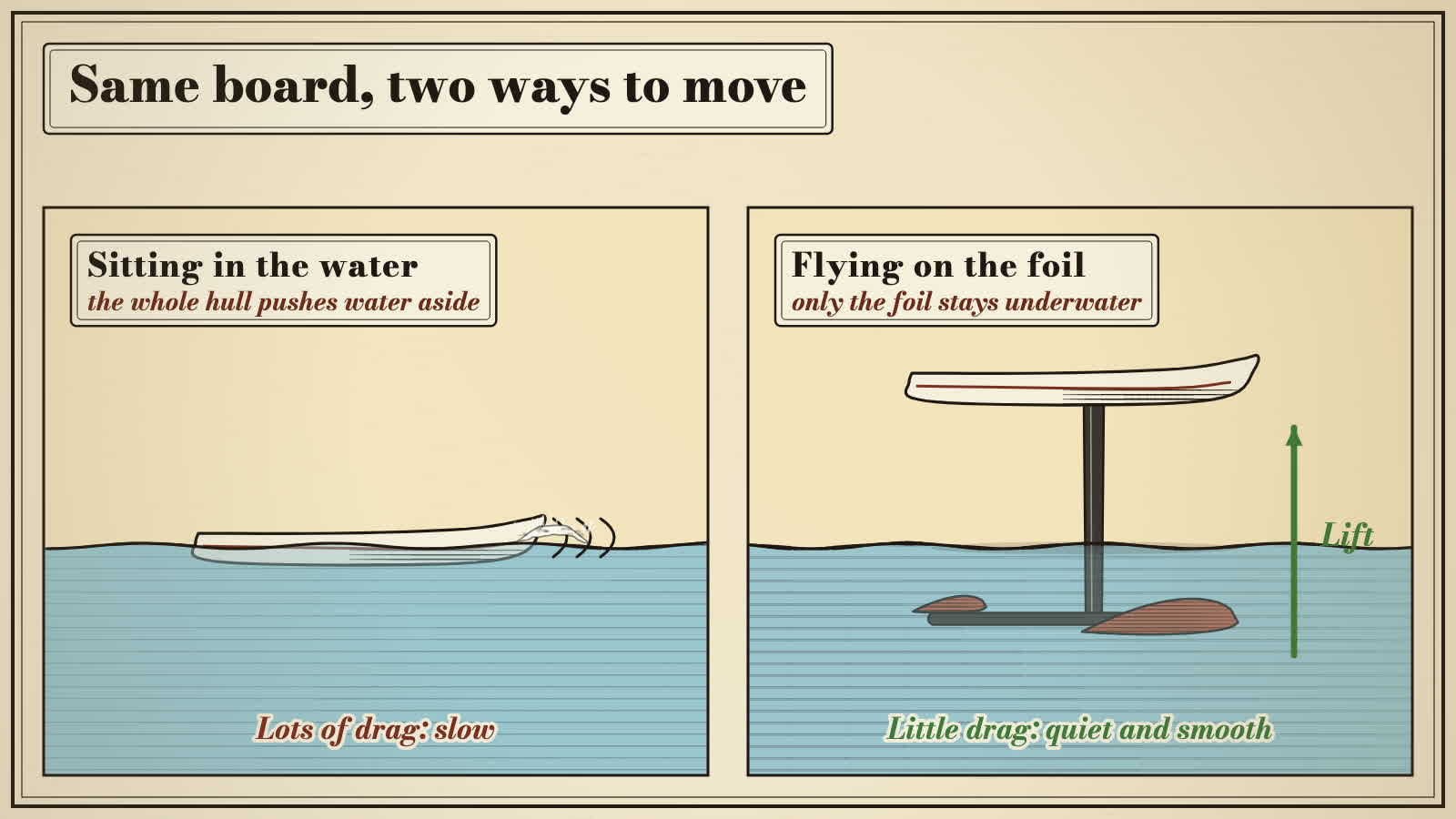
Once the board is moving, the foil lifts it clear of the water. Windance puts it simply: foils cut drag so much that you can ride in conditions that feel too light for a twin-tip. That is the big reason kiters add a foil: more riding days.2
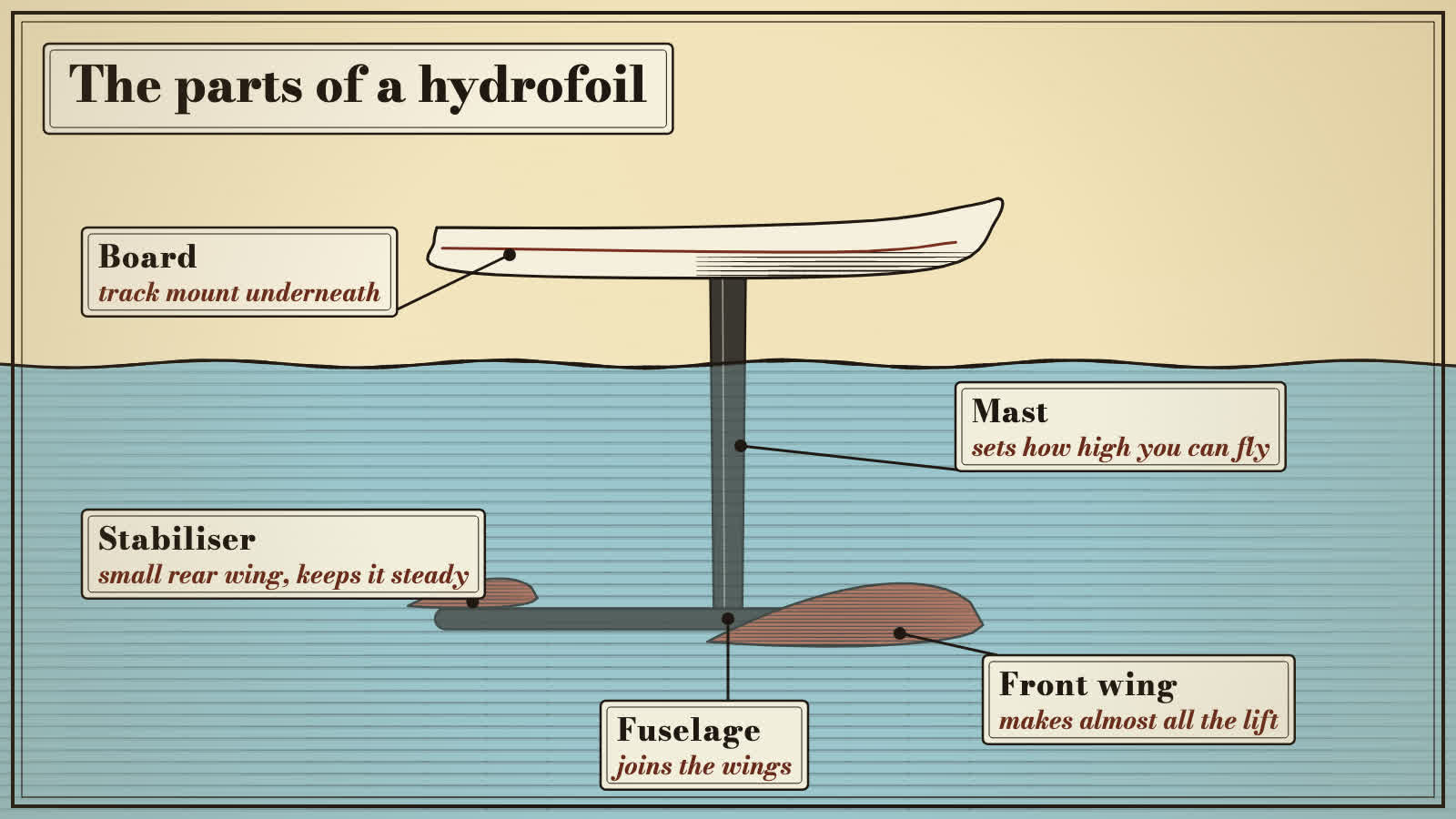
It also flips a kiter's habits around. Kite foils get overpowered faster than normal kiteboards, so less power is better than more. The foil itself works the same in every sport: see how a hydrofoil works.3
Waterman Mango Carafino designed and built the first hydrofoils for kitesurfing on Maui in the late 1990s. Early foil boards used boots or bindings, and it was 2006 before Carafino built one you could ride without them.4
Today it races at the top level. Formula Kite made its Olympic debut at Paris 2024, with riders reaching about 30 knots (about 35 mph) downwind in races of about 12 minutes.5
Kite racing is on the program again at the 2028 Los Angeles Olympics (LA28), at Belmont Shore, Long Beach.6
The gear
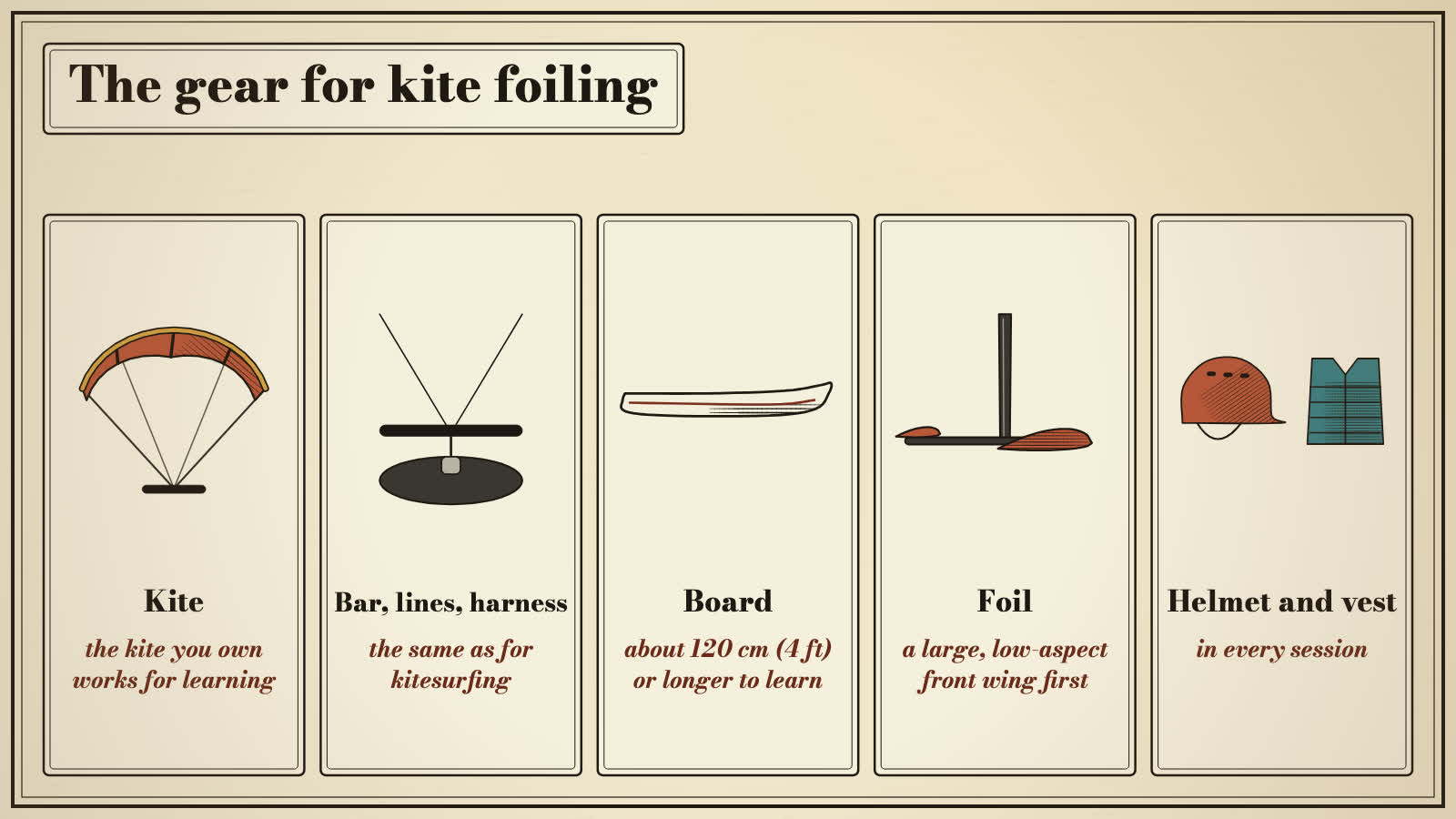
- The kite. All kites work for foiling, and the kite you already own will be fine for learning. Riders who foil all the time often choose light kites with a single strut (one inflated rib across the middle).3
- Bar, lines and harness. The same as for kitesurfing.
- The board and foil. The kite pulls you up, so the board doesn't have to float you while you build speed. Elite Watersports suggests a board of at least 120 cm (about 4 ft) and a large, low-aspect front wing to learn on, with smaller wings later.3
- Board leash. Many kite foilers ride without one, so the board can't tangle in the lines or spring back. Your school will tell you what it uses.
- Safety gear. Helmet and impact vest, covered in foil safety basics.
Words you'll hear
- Bar: what you hold to steer the kite. Pull it in for more power, push it out to depower (reduce the pull).
- Harness: a waist or seat belt with a hook that takes the kite's pull off your arms.
- Twin-tip: the normal kiteboard, with fins and no foil.
- Quick release: the safety system that cuts most of the kite's pull when you trigger it.7
How it differs from other kinds of foiling
Kite foiling vs wing foiling
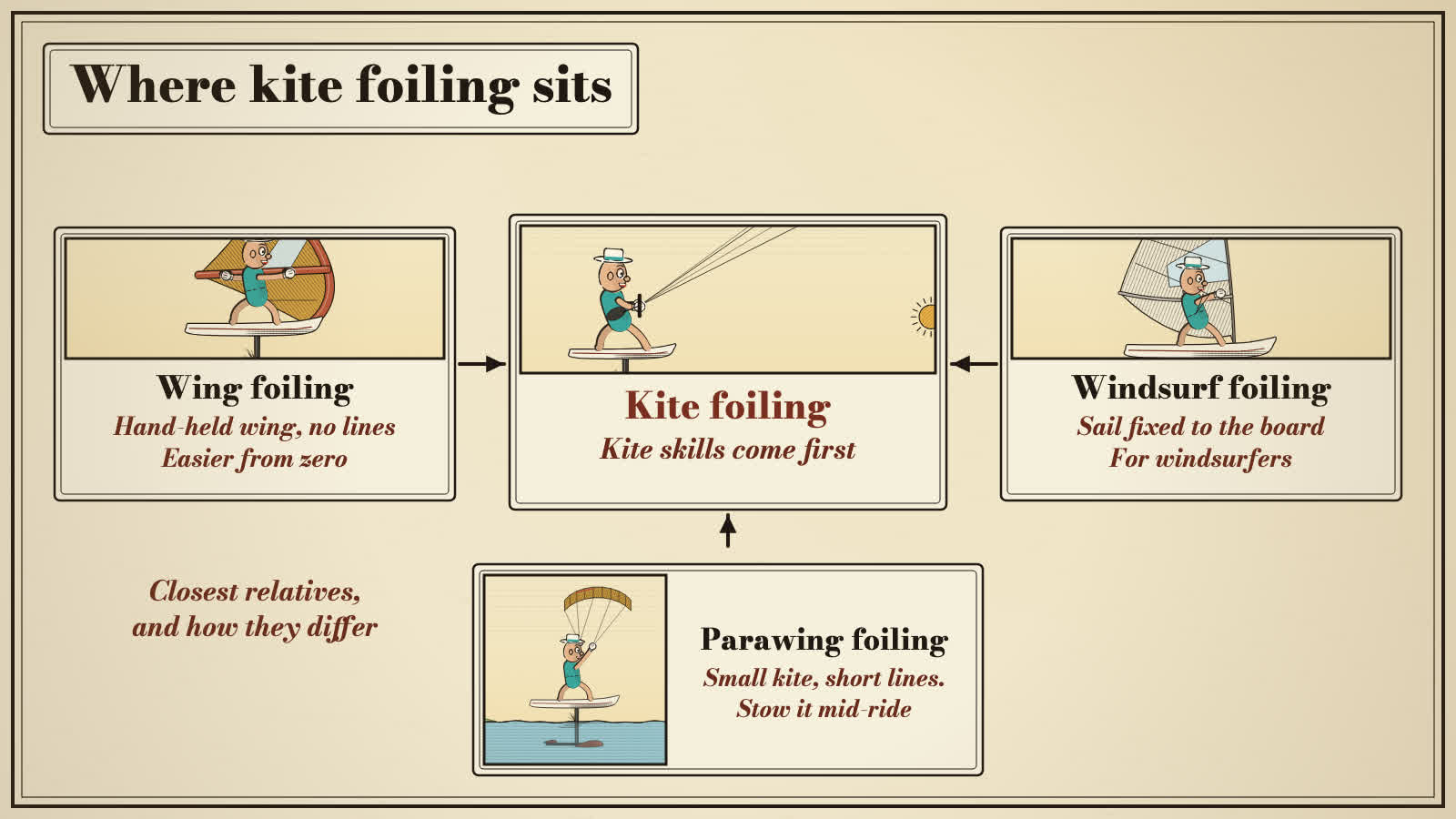
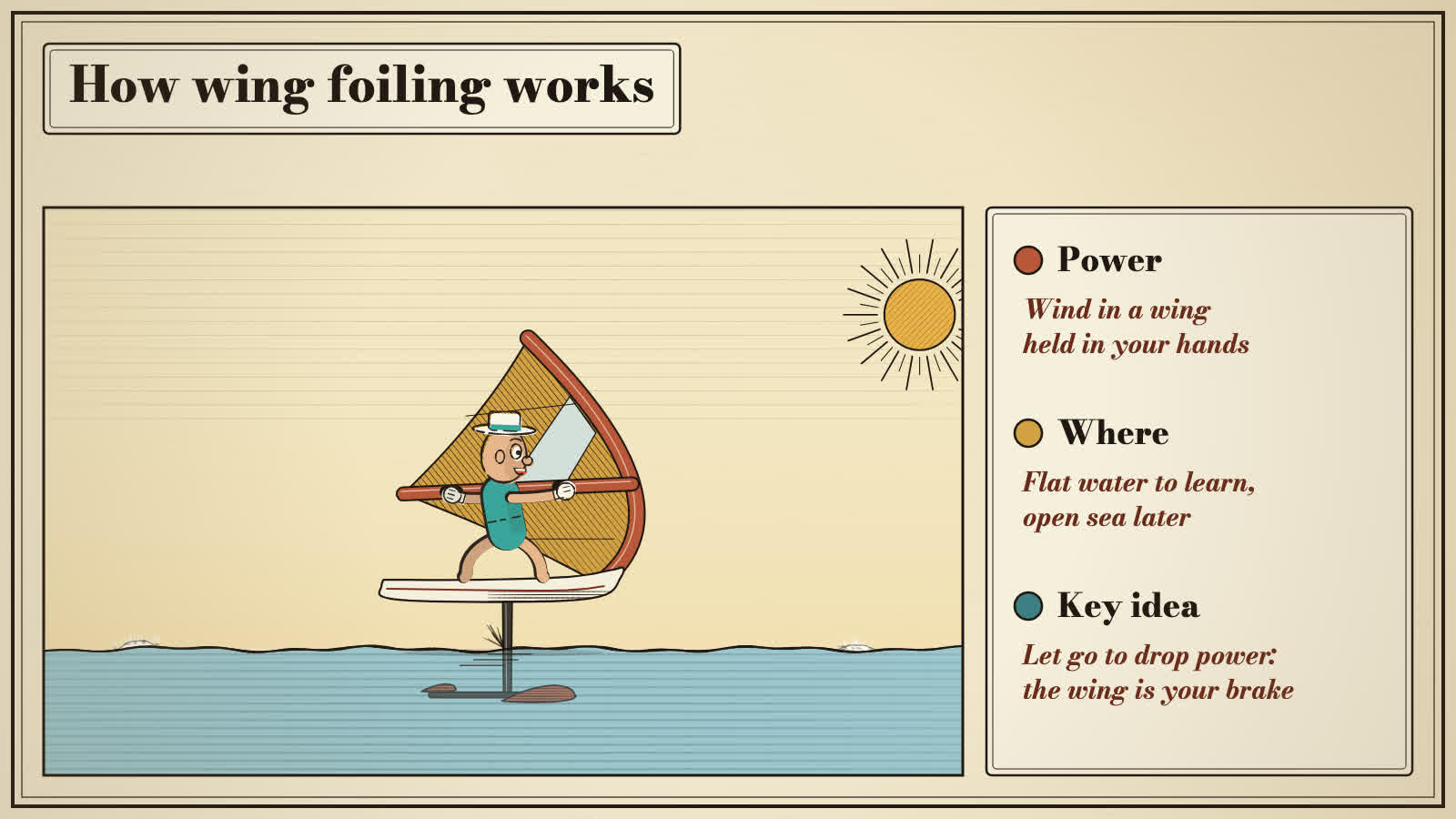
A wing is held in your hands with no lines. A kite flies far above you on long lines and needs a launch, a landing and practiced safety skills. REAL Watersports calls kite foiling a specialty for confident kiters who can already stay upwind, and steers most new foil students elsewhere first. Full guide: wing foiling.1
Kite foiling vs windsurf foiling
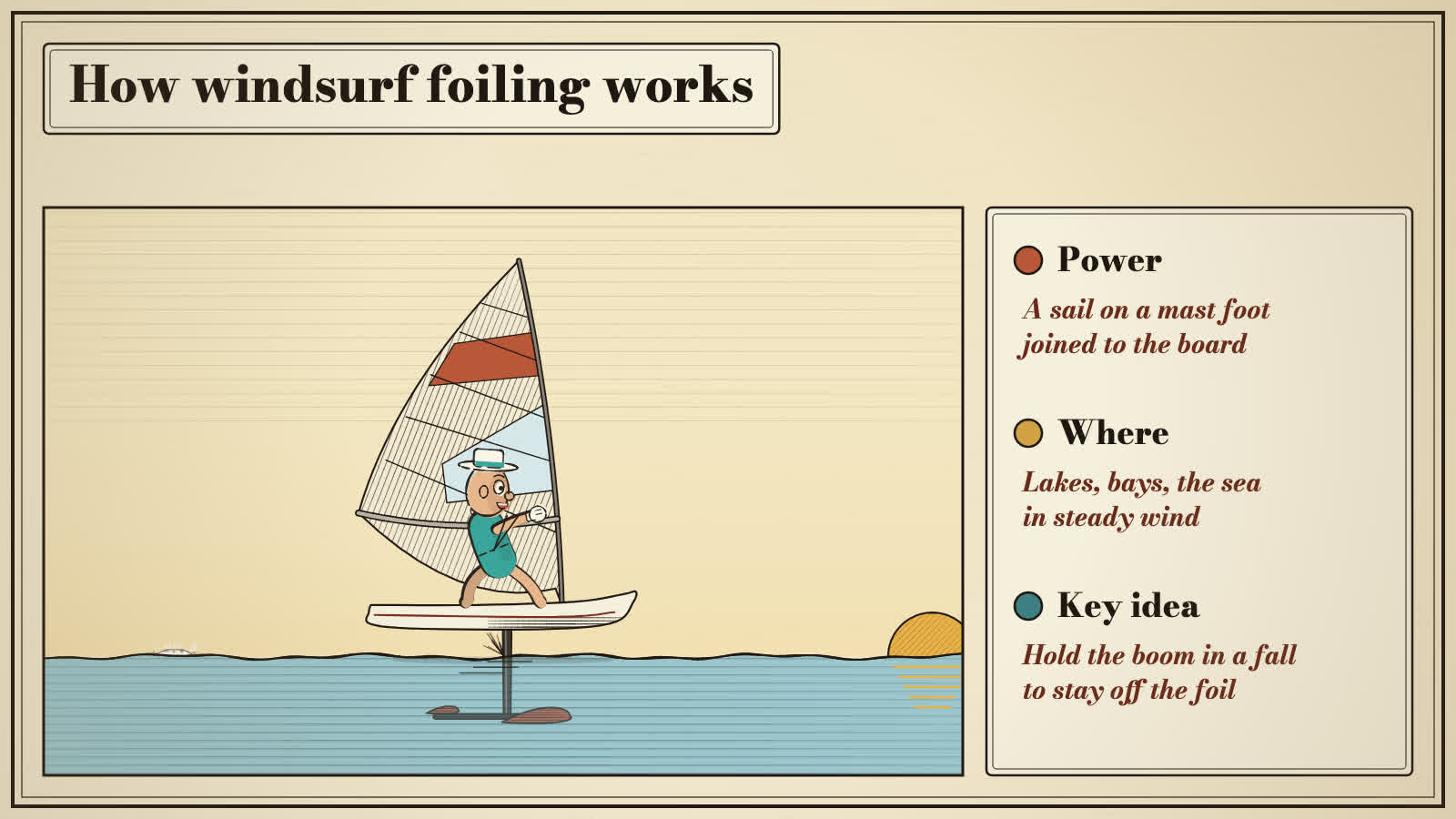
The difference is the rig. A windsurf sail is fixed to the board through a mast foot, while a kite flies free on lines. Full guide: windsurf foiling.
Kite foiling vs parawing foiling
A parawing has been called a mini kite on short lines. You hold it close instead of flying it far overhead, a harness is optional, and you can pack it away mid-ride to ride swell hands-free. Full guide: parawing foiling.8
Who it suits
Kite foiling is a good fit if you:
- already kitesurf on your own and can ride upwind
- get bored or stuck on the beach on light-wind days
- have a spot with a clear launch area and room downwind
Probably not your first foil sport if:
- you have never flown a kite. Take a kitesurfing course first, or start with wing foiling.
- your local beach is crowded or has a tight launch. A kite also needs a trained helper to launch and land, which a wing doesn't.
Getting started: lessons, renting, buying
Lesson or not? Yes, twice. First a kitesurfing course, so you can launch, ride, self-rescue and use the safety systems on your own. Then foil coaching on top.
Where to find one. Kite schools near open, flat water. Some coaches teach the foil part behind a boat first. MACkite calls boat towing "essentially the trainer kite for foiling".9
Rent or buy? If you already kite, you own the most expensive part: the kite, bar and harness. Rent or borrow a foil board first, because your board and front wing choices change quickly.
What to buy first. The foil board and foil, sized with a coach. Keep using your current kites while you learn.3
What your first sessions look like. You will practice body-dragging (letting the kite pull you through the water without the board) and water starts (getting up on the board from the water) with the foil board, short touch-and-go lifts, and lots of falls. Pick a day with light but steady wind, not the very lightest, and plenty of room downwind.3
Safety notes
The basics are the same in every kind of foiling: read our foil safety guide. Kite foiling adds a few of its own:
- Never in offshore wind. If the wind drops or you have to release, it carries you and the kite away from land. Learn in side-shore or side-onshore wind.
- Respect the lines. Never grab or touch a loaded line, keep them clear of people on the beach, and launch and land with a trained helper. After a crash, keep the foil board out of your lines.
- Test your quick release and wear the kite leash. Duotone says to test-trigger the release on land before every session. After a release, the leash keeps the kite attached to you with almost no pull.7
- Keep the kite flying when you fall. A kite that dives while you are in the water can drag you over the board and foil.
- Shallow launch areas. Walk the board out until the whole foil clears the bottom before the kite pulls you up.
Not sure this is the one? Compare every kind on what is foiling.
FAQ
Do you need to know how to kitesurf before kite foiling?
Yes. REAL Watersports offers kite foil coaching to confident kiteboarders who can already stay upwind. Learn kitesurfing first, or start foiling with a wing.1
Is kite foiling easier than wing foiling?
Not for a beginner. The foil part is similar, but you also need to fly a kite safely on long lines.
How much wind do you need to kite foil?
Less than on a twin-tip, because the foil cuts drag. The exact number depends on your weight, kite and foil, so ask a local school.2
Is kite foiling dangerous?
It carries the risks of kitesurfing plus a sharp foil under you. Lessons, riding with less power, and a helmet and impact vest all help. Above all, test your quick release before every session.7
Keep learning
Sources
Facts checked against the sources below in November 2026.
- REAL Watersports, Foiling lessons and FAQ realwatersports.com ↩
- Windance, Kite foiling explained windance.com ↩
- Elite Watersports, What gear do I need for kite foil elitewatersports.com ↩
- The Inertia, Foiling and the future of surfing theinertia.com ↩
- World Sailing, What is Formula Kite in Olympic sailing paris2024.sailing.org ↩
- World Sailing, LA28 Olympic sailing event program sailing.org ↩
- Duotone, Why a safety leash is essential for kitesurfing duotonesports.com ↩
- The Inertia, Parawing foiling explained theinertia.com ↩
- MACkite, Learning to foilboard behind the boat mackiteboarding.com ↩