 Foilopedia
Disciplines · Wave and paddle
Pump foiling and dock starts: what they are
Pump foiling is keeping a foil board flying with nothing but your own legs. There is no wind, wave or motor: you drive the board along with a steady up-and-down pumping motion, usually after jumping onto it from a dock. It suits riders who can already foil and want a challenge on calm, flat water.
It is also a skill every foiler uses. Surf, downwind and wake foilers all pump to link waves, cross a lull or stay up a little longer.
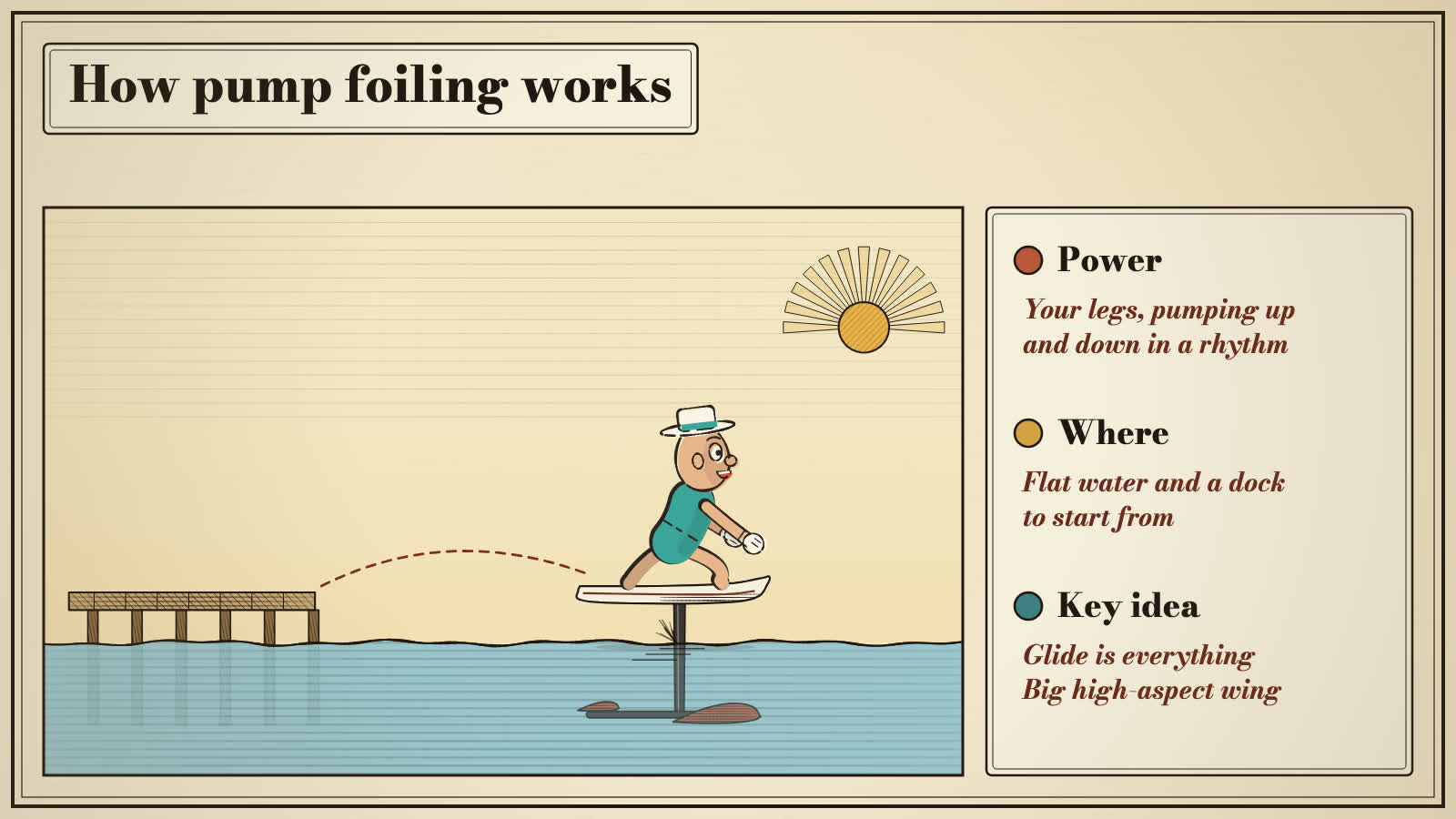
At a glance
- Power: your legs
- Where: flat water with a dock, jetty or boat to start from
- Learn from zero? Not really. Learn to foil first, ideally behind a boat
- Typical first step: foil time behind a boat, then dock start practice
- Gear to start: small stiff board, big high-aspect foil, helmet, impact vest
- Closest relatives: surf foiling, wake foiling
How it works
Pumping
A foil makes lift as long as it moves through the water fast enough. On flat water nothing is pushing you, so you have to make that speed yourself.
Pumping does it. You press down and then unweight the board in a steady rhythm, and the front wing works a bit like a bird's wing flapping. Each push turns some of your effort into forward speed. A foil that glides well loses very little speed between pumps, which is why pump riders care so much about glide. How front wing size and aspect ratio change that is covered in how a hydrofoil works.
Pumping is a rhythm, not a jump. The board stays flying the whole time, and the motion comes from your knees and hips. If you skate or ride pump tracks, the rhythm may feel familiar.
What a dock start is
You cannot pump a board up from standing still, so you need to start already moving. A dock start means running along a dock and jumping onto the board so it lands already moving, with the foil in the water. Slingshot warns it is not easy: it can take hundreds of attempts.1
The dock matters. MACkite suggests one about 10 to 24 inches (25 to 60 cm) off the water, with room to run.2
Other ways to start are a beach start, where you run in from the shore and jump on once the water is deep enough for the foil, or a jump from a boat.
How far can you go?
- In 2022 Hugo Wigglesworth reported breaking his own pumping record with 17 minutes 15 seconds, starting from a dinghy in Auckland.3
- In 2024 Nicolas Iten reported pumping 54.8 km (34 miles) in 4 hours 2 minutes on Lake Sempach in Switzerland, billed as a world record.4
The gear
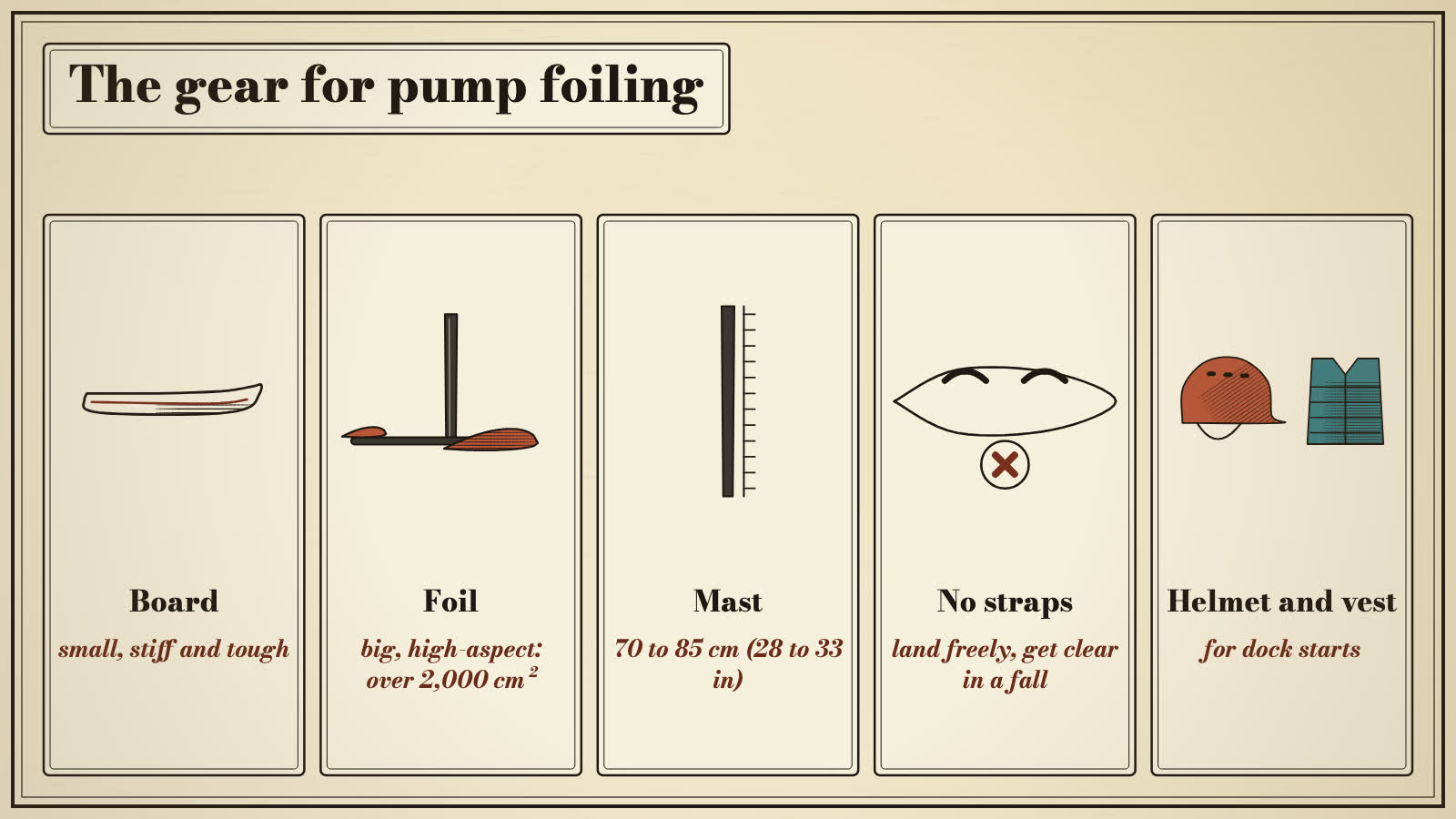
- Board: small, stiff and tough. It does not need to float you, only to survive being jumped on and dropped on a dock.1
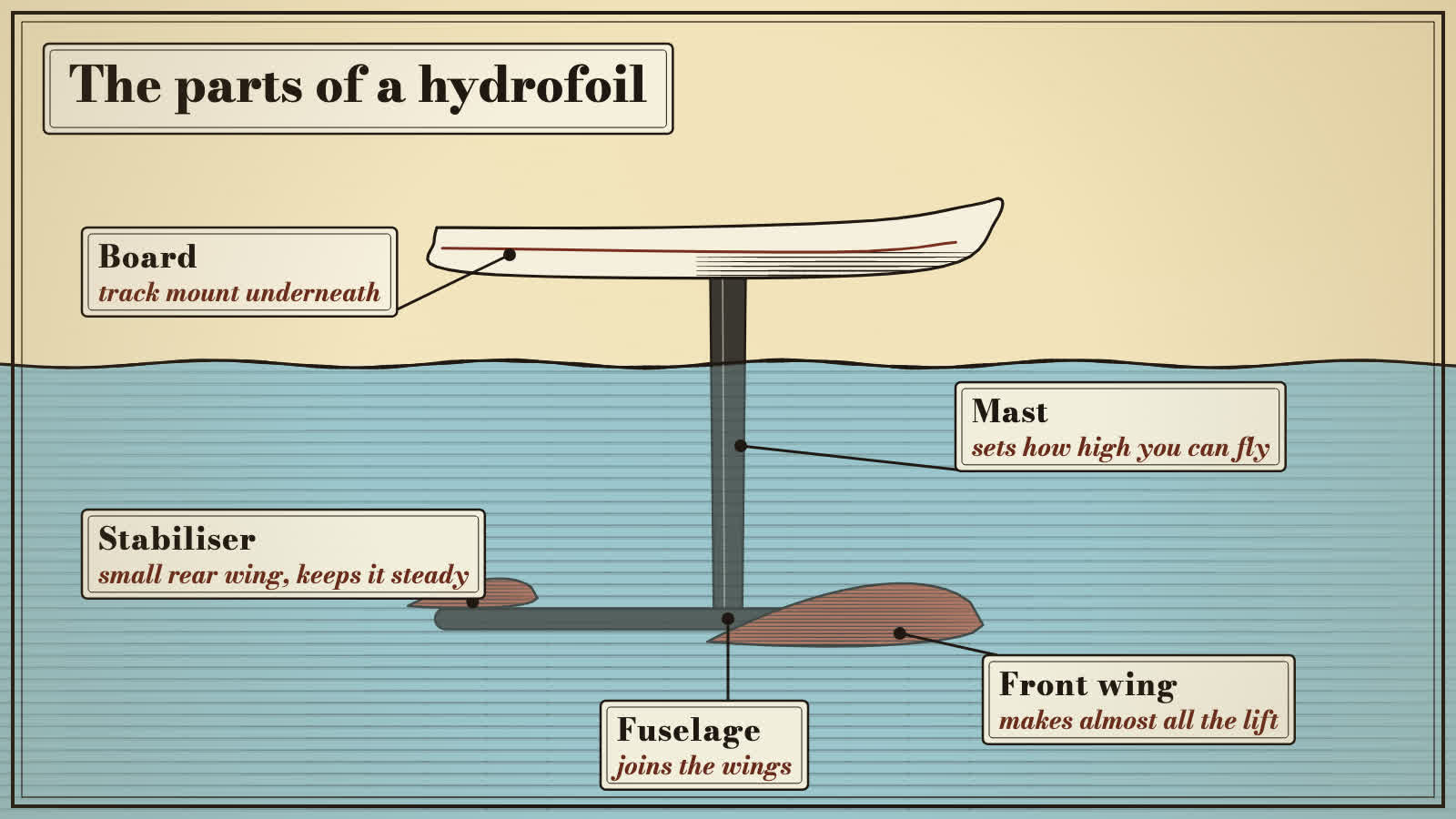
- Foil: a large, efficient, high-aspect front wing, because you are the only engine. MACkite suggests a wing above 2,000 cm² (about 310 sq in) for riders new to foiling.5
- Mast: a mid-length mast. MACkite calls 70 to 85 cm (about 28 to 33 in) the sweet spot.5
- No straps. You need to land freely and get clear of the board when you fall.
- Helmet and impact vest: recommended for dock starts, especially on angled docks.2
Words you'll hear
- Pumping: the rhythmic leg drive that keeps the foil flying.
- Dock start: running and jumping onto the board from a dock.
- Beach start: running in from the shore and jumping on once the water is deep enough for the foil.
- Glide: how far the foil carries you between pumps.
- High aspect: a long, thin front wing that glides and pumps well.
How it differs from other kinds of foiling
Pump foiling vs surf foiling
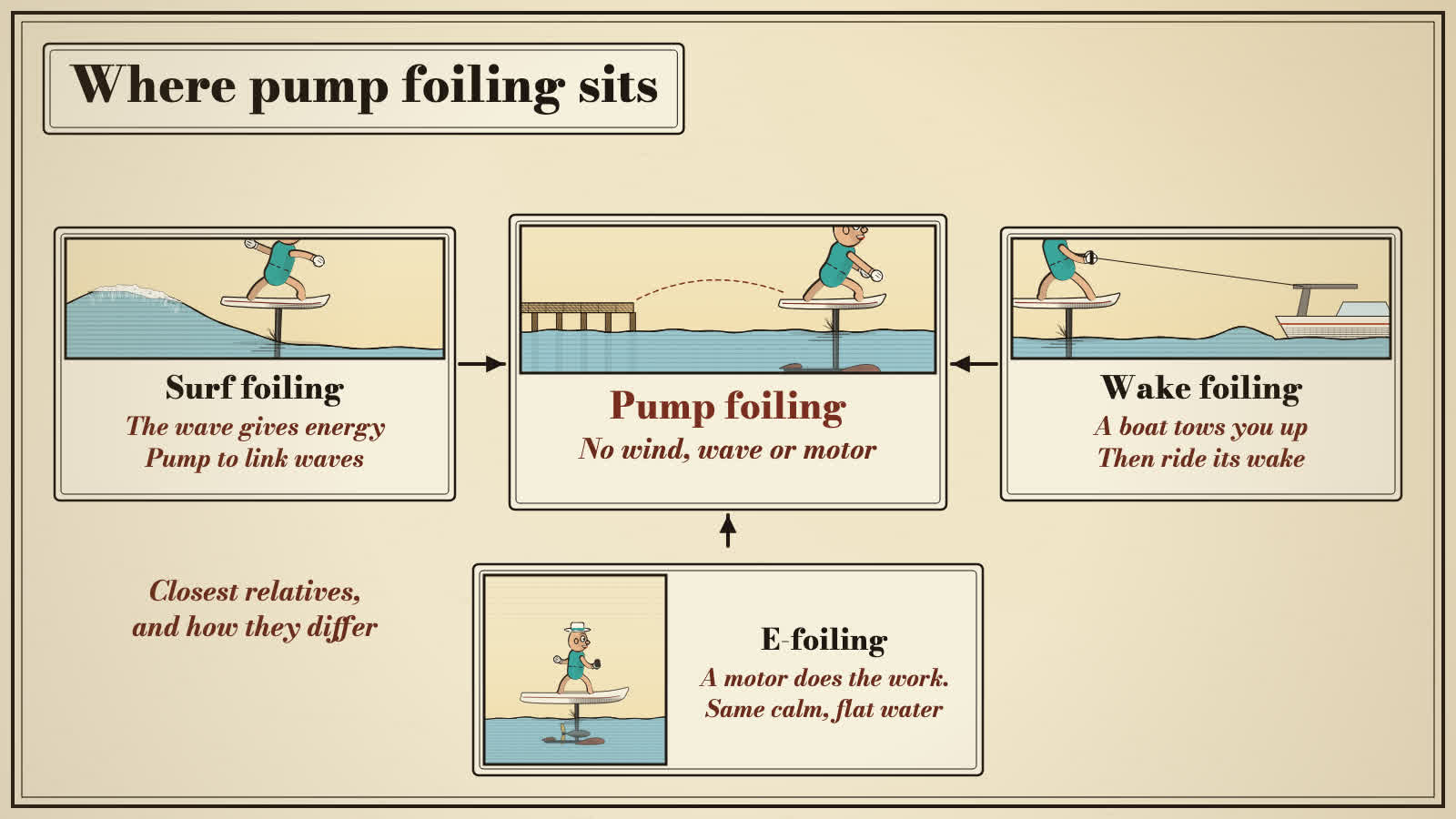
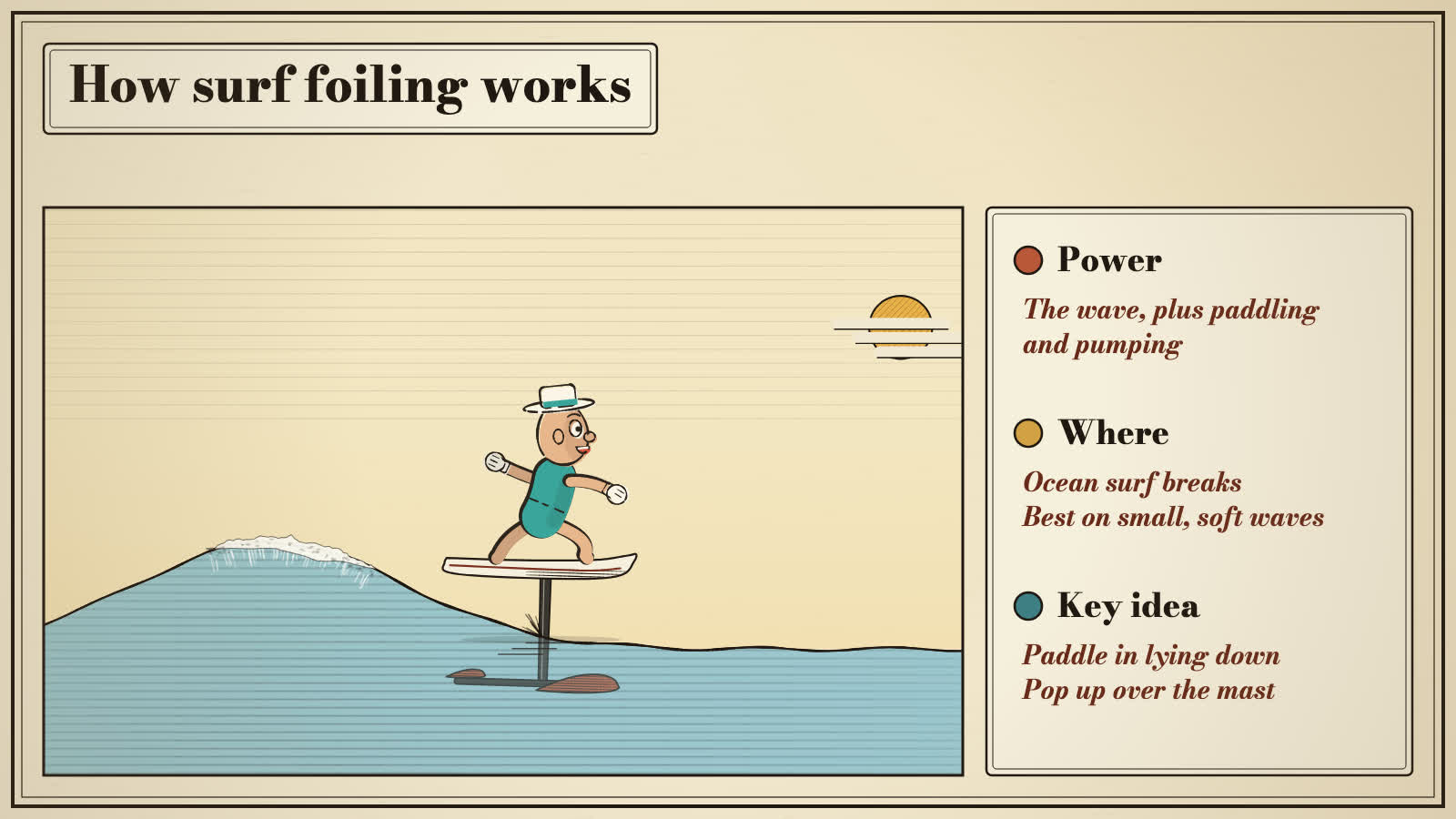
They use the same family of boards and foils. In surf foiling the wave gives you energy and you pump to link waves. In pump foiling you make all the energy yourself, so it is the best drill for surf foilers on flat days. See surf foiling.
Pump foiling vs wake foiling
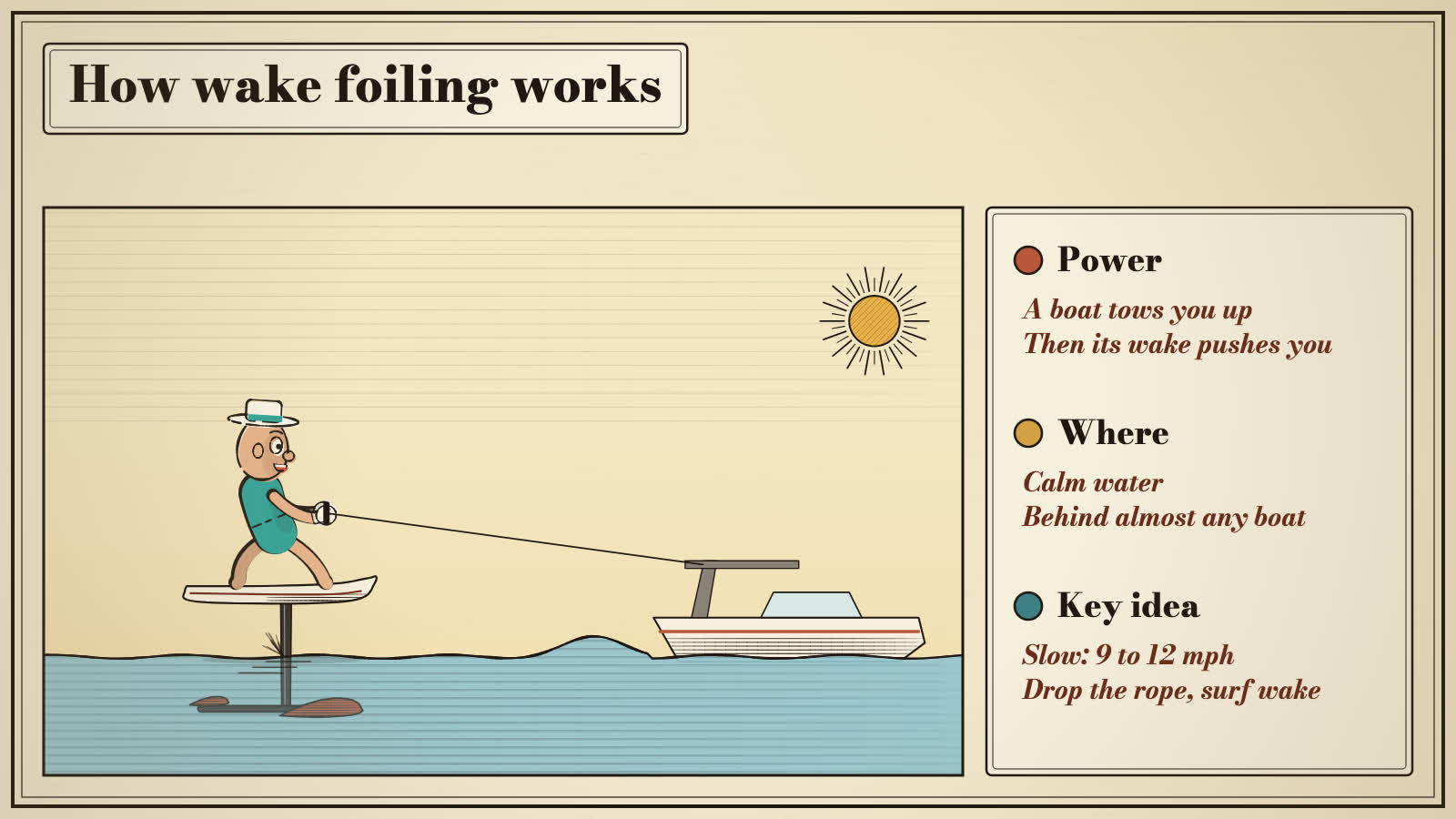
Wake foiling gives you a tow: the boat pulls you up to speed, then you can drop the rope and ride its wake. Many riders learn to foil behind a boat before they try dock starts. See wake foiling.
Pump foiling vs e-foiling
Both happen on flat water. On an e-foil a battery and motor do the work and you choose your speed. Pump foiling is the same calm-water flight with your legs as the motor. See e-foiling.
Who it suits
A good fit if you:
- can already foil, in any discipline, and want to train when there is no wind or surf
- live near flat water with a dock you are allowed to use
- like a skill challenge more than a gear challenge
- surf, skate or ride pump tracks and know the rhythm of pumping
Probably not your first foil sport if:
- you have never foiled. It is a no-wind sport, but not an easy one for beginners.
- you have no dock or safe starting spot over deep water
- you want quick results. Duotone says the learning time varies greatly, and many people need several sessions of many attempts just for the basic start.6
Getting started: lessons, renting, buying
- Lesson or not? Most riders build foil skills somewhere else first. Slingshot recommends practicing behind a boat and getting foil experience before you try dock starts.1
- Where to find one. Learn to fly behind a boat (wake foiling) before your first dock start.
- Rent or buy? Ask around. If other riders dock start near you, watching them and borrowing a setup for a try is the cheapest way in.
- What to buy first. The foil. The front wing makes the biggest difference, and a small, tough board is the cheaper part.
- What your first sessions look like. Mostly run, jump and splash. Getting the board to fly for a few pumps is the first win, and longer flights come once your start is clean.
Beginner tip: pick a calm day, deep water and nobody around you for your first tries.
Safety notes
The basics are the same in every kind of foiling: read our foil safety guide. Pump foiling adds a few of its own:
- The dock. Hard edges and posts sit right where you fall. MACkite recommends a helmet and impact vest, especially on angled docks.2
- Your own gear. A botched jump often ends with shins or feet hitting the mast or board edge. Booties and a clear landing help.
- Water depth. Never dock start over shallow water. The foil needs to clear the bottom with room to spare.
- Stay near your start. You can't restart in open water, so after a fall you paddle back lying on the board. Stay within easy reach of the dock and keep hold of the board.
- Others nearby. Use docks you are allowed to use, and keep swimmers, boats and other riders out of your landing zone.
Not sure this is the one? Compare every kind on what is foiling.
FAQ
What is a dock start in foiling?
A way to start without wind, waves or a boat. You run along a dock and jump onto the board so it lands already moving, then pump to keep flying. It can take hundreds of attempts to learn.1
Is pump foiling hard for beginners?
Yes. It is much easier if you can already foil. Duotone says many people need several sessions just to get the basic start, and other foil experience helps.6
How deep does the water need to be to dock start?
Deeper than your mast and foil, with room to spare, so you never hit the bottom when you land or fall. Our foil safety guide covers water depth for all foiling.
Can you pump foil on a lake?
Yes. Calm lakes are ideal, because the water is flat and docks are common. Nicolas Iten reported his 54.8 km (34 miles) distance record on Lake Sempach in Switzerland.4
Keep learning
Sources
Facts checked against the sources below in November 2026.
- Slingshot Sports, How to dock start slingshotsports.com ↩
- MACkite, 3 essential tips for learning to foil dock start mackiteboarding.com ↩
- SUP Magazin, Pump foil record standupmagazin.com ↩
- Total SUP, Nicolas Iten pump foiling records totalsup.com ↩
- MACkite, How to dock start a foil: a step-by-step pump foiling guide mackiteboarding.com ↩
- Duotone help center, How long does it take to learn pump foiling duotone-wing-and-foiling-helpcenter-copy.gorgias.help ↩