 Foilopedia
Disciplines · Motor and tow
Wake foiling: what it is and how it works
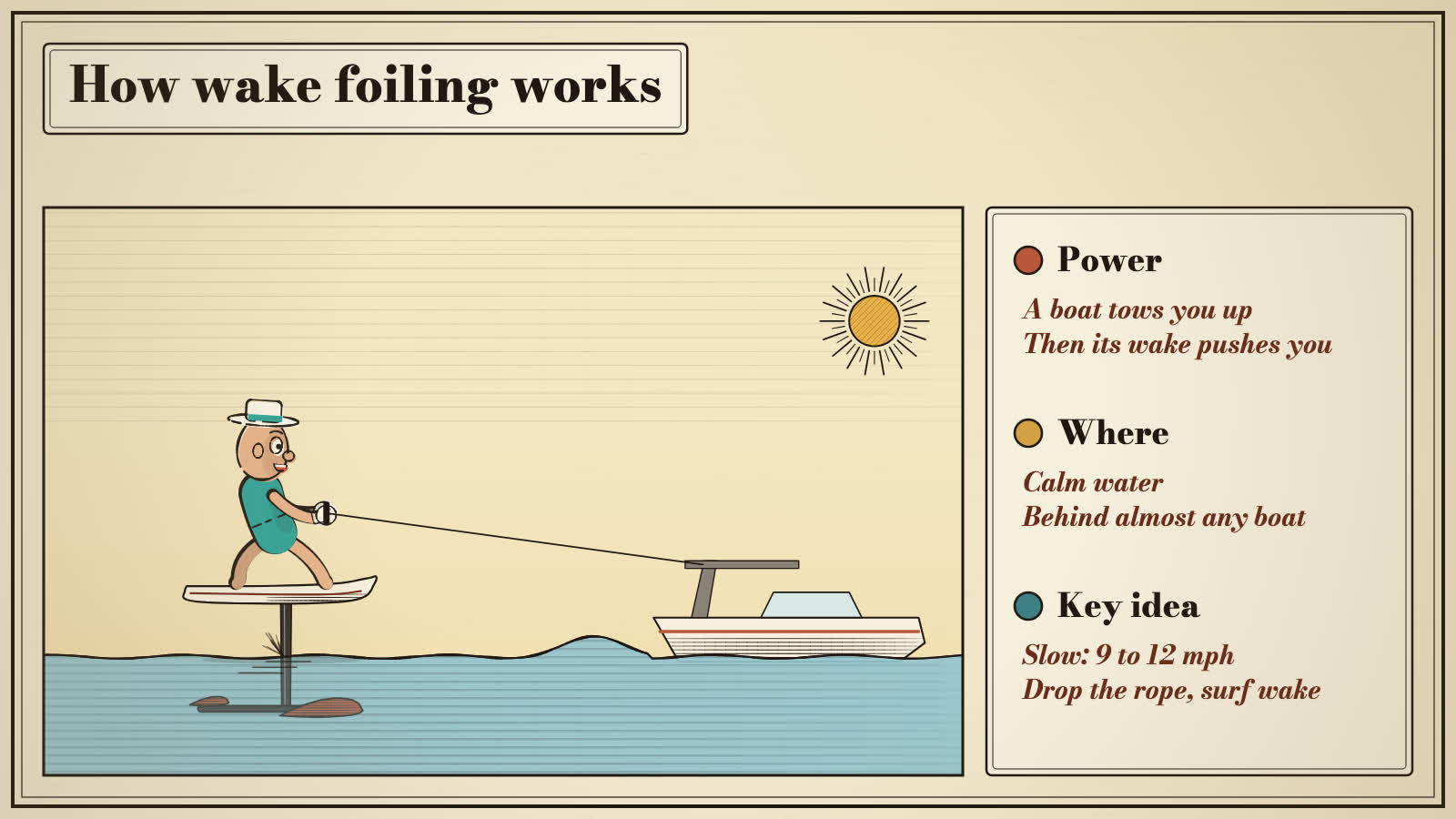
Wake foiling is riding a foil board behind a boat: the boat tows you up onto the foil on a rope, and then you can let go and surf its wake.
You don't need a special boat. A jet ski or almost any boat can pull you.1
That makes it a natural fit for boat owners, families and anyone who already wakeboards or wakesurfs.
At a glance
- Power: a boat, then the boat's wake
- Where: calm lakes, rivers and bays, behind a boat
- Learn from zero? Yes, with an instructor; wakeboard or wakesurf skills help
- Typical first step: a session with an instructor behind a boat
- Gear to start: small foil board, short mast, rope, vest
- Closest relatives: e-foiling, pump foiling
How it works
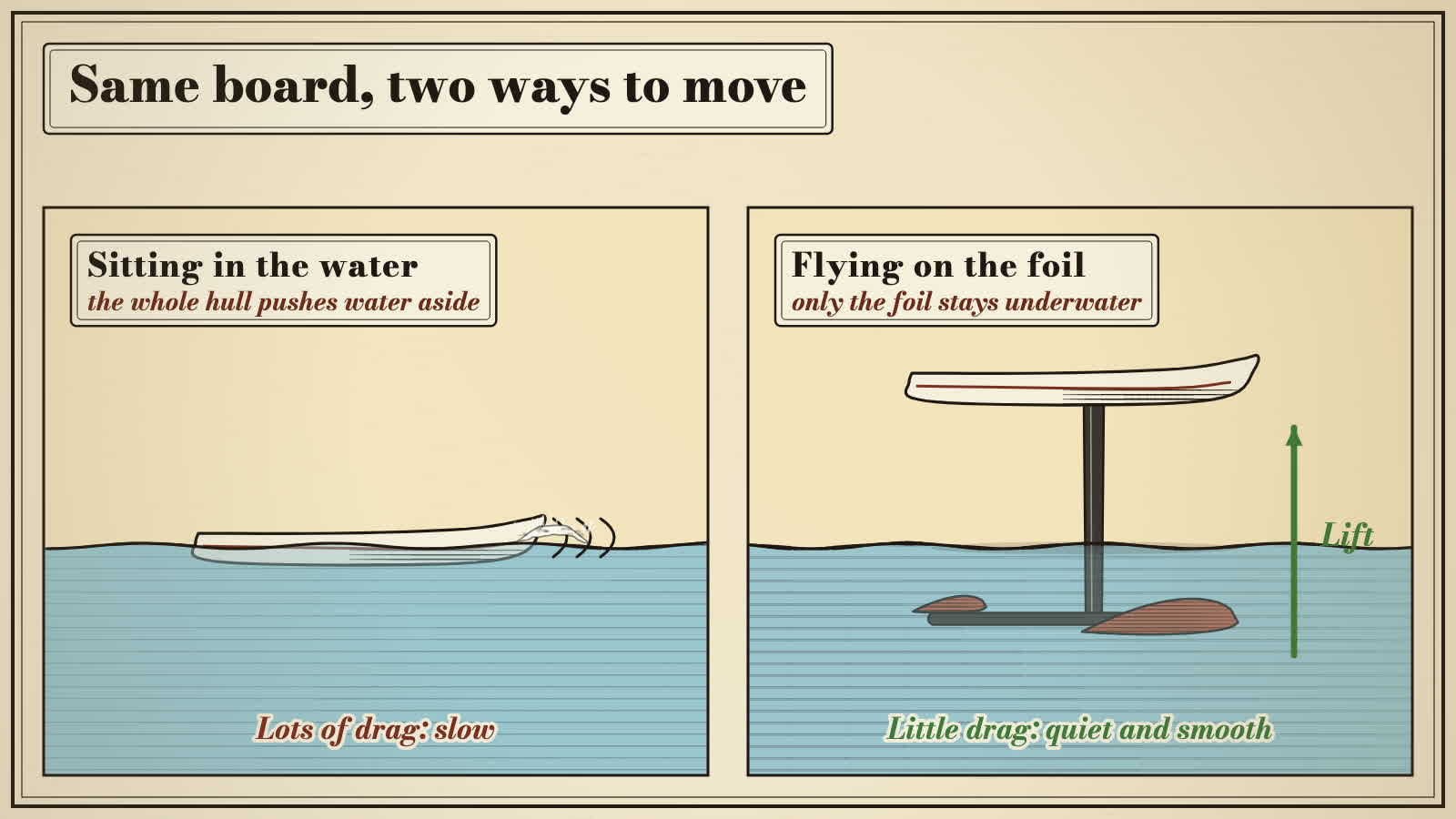
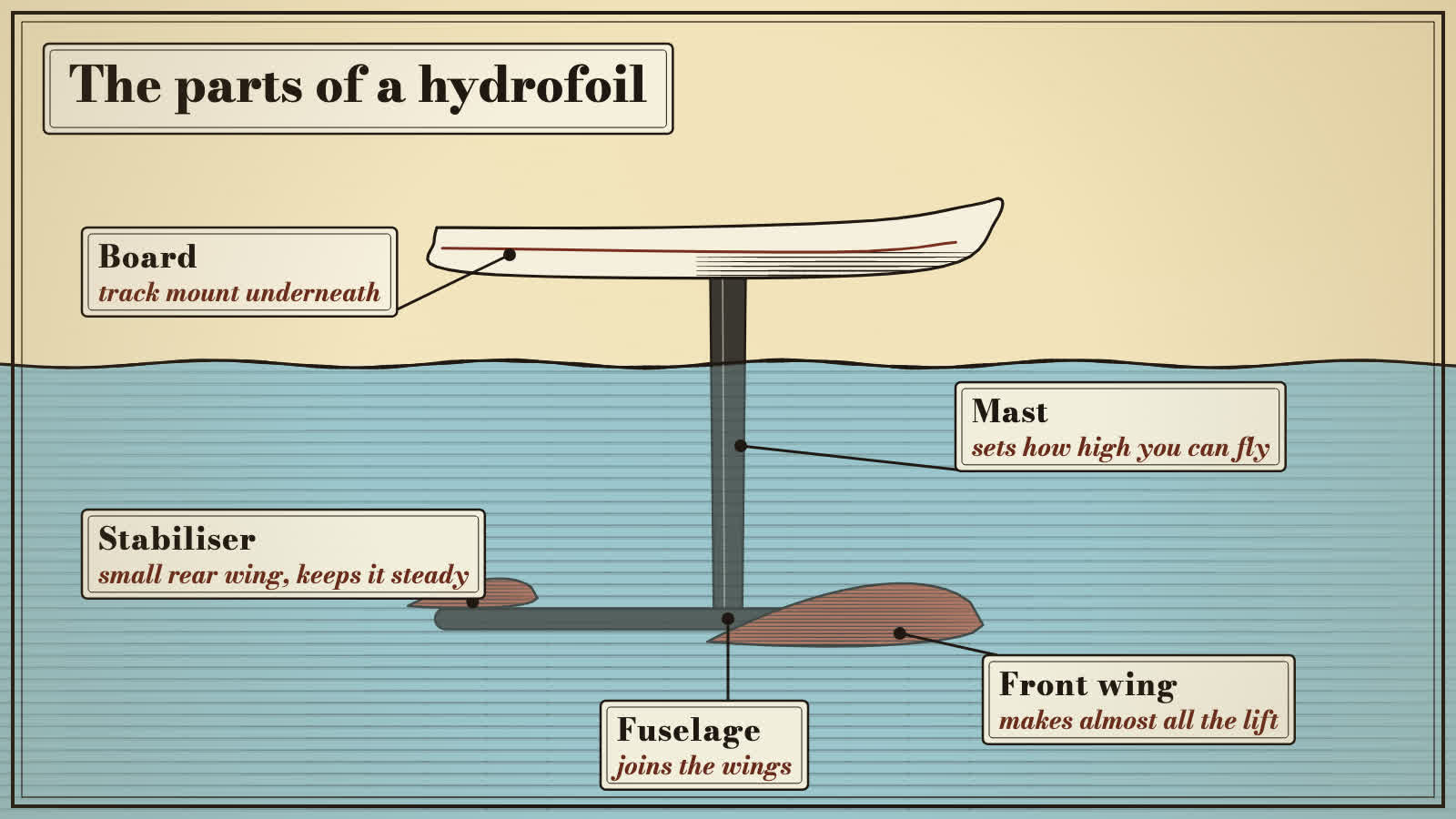
The foil works the same as in every kind of foiling: see how a hydrofoil works. What differs is that the boat gives you steady power, at a speed the driver controls.
You start in the water with a long rope in your hands, like a wakeboarder doing a deepwater start (starting from the water, pulled up by the boat). The boat pulls you up slowly. Most beginners learn at about 9 to 12 mph, starting slow and adding a little speed as the foil lifts.2
As you get better, the speed usually builds to around 11 to 13 mph.3
On the rope, weight over the nose holds the foil down, and leaning back lets it lift. Think of a plane held on the runway until it has enough speed.3
Once you are flying steadily, you can drop the rope and ride the wave the boat makes, an endless wave that keeps going as long as the boat does.2
Because a foil needs so little push, skilled riders can surf the wake several waves back.1
To stay in the wave after you let go, you shift your weight and pump the board. Pumping is a whole skill of its own: see pump foiling.
The gear
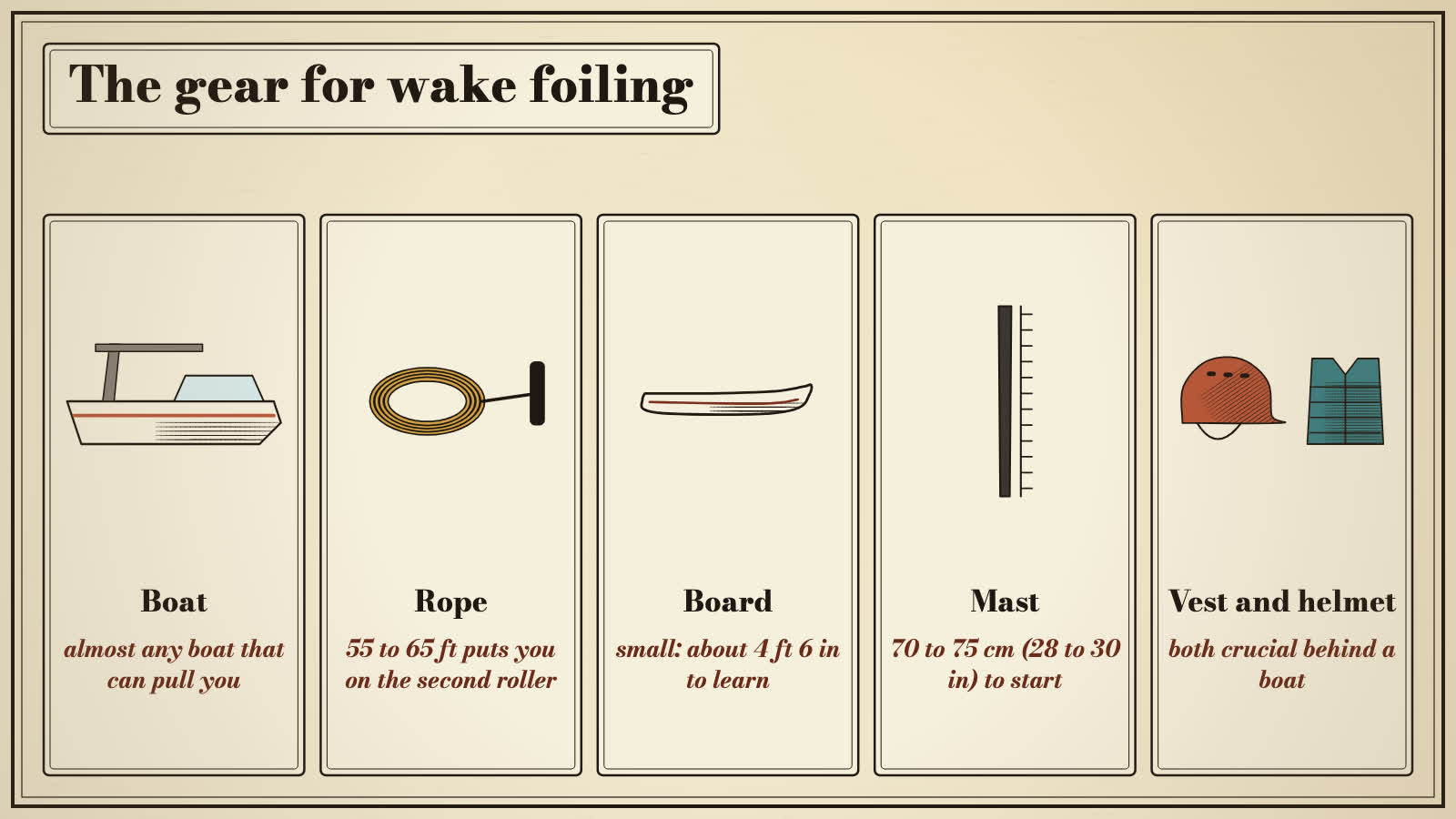
- Boat and driver. You don't need a special wake boat. Almost any watercraft that can pull you will do.1
- Rope. A rope of about 55 to 65 feet usually puts you on the boat's second wave, or "roller". Adjust it for your boat.2
- Board. Small and compact, often a wakesurf-style shape, much smaller than a wing foil board. The boat does the work, so the board doesn't need to float you up to speed. Wakeboarding Magazine suggests about 4 feet 6 inches long for a beginner.3
- Mast. Short to mid-length. MACkite calls 70 to 75 cm (about 28 to 30 in) the best starting point.4
- Front wing. A large wing for beginners, because the speeds are low. You move to smaller wings as you progress.2
- No straps to start. New riders should ride without foot straps so they can get clear of the board in a fall.2
- Life vest and helmet. MACkite calls both crucial behind a boat.2
Words you'll hear
- Roller: one of the waves in the boat's wake. Riders often sit on the second one.
- Ropeless or "surfing the wake": letting go of the rope and riding the boat's wave.
- Pumping: pushing the board up and down with your legs to keep it flying.
How it differs from other kinds of foiling
Wake foiling vs e-foiling
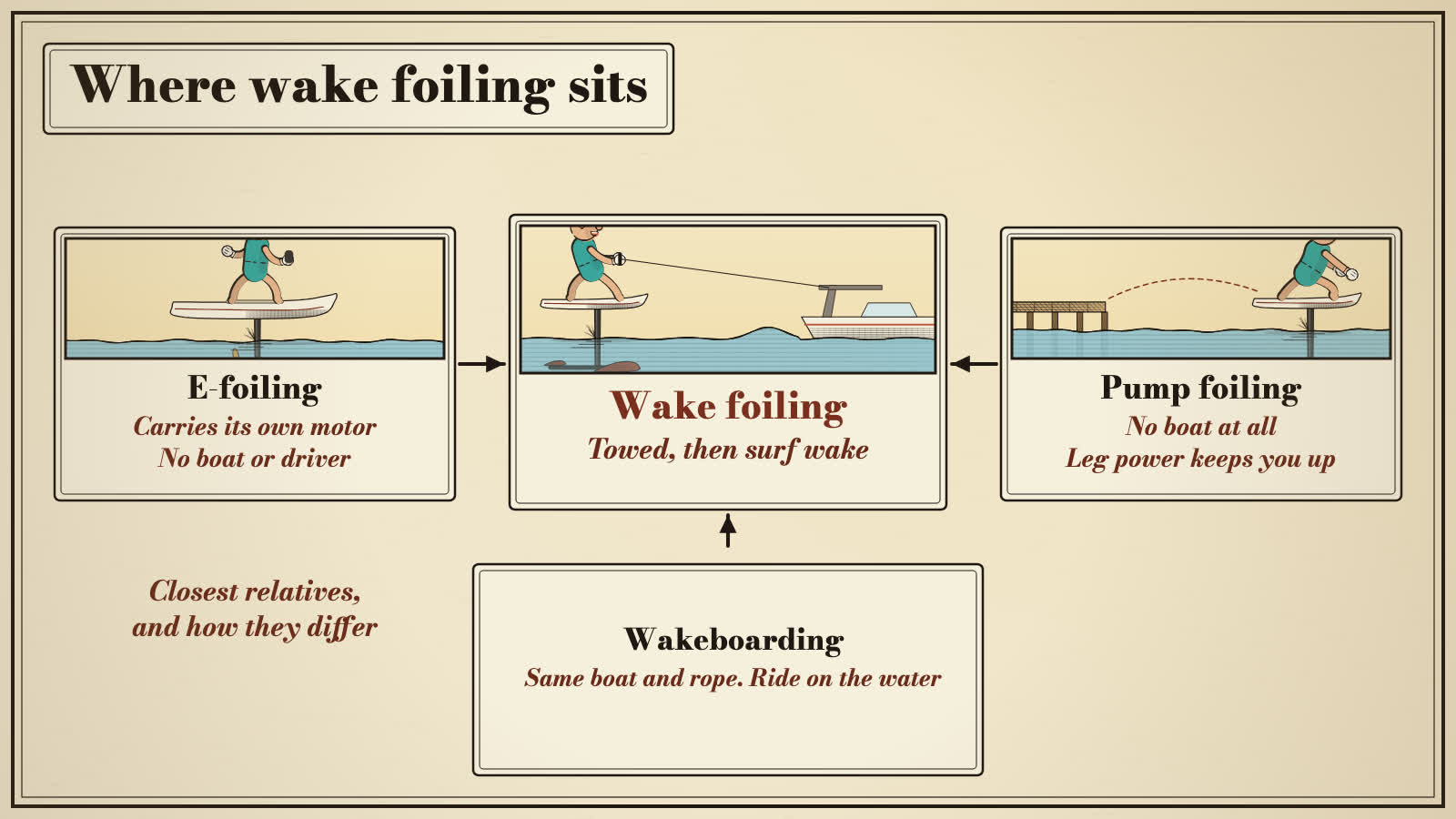
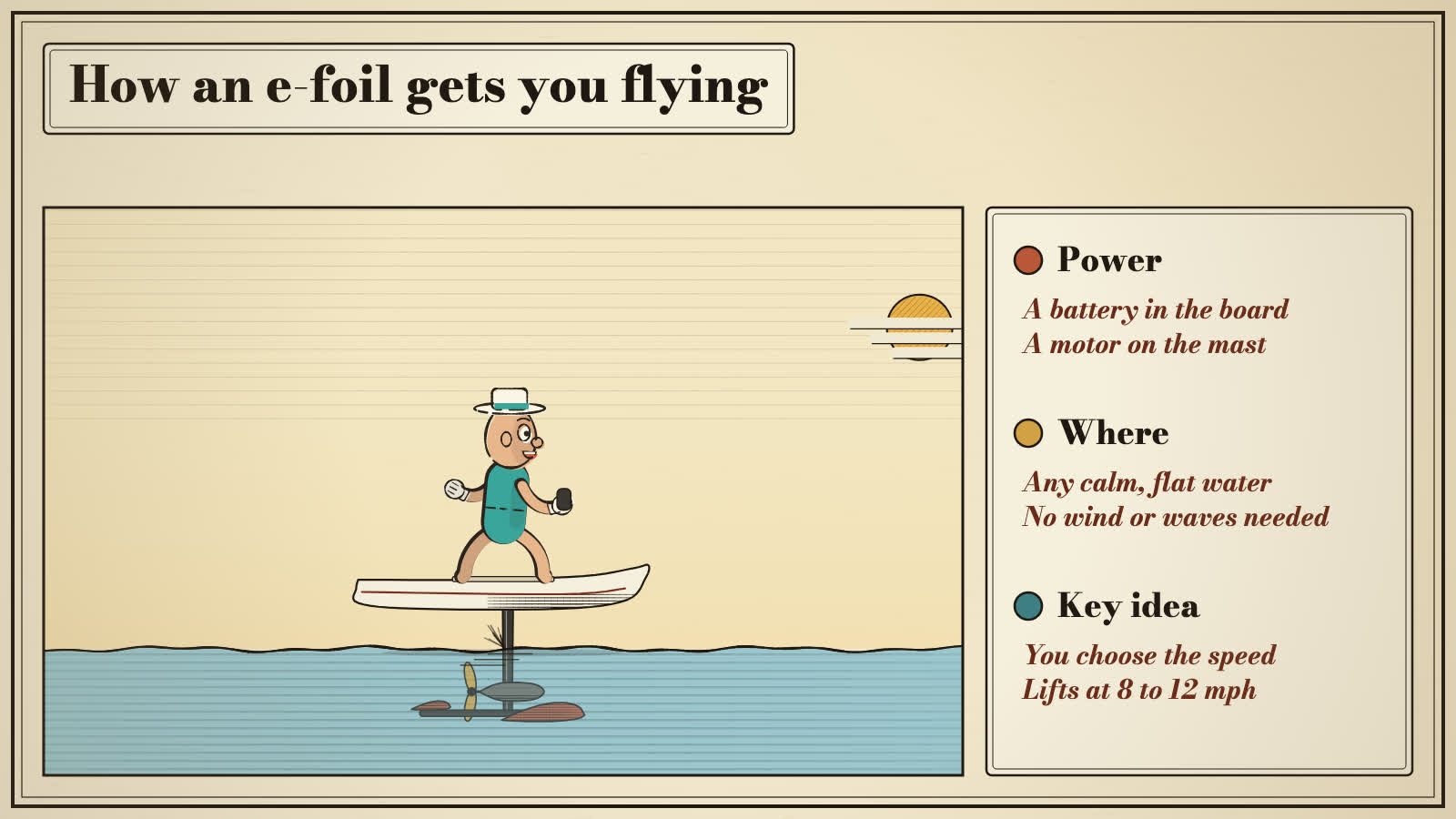
Both run on motor power and both suit calm water. An e-foil carries its own battery and motor, so you can ride alone from the shore. Wake foiling needs a boat and a driver, but it teaches you to ride a wave once you let go of the rope. Read the full e-foiling guide.
Wake foiling vs pump foiling
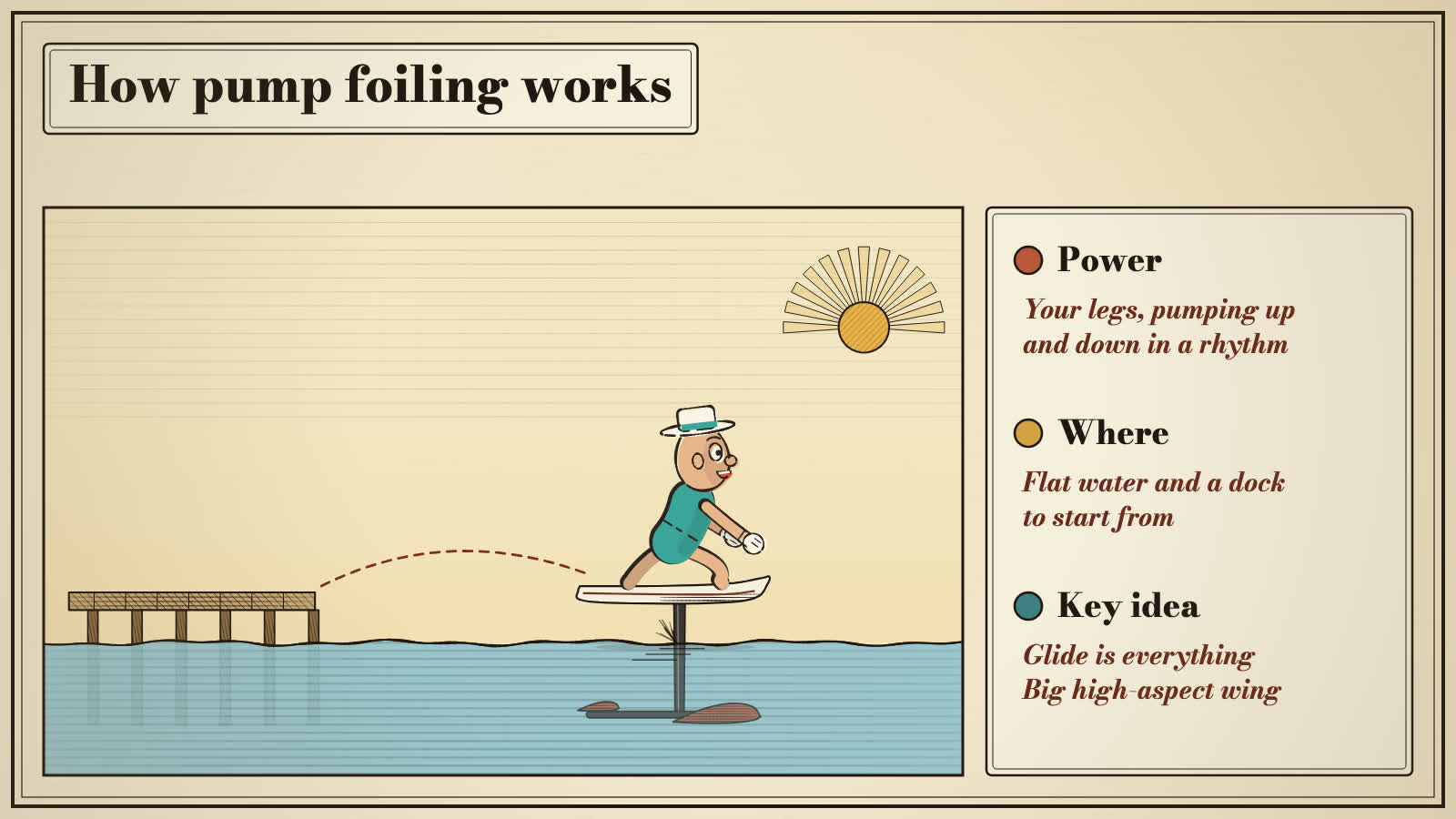
Wake foilers already pump to stay in the wake after the rope. Pump foiling takes that further: no boat at all, just a jump from a dock or the shore and leg power to keep flying. It is the natural next step once you can ride the wake without the rope.
Wake foiling vs wakeboarding and wakesurfing
All three happen behind a boat. On a wakeboard or wakesurf board you ride on the water. On a wake foil you fly above it, and the boat can go slower. Wakeboarders already know the rope pull and the deepwater start, but they have to learn front-to-back balance instead of tilting the board on its edge.
Who it suits
A good fit if you:
- own a boat or have friends who do
- already wakeboard or wakesurf: the rope, the start and the stance carry over
- want a social day on the water with family or friends
- want steady, easy power to learn foiling before you try a wing or a surf foil
Probably not your first foil sport if you:
- have no access to a boat, a driver or a school that tows
- want to ride alone, with no one else involved
- want to ride in waves or wind: other kinds of foiling go there
Getting started: lessons, renting, buying
Lesson or not? Wakeboarding Magazine recommends at least beginner wakeboarding or wakesurfing experience before you try it, and intermediate is better. If you have neither, start with an instructor who tows.3
Where to find one. Wake schools and boat-based watersport centers on lakes. Some foil schools also tow students behind a boat or jet ski.
Rent or buy? With a boat, the foil board is the only big new item. Without one, a school or a friend with a boat is the way in.
What to buy first. A beginner-sized setup: a compact board, a short mast and a large front wing, with no straps. Borrow or rent before you buy, so you know what size suits you.
What your first sessions look like. Some riders get up on the foil in their first hour. Others need several sessions on the rope before they can let go, and riding the wake without the rope can take longer. Riders who already wing, kite or windsurf foil learn much faster.5
Beginner tip: keep hold of the rope for your first sessions. Wakeboarding Magazine calls dropping it on day one "jumping too far ahead".3
Safety notes
The basics are the same in every kind of foiling: read our foil safety guide. Behind a boat, also keep these in mind:
- The propeller. The driver puts the engine in neutral or off whenever a rider is in the water near the boat or climbing aboard. Ride well back, especially behind outboard or sterndrive boats, where the prop is exposed.
- Exhaust. Don't ride or hang in the water right behind the stern while the engine runs: exhaust fumes, including carbon monoxide, build up there.
- Life vest and helmet. MACkite notes that a Coast Guard approved life vest is a legal requirement for towed watersports in the US; check your state's rules.2
- Have a spotter. Someone in the boat watches you at all times, with hand signals agreed before you start. On a jet ski, that means one with a seat for the spotter. Check whether your area requires an observer.
- Mind the rope. Let go cleanly when you fall, and never wrap it around your hand. The driver pulls the rope in or keeps it clear of the propeller before circling back.
Not sure this is the one? Compare every kind on what is foiling.
FAQ
What speed should the boat go for wake foiling?
Most beginners learn at about 9 to 12 mph. Start slow and add a little speed as the foil lifts.2
Can you wake foil behind any boat?
Almost. You don't need a special wake boat: nearly any watercraft that can pull you up will work.1
Is wake foiling easier than wakeboarding?
It is a different skill rather than an easier one. Wakeboarders already know the rope and the start, which helps. On a foil you also learn to balance front to back while flying.
Can you learn wake foiling behind a jet ski?
Yes, a jet ski can pull a wake foiler, as can just about any vessel.1
Keep learning
Sources
Facts checked against the sources below in November 2026.
- evo, What is wakefoiling evo.com ↩
- MACkite, Wake foil knowledge center mackiteboarding.com ↩
- Wakeboarding Magazine, Keys to wakefoiling behind a boat wakeboardingmag.com ↩
- MACkite, Choosing the best wake foil mast height mackiteboarding.com ↩
- Duotone help center, How long does it take to learn wake foiling duotone-wing-and-foiling-helpcenter-copy.gorgias.help ↩