 Foilopedia
Learn · E-foil and wake
Riding an e-foil in swell and small waves
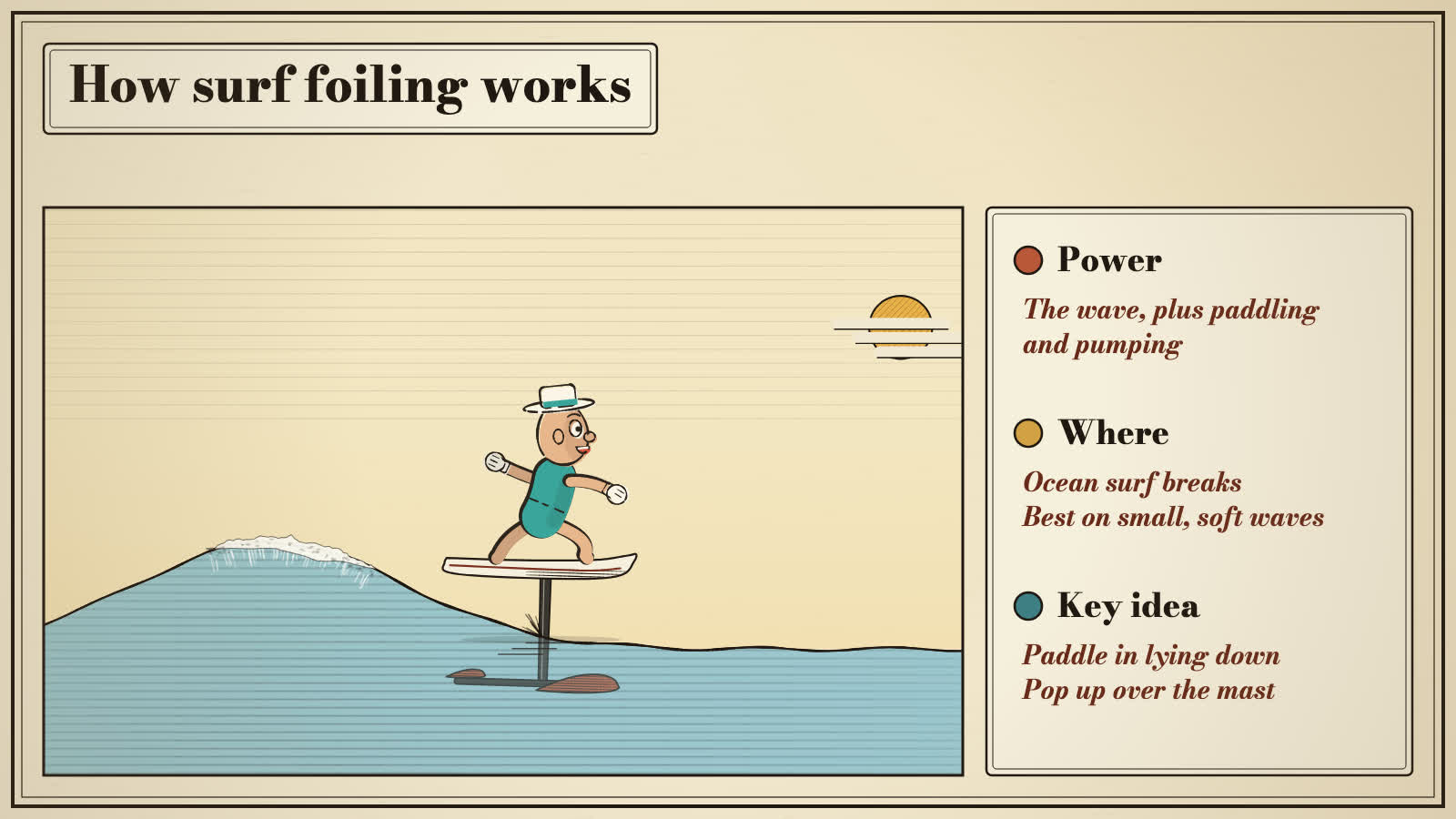
You can ride an e-foil in waves. Use the motor to get onto a swell, then ease off and let the wave carry you. It is one of the best feelings in foiling. It is also where e-foils meet surfers, reefs and currents, so it comes after flat-water skills, not before.
Are you ready?
Waydoo lists what to have first:1
- Turns both ways on flat water, smooth speed changes, and comfort at varying throttle levels. See e-foil turns and height control.
- Self-rescue: you can fall safely and climb back on with no help.
- Time on the board: Waydoo cites at least 10 hours of total riding as a common minimum.
- Gear: an impact vest or PFD, helmet, leash and a propeller guard. Use the leash your brand recommends, because e-foil leash setups vary.
- A contact: a buddy, or someone on shore who knows where you launched and when you will be back.
Waydoo's rule is simple: if you can't tick every item, stay on flat water.1
Pick the right swell
Fliteboard says the best start is clean, small swell with longer periods, in deeper water, away from crowds. Offshore wind makes the wave face more predictable.2
Waydoo suggests waves of about 1 to 3 ft (0.3 to 0.9 m), waist to chest high, with a gentle slope and little white water. It prefers clean point or reef breaks with a predictable lineup over beach breaks. But Waydoo also says to avoid waves breaking over shallow reef or rock. Ride only where the bottom stays deep at low tide.1
Fliteboard team rider Adam Bennetts describes his ideal as a wave that doesn't break, one that surfers and other craft can't ride.2
Beginner tip: your first "waves" can be open-ocean bumps far from any break. You learn to feel the swell lift you without a crowd or a shallow bottom.
Water depth
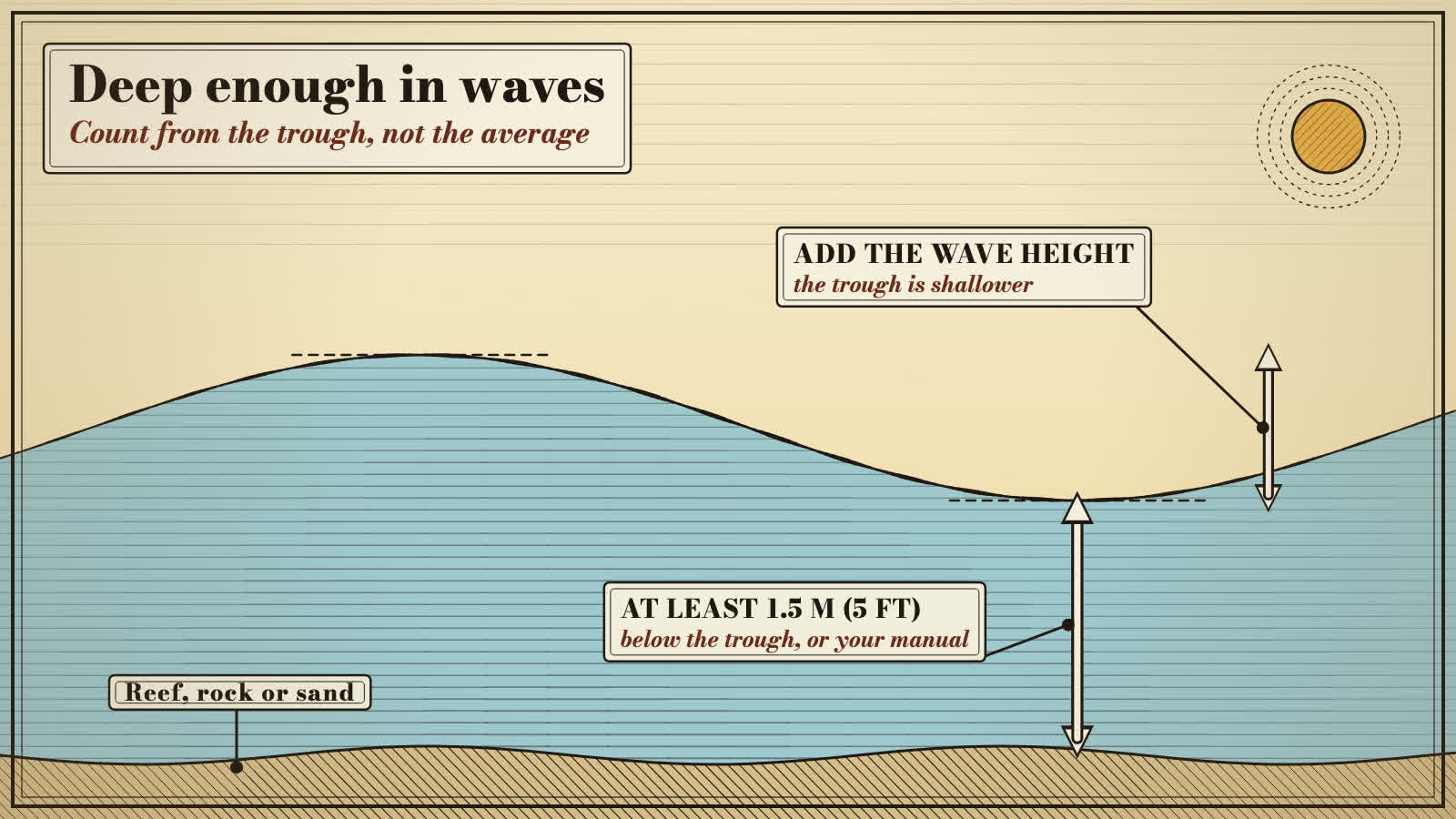
Start from the flat-water minimum: at least 1.5 m (5 ft), or your manual's figure if it is deeper. Then add at least the height of the waves, because the trough is shallower than the average depth. Waydoo also says to go deeper when the swell is running. How makers' launch depths compare is in e-foil propeller safety.3,1
Reefs, rocks and sandbars are hard to see in moving water. At a new spot, ask lifeguards, local riders or a surf shop. When in doubt, ride deeper water.1
Catching the wave
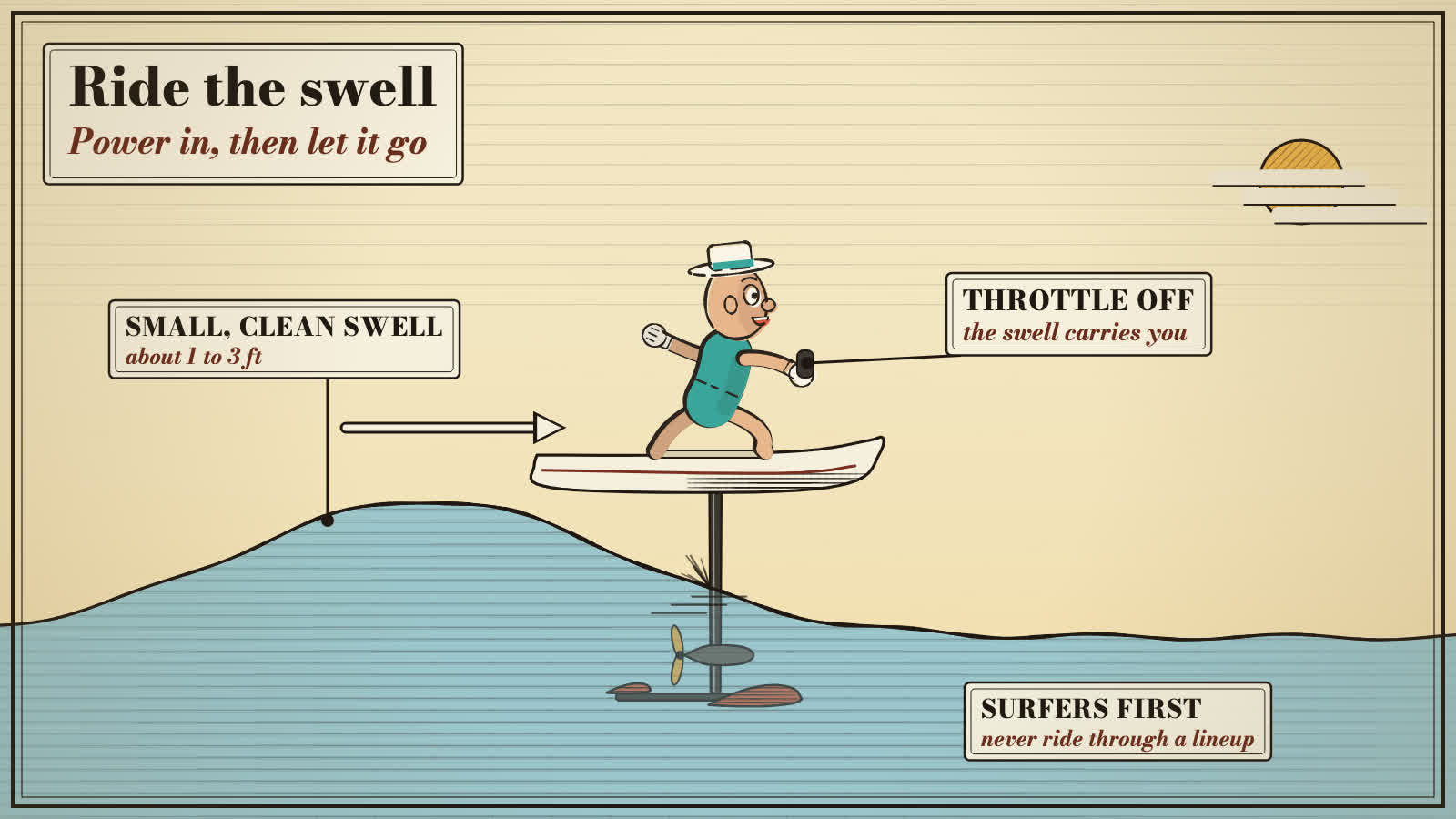
- Start wide and early. Fliteboard says to use the motor to get into position wide and early, matching the wave's speed. Waydoo says to sit wider and farther outside than you would on a surfboard, and to start moving before the wave reaches you.2,1
- Come in at an angle. Fliteboard team rider Adam Bennetts says to approach the wave from behind at an angle, moving away from the breaking part and matching its speed. Waydoo says to aim a little down the line, not straight at the shore, for a longer ride and to stay out of the impact zone.4,1
- Ease off as it lifts you. Waydoo suggests dropping to about 20 to 30 percent throttle as the swell lifts the board. Use the motor for balance and steering, not to push you.1
- Cut the motor when the wave takes over. Fliteboard says to reduce power until you feel the wave take over, then cut the motor.4
- Ride it like a surfboard. Keep your weight a little forward to hold speed and steer by shifting your weight side to side. Look down the line.4,2
- Power back out. When the wave ends, turn the motor back on only once you are back on the board and clear of people, and go out around the breaking waves, not through them. Fliteboard says good throttle response lets you boost past steep sections into safer water.2
Move your weight gradually. Sudden shifts upset the foil, and the wave is already moving the board under you.1
If you fall: let go of the throttle, fall to the side away from the foil, and cover your head as you come up. A wave can throw the board back at you, and Waydoo warns the board can hit bottom and damage the mast, propeller or fuselage.5,1
Gear that helps
- A prop that glides. When the motor is off, a fixed prop drags. Fliteboard suggests its True Glide or Folding Prop for wave riding. Waydoo says a folding prop cuts drag and extends your glide.4,1
- The right wing. Fliteboard says medium-aspect surf wings balance efficiency and control, and suggests larger wings for riding waves unpowered. Waydoo's mid-size wing range is in e-foil turns and height control.2,4
- A smaller board. Fliteboard says compact boards handle steep sections better. Waydoo says its largest 130 L board is harder to pivot in waves.2,1
- A sturdy leash and protection. Fliteboard stresses these in powerful conditions.2
Sharing the waves
This part matters most. A motorized board in a surf lineup is unwelcome and dangerous.
- Surfers come first. Waydoo says traditional surfers have right of way. Treat yourself as the visitor.1
- Never ride through a lineup. Never ride through surfers, swimmers or paddleboarders. Motor noise and speed can startle people, and a collision can cause serious injury.1
- Find your own peak. Fliteboard says to pick peaks away from surf zones, launch from uncrowded spots, ride sections surfers can't or won't ride, and keep plenty of space at all times.2
Rules differ by place. Some beaches restrict motorized craft in surf breaks or swim zones. Waydoo says to check local regulations, obey posted signs and follow lifeguards. Ask the local harbor, park or lifeguard office before you ride a new break, and see e-foil rules.1
Safety note
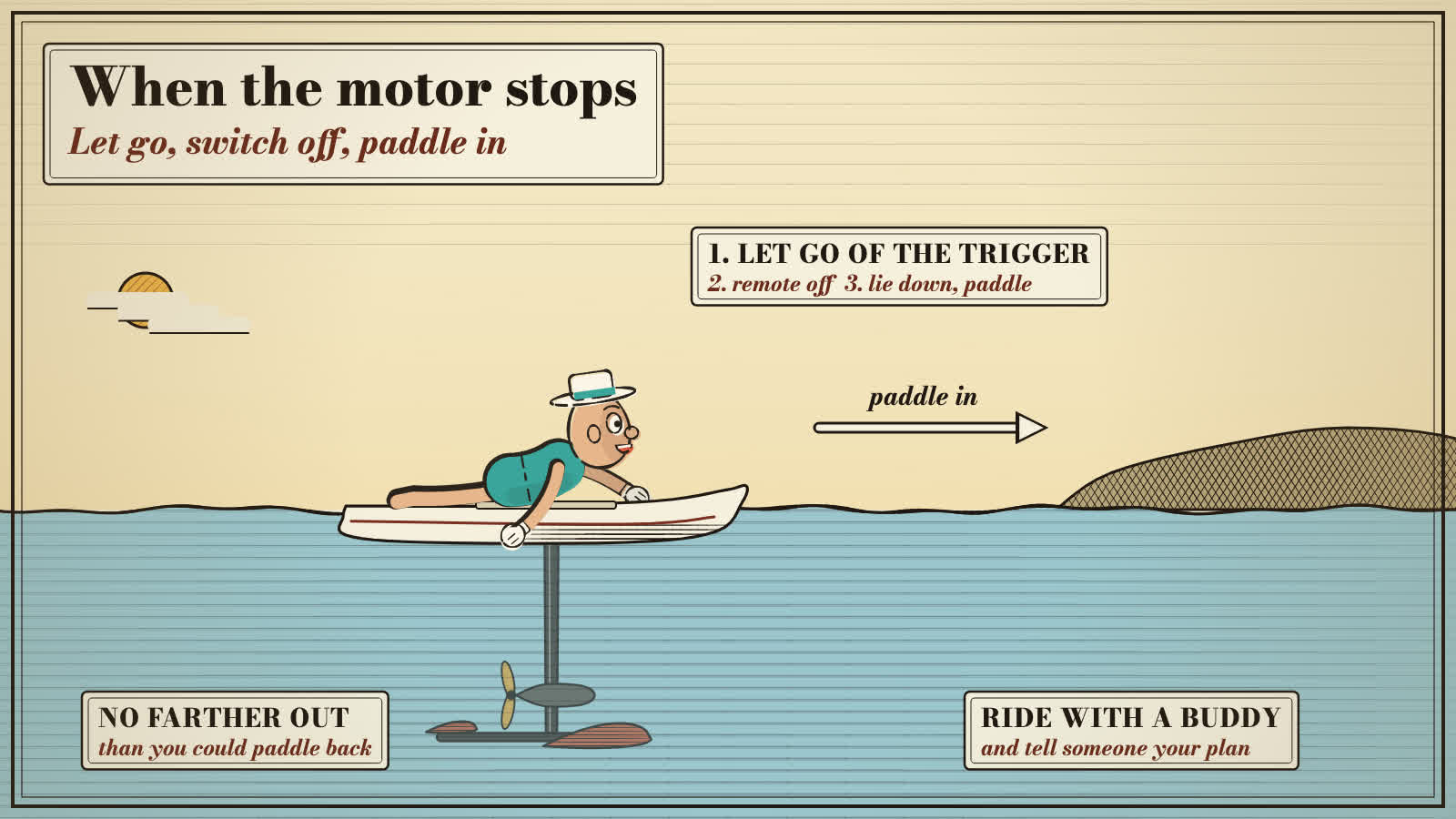
Ocean conditions change fast, and currents can carry you farther than you expect. Check the marine forecast for swell, wind and tide. Ride with a buddy, tell someone your plan, and carry a waterproof way to call for help at unfamiliar spots. What to do if the motor stops out there is in when something goes wrong on an e-foil. Fliteboard's advice is short: if you have any doubt, don't go out. More in our foil safety basics.1,2
Common mistakes
- Going too soon. Waves come after reliable turns and self-rescue, not before.
- Too much throttle on the wave. You outrun the swell. Ease off as it lifts you.
- Lining up at the peak. That is where the surfers sit. Go wide.
- Forgetting the bottom. The trough is shallow. Ride deeper water.
FAQ
Can you ride an e-foil in waves?
Yes. You use the motor to catch the swell, then ease off or cut the power and ride the wave's energy. Fliteboard and Waydoo both say to start on small, clean swell in deep, uncrowded water.2,1
How big should waves be for e-foiling?
Waydoo suggests starting on about 1 to 3 ft (0.3 to 0.9 m), waist to chest high, with a gentle slope and little white water. Fliteboard suggests small swell with longer periods.1,2
Do you turn the motor off when riding a wave on an e-foil?
Some experienced riders do. Waydoo suggests easing to about 20 to 30 percent as the swell lifts you, and Fliteboard says to cut the motor once the wave takes over.1,4
Can you e-foil where people are surfing?
Keep clear of them. Waydoo says surfers have right of way and you should never ride through a lineup, and some beaches restrict motorized craft in surf zones. Check local rules first.1
Keep learning
Sources
Facts checked against the sources below in November 2026.
- Waydoo, Can you ride an eFoil in waves waydoo.com ↩
- Fliteboard, Can you ride an eFoil in waves eu.fliteboard.com ↩
- Fliteboard, How to eFoil: a step-by-step guide fliteboard.com ↩
- Fliteboard, Top 6 eFoil tricks fliteboard.com ↩
- Waydoo, How to eFoil waydoo.com ↩